
Catalogue Search | MBRL


Are you sure you want to remove the book from the shelf?

{{itemTitle}}
821
result(s) for
"Great Britain Social life and customs."
Sort by:
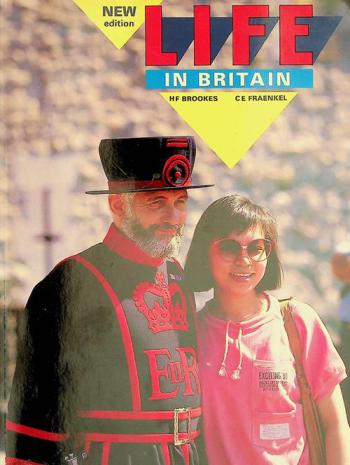
Life in Britain
A background reader for ELT teachers and students, particularly intermediate / advanced students.

Constructing Girlhood Through the Periodical Press, 1850–1915
Focusing on six popular British girls' periodicals, Kristine Moruzi explores the debate about the shifting nature of Victorian girlhood between 1850 and 1915. During an era of significant political, social, and economic change, girls' periodicals demonstrate the difficulties of fashioning a coherent, consistent model of girlhood. The mixed-genre format of these magazines, Moruzi suggests, allowed inconsistencies and tensions between competing feminine ideals to exist within the same publication. Adopting a case study approach, Moruzi shows that the Monthly Packet, the Girl of the Period Miscellany, the Girl's Own Paper, Atalanta, the Young Woman, and the Girl's Realm each attempted to define and refine a unique type of girl, particularly the religious girl, the 'Girl of the Period,' the healthy girl, the educated girl, the marrying girl, and the modern girl. These periodicals reflected the challenges of embracing the changing conditions of girls' lives while also attempting to maintain traditional feminine ideals of purity and morality. By analyzing the competing discourses within girls' periodicals, Moruzi's book demonstrates how they were able to frame feminine behaviour in ways that both reinforced and redefined the changing role of girls in nineteenth-century society while also allowing girl readers the opportunity to respond to these definitions.
eBook


Leisure, citizenship and working-class men in Britain, 1850-1945
From the bawdy audience of a Victorian Penny Gaff to the excitable crowd of an early twentieth century football match, working-class male leisure proved to be a contentious issue for contemporary observers. For middle-class social reformers from across the political spectrum, the spectacle of popular leisure offered a view of working-class habits, and a means by which lifestyles and behaviour could be assessed. For the mid-Victorians, gingerly stepping into a new mass democratic age, the desire to create a bond between the recently enfranchised male worker and the nation was more important than ever. This trend continued as those in governance perceived that 'good' leisure and citizenship could fend off challenges to social stability such as imperial decline, the mass degenerate city, hooliganism, civic and voter apathy and fascism. Thus, between 1850 and 1945 the issue of male leisure became enmeshed with changing contemporary debates on the encroaching mass society and its implications for good citizenry. Working-class culture has often been depicted as an atomised and fragmented entity lacking any significant cultural contestation. Drawing on a wealth of primary and secondary source material, this book powerfully challenges these recent assumptions and places social class centre stage once more. Arguing that there was a remarkable continuity in male working-class culture between 1850 and 1945, Beaven contends that despite changing socio-economic contexts, male working-class culture continued to draw from a tradition of active participation and cultural contestation that was both class and gender exclusive. This lively and readable book draws from fascinating accounts from those who participated in and observed contemporary popular leisure making it of importance to students and teachers of social history, popular culture, urban history, historical geography, historical sociology and cultural studies.
eBook

Music and youth culture
This work explores young people's enactment of musical tastes and performances and how these are articulated through narratives and literacies. It draws on interviews and observations of youth groups, together with archival evidence.
eBook

Voices of Medieval England, Scotland, Ireland, and Wales : Contemporary Accounts of Daily Life
\"Voices of Medieval England, Scotland, Ireland, and Wales : Contemporary Accounts of Daily Life provides a broad selection of primary documents that are appropriate in level and content for a variety of readers. It includes dozens of primary document excerpts that illustrate important elements of daily life during the medieval period. Each document is accompanied by an introduction that supplies relevant historical background, context points to help readers evaluate the document, a description of the results and consequences of the document, and a 'Further Information' section listing important print and electronic resources as well as any relevant films or television programs. Covering an important curricular topic, this book provides extensive contextual material along with guidance to help students read documents. Additionally, it serves to support Common Core State Standards by helping students develop critical thinking skills through document analysis. Features: Provides tools and techniques for effectively evaluating the meaning and importance of the documents; Enables students to effectively incorporate information from primary documents into various school and personal research projects; Includes an 'Ask Yourself' section of questions about the document and the source era as well as a 'Topics to Consider' section that suggests themes to explore in an essay, online project, or class presentation\"--From publisher's website.
Book

Girl Trouble
A brilliant cultural history.' Irish Examiner Girls behave badly. If they're not obscenity-shouting, pint-swigging ladettes, they're narcissistic, living dolls floating around in a cloud of self-obsession, far too busy twerking to care. And this is news. In this witty and wonderful book, Carol Dyhouse shows that where there's a social scandal or a wave of moral outrage, you can bet a girl is to blame. Whether it be stories of 'brazen flappers' staying out and up all night in the 1920s, inappropriate places for Mars bars in the 1960s or Courtney Love's mere existence in the 1990s, bad girls have been a mass-media staple for more than a century. And yet, despite the continued obsession with their perceived faults and blatant disobedience, girls are infinitely better off today than they were a century ago. This is the story of the challenges and opportunities faced by young women growing up in the swirl of the twentieth century, and the pop-hysteria that continues to accompany their progress.
eBook


The ends of life : roads to fulfilment in early modern England
How should we live? That question was no less urgent for English men and women who lived between the early sixteenth and late eighteenth centuries than for this book's readers. Keith Thomas's masterly exploration of the ways in which people sought to lead fulfilling lives in those centuries between the beginning of the Reformation and the heyday of the Enlightenment illuminates the central values of the period, while casting incidental light on some of the perennial problems of human existence. Consideration of the origins of the modern ideal of human fulfilment and of obstacles to its realization in the early modern period frames an investigation that ranges from work, wealth, and possessions to the pleasures of friendship, family, and sociability. The cult of military prowess, the pursuit of honour and reputation, the nature of religious belief and scepticism, and the desire to be posthumously remembered are all drawn into the discussion, and the views and practices of ordinary people are measured against the opinions of the leading philosophers and theologians of the time. The Ends of Life offers a fresh approach to the history of early modern England, by one of the foremost historians of our time. It also provides modern readers with much food for thought on the problem of how we should live and what goals in life we should pursue.
eBook