
Catalogue Search | MBRL


Are you sure you want to remove the book from the shelf?

{{itemTitle}}
1,814
result(s) for
"Great Britain. Army History."
Sort by:

A British profession of arms : the politics of command in the late Victorian Army
\"Examines the internal dynamics of promotion and appointment in the officer corps in late Victorian Britain\"-- Provided by publisher.
Book

Life, Death, and Growing Up on the Western Front
This book was inspired by the author's discovery of an extraordinary cache of letters from a soldier who was killed on the Western Front during the First World War. The soldier was his grandfather, and the letters had been tucked away, unread and unmentioned for many decades. Intrigued by the heartbreak and history of these family letters, Fletcher sought out the correspondence of other British soldiers who had volunteered for the fight against Germany. This resulting volume offers a vivid account of the physical and emotional experiences of seventeen British soldiers whose letters survive. Drawn from different regiments, social backgrounds, and areas of England and Scotland, they include twelve officers and five ordinary \"Tommies.\"
The book explores the training, journey to France, fear, shellshock, and life in the trenches as well as the leisure, love, and home leave the soldiers dreamed of. Fletcher discusses the psychological responses of 17- and 18-year-old men facing appalling realities and considers the particular pressures on those who survived their fallen comrades. While acknowledging the horror and futility the soldiers of the Great War experienced, the author shows another side to the story, focusing new attention on the loyal comradeship, robust humor, and strong morale that uplifted the men at the Front and created a powerful bond among them.
eBook

Sepoy generals : Wellington to Roberts
Biographical studies written while the author was employed as director of records to the Government of India in examining the ancient records in the archives at Bombay, Madras and Calcutta.
Book
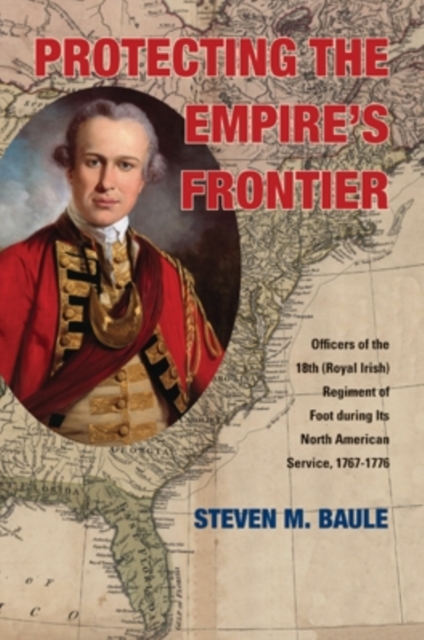
Protecting the Empire's Frontier
Protecting the Empire's Frontiertells stories of the roughly eighty officers who served in the 18th (Royal Irish) Regiment of Foot, which served British interests in America during the crucial period from 1767 through 1776. The Royal Irish was one of the most wide-ranging regiments in America, with companies serving on the Illinois frontier, at Fort Pitt, and in Boston, New York, and Philadelphia, with some companies taken as far afield as Florida, Spanish Louisiana, and present-day Maine. When the regiment was returned to England in 1776, some of the officers remained in America on staff assignments. Others joined provincial regiments, and a few joined the American revolutionary army, taking up arms against their king and former colleagues.Using a wide range of archival resources previously untapped by scholars, the text goes beyond just these officers' service in the regiment and tells the story of the men who included governors, a college president, land speculators, physicians, and officers in many other British regular and provincial regiments. Included in these ranks were an Irishman who would serve in the U.S. Congress and as an American general at Yorktown; a landed aristocrat who represented Bath as a member of Parliament; and a naval surgeon on the ship transporting Benjamin Franklin to France. This is the history of the American Revolutionary period from a most gripping and everyday perspective.An epilogue covers the Royal Irish's history after returning to England and its part in defending against both the Franco-Spanish invasion attempt and the Gordon Rioters. With an essay on sources and a complete bibliography, this is a treat for professional and amateur historians alike.
eBook

Indianization, the officer corps, and the Indian Army : the forgotten debate, 1817-1917
\"In the Indian Army of the British Raj, the officer corps was \"reserved for the governing race\", (i.e. the British). Only in 1917, a mere thirty years before India won freedom, did the Raj permit Indians into the Army's officer corps, thus slowly beginning its Indianization. Yet it is often forgotten that this decision was the culmination of a hundred-year-long debate. Based on meticulous archival research in Britain and India, this book breaks new ground by offering readers the first detailed account of this generally forgotten debate. It traces the myriad schemes and counter-schemes the debate generated, the complex twists and turns it took, and how it engaged both British policy-makers anxious to maintain control, as well as nationalist Indian leaders agitating for greater self-government. This work also offers insights into the martial races concept, the 1857 uprising, and the impact of Anglo-Indian ideology upon the Indian Army. Clearly written and carefully argued, this monograph is an original and defining contribution to military/war and society history, the history of colonial India and its army, the history of British empire, the history of racism, and to civil-military relations.\" --Provided by publisher.
Book

Books and the British Army in the Age of the American Revolution
Historians have long understood that books were important to the British army in defining the duties of its officers, regulating tactics, developing the art of war, and recording the history of campaigns and commanders. Now, in this groundbreaking analysis, Ira D. Gruber identifies which among over nine hundred books on war were considered most important by British officers and how those books might have affected the army from one era to another. By examining the preferences of some forty-two officers who served between the War of the Spanish Succession and the French Revolution, Gruber shows that by the middle of the eighteenth century British officers were discriminating in their choices of books on war and, further, that their emerging preference for Continental books affected their understanding of warfare and their conduct of operations in the American Revolution. In their increasing enthusiasm for books on war, Gruber concludes, British officers were laying the foundation for the nineteenth-century professionalization of their nation's officer corps. Gruber's analysis is enhanced with detailed and comprehensive bibliographies and tables.
eBook

The Irish amateur military tradition in the British Army, 1854-1992
Examines the framework in which Irish auxiliary forces, part-time soldiers of the British Army, have existed alongside their regular army counterparts and how they have interacted with wider society.
Book

The men who lost America : British leadership, the American Revolution, and the fate of the empire
A unique account of the American Revolution, told from the perspective of the leaders who conducted the British war effort.
eBook

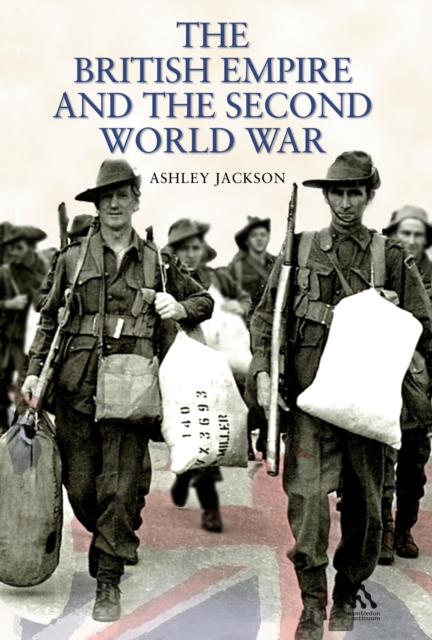
The British Empire and the Second World War
In 1939 Hitler went to war not just with Great Britain; he also went to war with the whole of the British Empire, the greatest empire that there had ever been. In the years since 1945 that empire has disappeared, and the crucial fact that the British Empire fought together as a whole during the war has been forgotten. All the parts of the empire joined the struggle and were involved in it from the beginning, undergoing huge changes and sometimes suffering great losses as a result. The war in the desert, the defence of Malta and the Malayan campaign, and the contribution of the empire as a whole in terms of supplies, communications and troops, all reflect the strategic importance of Britain's imperial status. Men and women not only from Australia, New Zealand and India but from many parts of Africa and the Middle East all played their part. Winston Churchill saw the war throughout in imperial terms. The British Empire and the Second World War emphasises a central fact about the Second World War that is often forgotten.
eBook