
Catalogue Search | MBRL


Are you sure you want to remove the book from the shelf?

{{itemTitle}}
559
result(s) for
"Great Reform Act"
Sort by:

Democracy and the Vote in British Politics, 1848-1867
The Second Reform Act, passed in 1867, created a million new voters, doubling the electorate and propelling the British state into the age of mass politics. It marked the end of a twenty year struggle for the working class vote, in which seven different governments had promised change. Yet the standard works on 1867 are more than forty years old and no study has ever been published of reform in prior decades.
This study provides the first analysis of the subject from 1848 to 1867, ranging from the demise of Chartism to the passage of the Second Reform Act. Recapturing the vibrancy of the issue and its place at the heart of Victorian political culture, it focuses not only on the reform debate itself, but on a whole series of related controversies, including the growth of trade unionism, the impact of the 1848 revolutions and the discussion of French and American democracy.
eBook

DEMOCRATIZATION UNDER THE THREAT OF REVOLUTION: EVIDENCE FROM THE GREAT REFORM ACT OF 1832
We examine the link between the threat of violence and democratization in the context of the Great Reform Act passed by the British Parliament in 1832. We georeference the so-called Swing riots, which occurred between the 1830 and 1831 parliamentary elections, and compute the number of these riots that happened within a 10 km radius of the 244 English constituencies. Our empirical analysis relates this constituency-specific measure of the threat perceptions held by the 344,000 voters in the Unreformed Parliament to the share of seats won in each constituency by pro-reform politicians in 1831. We find that the Swing riots induced voters to vote for pro-reform politicians after experiencing first-hand the violence of the riots.
Journal Article
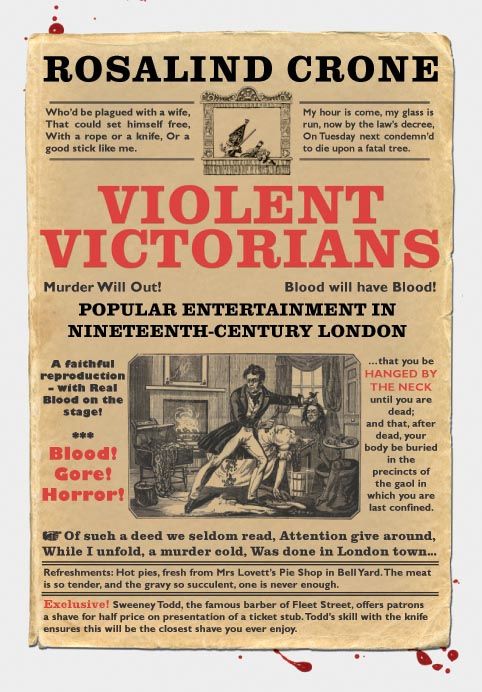
Violent Victorians
By drawing attention to the wide range of gruesome, bloody and confronting amusements patronised by ordinary Londoners this book challenges our understanding of Victorian society and culture. From the turn of the nineteenth century, graphic, yet orderly, ‘re-enactments’ of high level violence flourished in travelling entertainments, penny broadsides, popular theatres, cheap instalment fiction and Sunday newspapers. This book explores the ways in which these entertainments siphoned off much of the actual violence that had hitherto been expressed in all manner of social and political dealings, thus providing a crucial accompaniment to schemes for the reformation of manners and the taming of the streets, while also serving as a social safety valve and a check on the growing cultural hegemony of the middle class.
eBook

How to get the snowball rolling and extend the franchise: voting on the Great Reform Act of 1832
This paper suggests a new approach to analyzing the causes of franchise extension. Based on a new dataset, it provides a detailed econometric study of the Great Reform Act of 1832 in the United Kingdom. The analysis yields four main results. First, modernization theory receives limited support. Second, the reform enjoyed some measure of popular support. Third, the threat of revolution had an asymmetric impact on the voting behavior of the pro-reform Whigs and the anti-reform Tories. While the threat might have convinced reluctant reformers among the Whig politicians—and among their patrons—to support the bill, it seems to have hardened the resistance to reform among the Tories. Fourth, ideology played a critical role. Nevertheless, it also appears that self-interest and political expedience explained the votes of many Members of Parliament.
Journal Article

Violent Victorians
We are often told that the Victorians were far less violent than their forebears: over the course of the nineteenth century, violent sports were mostly outlawed, violent crime, including homicide, notably declined, and punishments were hidden from public view within prison walls. They were also much more respectable, and actively sought orderly, uplifting, domestic and refined pastimes. Yet these were the very same people who celebrated the exceptionally violent careers of anti-heroes such as the brutal puppet Punch and the murderous barber Sweeney Todd. By drawing attention to the wide range of gruesome, bloody and confronting amusements patronised by ordinary Londoners this book challenges our understanding of Victorian society and culture. From the turn of the nineteenth century, graphic, yet orderly, 're-enactments' of high level violence flourished in travelling entertainments, penny broadsides, popular theatres, cheap instalment fiction and Sunday newspapers.
eBook

Law and Reform in the 1820s
The most significant British law reforms of the nineteenth century happened in the 1820s and 1830s. These reforms were begun by the Tories before the Great Reform Act of 1832, completed under the Whigs in the years after 1832, and imposed on a majority that had no hand in shaping them. They set a new pattern for imposing order by the use of criminal law, shifting away from the use of rare but brutal displays of state power on the body of the convict and toward a system where less severe punishments were implemented with much greater frequency and consistency.
Book Chapter


\Choice\ Can Be a Mirage as Schools Vie in Market
Discusses the change to a choice-based school system in Great Britain under the Education Reform Act of 1988. Compares the British system with proposed changes in the United States. Describes the changes that have placed budgeting and management in the hands of the individual schools that have the power to \"opt out\" of school district control. (DK)
Journal Article
