
Catalogue Search | MBRL


Are you sure you want to remove the book from the shelf?

{{itemTitle}}
8,159
result(s) for
"Greek philosophy"
Sort by:

How to be an epicurean : the ancient art of living well
\"Despite the innumerable ways in which modern conveniences and scientific progress have changed our quality of life, many of our problems--concerning love, money, family, and politics--are the same as those faced by the Greeks. The response to those problems isn't unreflective hedonism, but the thoughtful pursuit of pleasure and purpose. Epicureanism shows us how to do it by promoting reason, respect for the natural world, and reverence for our fellow humans.\" -- inside front jacket flap.
Book

Philosophy and dietetics in the Hippocratic on regimen : a delicate balance of health
This book offers the first extended study published in English on the Hippocratic treatise On Regimen, one of the most important pre-Platonic documents of the discussion of human nature and other topics at the intersection of ancient medicine and philosophy.
eBook


Aristotle's discovery of the human : piety and politics in the Nicomachean ethics
Aristotle's Discovery of the Human offers a fresh, illuminating, and accessible analysis of one of the Western philosophical tradition's most important texts.
In Aristotle's Discovery of the Human, noted political theorist Mary P. Nichols explores the ways in which Aristotle brings the gods and the divine into his \"philosophizing about human affairs\" in his Nicomachean Ethics. Her analysis shows that, for Aristotle, both piety and politics are central to a flourishing human life. Aristotle argues that piety provides us not only an awareness of our kinship to the divine, and hence elevates human life, but also an awareness of a divinity that we cannot entirely assimilate or fathom. Piety therefore supports a politics that strives for excellence at the same time that it checks excess through a recognition of human limitation.
Proceeding through each of the ten books of the Ethics, Nichols shows that this prequel to Aristotle's Politics is as theoretical as it is practical. Its goal of improving political life and educating citizens and statesmen is inseparable from its pursuit of the truth about human beings and their relation to the divine. In the final chapter, which turns to contemporary political debate, Nichols's suggestion of the possibility of supplementing and deepening liberalism on Aristotelian grounds is supported by the account of human nature, virtue, friendship, and community developed throughout her study of the Ethics.
eBook

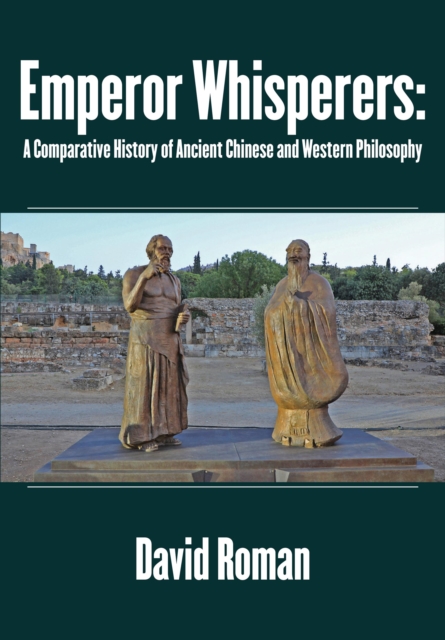
Emperor Whisperers
Emperor Whisperers charts a comparative history of the two largest strains of ancient philosophy, from the first millennium BC to around AD 500. The book examines how
philosophy arose from atheism in both China and Greece but entered a cul de sac when atheism spread from the elites to the middle classes. China's philosophy evolved to oppose law with morals, which created a mandarin class of \"emperor whisperers, \" while Western philosophy was complicated by competing political systems that were only harmonized by the triumph of the Roman Empire. As antiquity came to an end, imported new religions – Buddhism and Christianity – reintroduced faith into elite thought and kickstarted the Middle Ages.
eBook

Epicureanism : a very short introduction
Epicureanism is commonly associated with a carefree view of life and the pursuit of pleasures, particularly the pleasures of the table. However it was a complex and distinctive system of philosophy that emphasized simplicity and moderation, and considered nature to consist of atoms and the void. Epicureanism is a school of thought whose legacy continues to reverberate today. In this 'Very Short Introduction', Catherine Wilson explains the key ideas of the School, comparing them with those of the rival Stoics and with Kantian ethics, and tracing their influence on the development of scientific and political thought from Locke, Newton, and Galileo to Rousseau, Marx, Bentham, and Mill. She discusses the adoption and adaptation of Epicurean motifs in science, morality, and politics from the 17th Century onwards and contextualises the significance of Epicureanism in modern life.
Book

Platons Tanzende Stadt: Moralpsychologie Und Chortanz in Den Nomoi
Weshalb ist der Chortanz ((S{rufl\"a(B) in Platons Nomoi so prominent? Zur Beantwortung dieser Frage bietet dieses Buch eine eingehende Analyse der Moralpsychologie des Dialogs und argumentiert, dass der Tanz nicht nur ein erzieherisches Instrument, sondern - als körperlicher Ausdruck geordneter Lust - auch ein Symbolbild für das Hauptziel der moralischen Erziehung ist: die Mäigung ((Sv}zurvy\"pj(B). So wird der Chortanz zu einem wirkmächtigen Konstrukt zur Veranschaulichung der philosophischen Hauptanliegen Platons. Zu den Schwerpunkten des Buches gehören darüber hinaus eine innovative Erklärung des komplexen Aufbaus des Dialogs, neue Deutungen des Marionettengleichnisses und der Ansprache an die Tragiker sowie die erste Untersuchung der moralischen Funktion der Scham in Kapitellänge. Ausgezeichnet mit dem Conrado Eggers Lan Prize der International Plato Society 2022. Why is choral dance ((S{rufl\"a(B) so prominent in Plato's Laws? In answer to this question, this book offers an in-depth analysis of the dialogue's moral psychology, arguing that dance is not only an educational instrument but also, in terms of the physical expression of ordered pleasure, a symbolic image of the principal goal of moral education: moderation ((Sv}zurvy\"pj(B). Thus, choral dance becomes a powerful construct to illustrate Plato's main philosophical concerns. Other key features of the book include an innovative account of the dialogue's complex composition, new interpretations of the puppet image and the tragedy claim, and the first chapter-length investigation of the moral funtion of shame. Winner of the Conrado Eggers Lan Prize of the International Plato Society 2022.
eBook

The Cambridge companion to the Sophists
\"A comprehensive introduction to the Classical Greek sophists, placing them afresh in their cultural context. These public figures, such as Protagoras and Gorgias, were wide-ranging experts before discipline-specialization, and represent the flourishing of linguistic, historical, and philosophical reflection in the time of Socrates\"-- Provided by publisher.
BOOK

Spectacles of Truth in Classical Greek Philosophy
In fourth-century Greece (BCE), the debate over the nature of philosophy generated a novel claim: that the highest form of wisdom is theoria, the rational 'vision' of metaphysical truths (the 'spectator theory of knowledge'). This 2004 book offers an original analysis of the construction of 'theoretical' philosophy in fourth-century Greece. In the effort to conceptualise and legitimise theoretical philosophy, the philosophers turned to a venerable cultural practice: theoria (state pilgrimage). In this practice, an individual journeyed abroad as an official witness of sacralized spectacles. This book examines the philosophic appropriation and transformation of theoria, and analyses the competing conceptions of theoretical wisdom in fourth-century philosophy. By tracing the link between traditional and philosophic theoria, this book locates the creation of theoretical philosophy in its historical context, analysing theoria as a cultural and an intellectual practice. It develops a new, interdisciplinary approach, drawing on philosophy, history and literary studies.
eBook