
Catalogue Search | MBRL


Are you sure you want to remove the book from the shelf?

{{itemTitle}}
73
result(s) for
"Greeks Cyprus History."
Sort by:


The Cyprus Problem
For nearly 60 years, the tiny Mediterranean nation of Cyprus has taken a disproportionate share of the international spotlight. In The Cyprus Problem: What Everyone Needs to Know®, James Ker-Lindsay--recently appointed as expert advisor to the UN Secretary-General's Special Advisor on Cyprus--offers an incisive, even-handed account of the conflict. Ker-Lindsay covers all aspects of the Cyprus problem, placing it in historical context, addressing the situation as it now stands, and looking toward its possible resolution.
eBook

The Cyprus problem
For nearly 60 years, the tiny Mediterranean nation of Cyprus has taken a disproportionate share of the international spotlight. In The Cyprus Problem: What Everyone Needs to KnowRG, James Ker-Lindsay--recently appointed as expert advisor to the UN Secretary-General's Special Advisor on Cyprus--offers an incisive, even-handed account of the conflict. Ker-Lindsay covers all aspects of the Cyprus problem, placing it in historical context, addressing the situation as it now stands, and looking toward its possible resolution.
eBook

Past in Pieces: Belonging in the New Cyprus
On April 23, 2003, to the surprise of much of the world, the ceasefire line that divides Cyprus opened. The line had partitioned the island since 1974, and so international media heralded the opening of the checkpoints as a historic event that echoed the fall of the Berlin Wall. As in the moment of the Wall's collapse, cameras captured the rush of Cypriots across the border to visit homes unwillingly abandoned three decades earlier. It was a euphoric moment, and one that led to expectations of reunification. But within a year Greek Cypriots overwhelmingly rejected at referendum a United Nations plan to reunite the island, despite their Turkish compatriots' support for the plan. InThe Past in Pieces, anthropologist Rebecca Bryant explores why the momentous event of the opening has not led Cyprus any closer to reunification, and indeed in many ways has driven the two communities of the island further apart. This chronicle of the \"new Cyprus\" tells the story of the opening through the voices and lives of the people of one town that has experienced conflict. Over the course of two years, Bryant studied a formerly mixed town in northern Cyprus in order to understand both experiences of life together before conflict and the ways in which the dissolution of that shared life is remembered today. Tales of violation and loss return from the past to shape meanings of the opening in daily life, redefining the ways in which Cypriots describe their own senses of belonging and expectations of the political future. By examining the ways the past is rewritten in the present, Bryant shows how even a momentous opening may lead not to reconciliation but instead to the discovery of new borders that may, in fact, be the real ones.
eBook
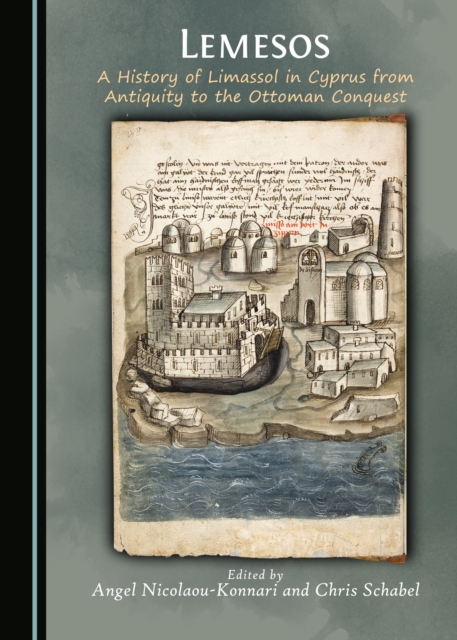
Lemesos
This volume is the first scholarly work in English examining the history of the town and district of Limassol in Cyprus from antiquity to the 1570/1 Ottoman conquest of the island. Based on original research and adopting a multidisciplinary approach, six established scholars study Limassol's political, social, and economic history, as well as its artistic and cultural contribution in ancient, Byzantine, Frankish, and Venetian times. A second volume will explore the history of Limassol up to 1960.
eBook

The Turkish Arms Embargo
Drawing on newly available archival materials from the Gerald Ford and Jimmy Carter Presidential Libraries, James F.Goode offers a revolutionary analysis of the complex factors leading to the imposition and continuance of the 1975-1978 Turkish Arms Embargo.
eBook

Domestic and Divine
Built on the southwestern coast of Cyprus in the second century A.D., the House of Dionysos is full of clues to a distant life—in the corner of a portico, shards of pottery, a clutch of Roman coins found on a skeleton under a fallen wall—yet none is so evocative as the intricate mosaic floors that lead the eye from room to room, inscribing in their colored images the traditions, aspirations, and relations of another world. In this lavishly illustrated volume, Christine Kondoleon conducts us through the House of Dionysos, showing us what its interior decoration discloses about its inhabitants and their time. Seen from within the context of the house, the mosaics become eloquent witnesses to an elusive dialogue between inhabitants and guests, and to the intermingling of public and private. Kondoleon draws on the insights of art history and archaeology to show what the mosaics in the House of Dionysos can tell us about these complex relations. She explores the issues of period and regional styles, workshop traditions, the conditions of patronage, and the forces behind iconographic change. Her work marks a major advance, not just in the study of Roman mosaics, but in our knowledge of Roman society.
eBook

A (Post-)Byzantine Prophecy Reworded
The paper examines a hitherto little-known Greek prophecy of the late sixteenth century, which may be called the Vaticinium de restitutione Constantinopoleos (VatResCon). The prophecy was penned in reaction to the fall of Cyprus (1571) and predicts the imminent recapture of Constantinople through an alliance with Western forces. The purpose of this article is twofold: first, I reconstruct the historical context in which this prophecy was composed by reviewing the factors that led to the unprecedented proliferation of Byzantine apocalyptic literature in the aftermath of the fall of Constantinople (1453). To illustrate this remarkable development, I present three notable apocalyptic texts composed shortly after 1453. Second, I discuss the dating and manuscript transmission of VatResCon and introduce a demotic paraphrase of the prophecy, which has come down in a single Meteōra manuscript. I provide a diplomatic edition and translation of the paraphrastic version, which can be dated to the early seventeenth century. The edition of the paraphrase serves as a corollary to the recently published editio princeps of VatResCon. An examination of the manuscript environment shows that VatResCon ordinarily comes down in oracular collections that place it in the context of prophetic messianism and apocalyptic irredentism. Moreover, I argue that the prophecy’s pro-Western orientation can explain its short-lived popularity, as the expectation to receive military assistance against the Turks gradually shifted towards Russia. In essence, VatResCon signifies the transition from Venetophile to Russophile prophecies while demonstrating that the Byzantine apocalyptic tradition was alive well over a century after the Eastern Roman polity had come to an end.
Journal Article

Genetic Study of Early Onset Parkinson’s Disease in Cyprus
Parkinson’s Disease (PD) is a multifactorial neurodegenerative disease characterized by motor and non-motor symptoms. The etiology of PD remains unclear. However, several studies have demonstrated the interplay of genetic, epigenetic, and environmental factors in PD. Early-onset PD (EOPD) is a subgroup of PD diagnosed between the ages of 21 and 50. Population genetic studies have demonstrated great genetic variability amongst EOPD patients. Hence, this study aimed to obtain a genetic landscape of EOPD in the Cypriot population. Greek-Cypriot EOPD patients (n = 48) were screened for variants in the six most common EOPD-associated genes (PINK1, PRKN, FBXO7, SNCA, PLA2G6, and DJ-1). This included DNA sequencing and Multiplex ligation-dependent probe amplification (MLPA). One previously described frameshift variant in PINK1 (NM_032409.3:c.889del) was detected in five patients (10.4%)—the largest number to be detected to date. Copy number variations in the PRKN gene were identified in one homozygous and 3 compound heterozygous patients (8.3%). To date, the pathogenic variants identified in this study have explained the PD phenotype for 18.8% of the EOPD cases. The results of this study may contribute to the genetic screening of EOPD in Cyprus.
Journal Article
A Linguistic History of Ancient Cyprus
This pioneering volume approaches the languages and scripts of ancient Cyprus from an interdisciplinary point of view, with a primarily linguistic and epigraphic approach supplemented by a consideration of their historical and cultural context. The focus is on furthering our knowledge of the non-Greek languages/scripts, as well as appreciating their place in relation to the much better understood Greek language on the island. Following on from recent advances in Cypro-Minoan studies, these difficult, mostly Late Bronze Age inscriptions are reassessed from first principles. The same approach is taken for non-Greek languages written in the Cypriot Syllabic script during the first millennium BC, chiefly the one usually referred to as Eteocypriot. The final section is then dedicated to the Phoenician language, which was in use on Cyprus for some hundreds of years. The result is a careful reappraisal of these languages/scripts after more than a century of sometimes controversial scholarship.
eBook