
Catalogue Search | MBRL


Are you sure you want to remove the book from the shelf?

{{itemTitle}}
2,872
result(s) for
"Greene, Graham"
Sort by:

Graham Greene : the last interview and other conversations
A master of twentieth century fiction, Graham Greene looks back on his life. This volume also includes several key interviews from throughout his long, fruitful career.
Book
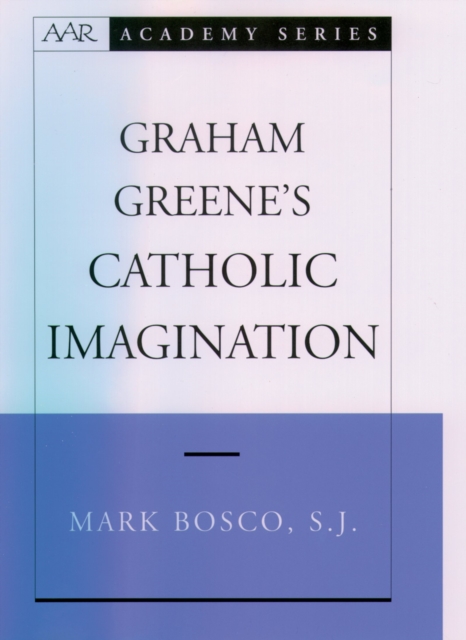
Graham Greene's Catholic imagination
This book focuses on the importance of Catholicism in Graham Greene’s life and writings. In his 67 years of writing, Catholicism was always the thread that bound his literary preoccupations into a recognizable pattern. The chapters in this volume explore the development of Greene’s Catholic imagination by situating him in the two historical and theological milieus that dominate 20th century Catholicism: the Catholic revival in the first half of the century, and the Vatican II and post-Vatican II concerns that found new expression in his later novels.
eBook
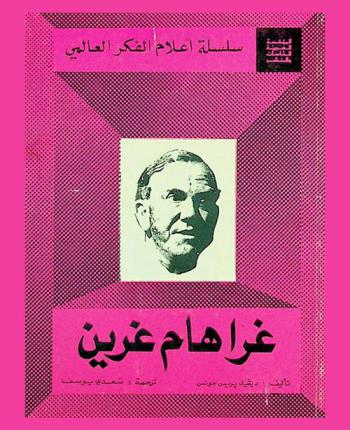
غراهام غرين
كتاب \"غراهام غرين\" يتحدث عن أن تعني الرواية الإنجليزية المعاصرة بالنسبة لعدد عظيم من القراء في مختلف بلدان العالم غراهام غرين المادة الأدبية الوحيدة بين صادرات بريطانيا كما سمته إحدى الصحف الأميركية الأماكن التي تتناولها كتبه كوزموبوليتية الطابع-المكسيك، غرب إفريقيا، كوبا، الكونغو، الهند الصينية إلا أنه تعلم حرفته من تراث أدبي إنجليزي وبعض سمعته وشهرته أو ما يقابلها من عداء وبغض مستمد من كاثوليكيته لكن غرين لم يعتذر عن المسالة البتة ولقد قال إنه كاتب أخذ في أربعة كتب أو خمسة شخصيات ذات أفكار كاثوليكية لرواياته.
Book
Graham Greene’s Narrative in Spain
This volume provides a detailed description of the literary contact between Graham Greene and Franco's Spain. Part I describes the most significant political events that affected the Spanish book industry under this regime, with the first chapter offering an account of the methods of control created to exercise authoritative influence over the cultural scene. Part II explores critical studies of Greene's artistic output in Franco's Spain, and the second chapter investigates literary critics' evaluations of the author as published in the national press, magazines and journals, as well as in the prologues, introductions and prefaces to his books. Parts III and IV study the role played by the book industry in the reception of the writer in Spain, as well as the obstacles it faced at the censorship office. Accordingly, chapters three to six provide the names of the publishers and booksellers who attempted to disseminate his work throughout the country. Using the censorship files, these chapters measure with great precision publishers' interest in Greene's works, and establish the power Franco's censorship wielded over the reception of his literature in Spain. The final section of the book brings together a number of significant conclusions developed throughout this study. As such, Graham Greene's Narrative in Spain provides the reader with a comprehensive overview of the roles played by national literary criticism and the book industry in the reception of the author's works in Franco's Spain, as well as of the influence exerted by the regime throughout the whole publishing process.
eBook

Epidemics, Leprosy, and Hope in Graham Greene’s A Burnt-Out Case
Graham Greene is a critically acclaimed British novelist in twentieth-century literature. In his epidemic narrative A Burnt-Out Case (1977), Querry, a world-famous European architect, loses his faith in work and the Catholic religion and escapes to the leprosy-infected Congo. Querry 's ennui makes him a de facto spiritual leper. Such an analogy often demonizes disease and normalizes people 's perception of epidemics, simultaneously misrepresenting patients ' various experiences. Nonetheless, the traditional stigmatization imposed on the Other, such as lepers in the Congo, does not merely necessitate the agony of the infected. Rather, epidemics often entail the victim 's epiphany and turn the sufferers ' pain into pleasure and their desperation into inspiration. Querry 's retrieval of faith in life and humanity illustrates this empowerment. This paper argues that epidemics and people 's responses to them alert us to a deconstructive power inherent in contagion. Epidemics are threatening and fearful, but they also enable humans to reexamine their lives and refresh their sympathetic understanding of human suffering. G. Greene's (1977) A Burnt-Out Case brings forth a timely version of people's regained humanity through suffering and disease, something urgently needed in the (post-)COVID-19 era.
Journal Article

Modernism’s Missing Myth: A Reception History of Graham Greene’s The Power and the Glory
This paper uses a reception history approach to argue that Graham Greene’s novel The Power and the Glory should be considered a modernist text. The intense but varied affective responses of readers, along with the mythic status they attribute to the work, reveal that the novel has long been read both within and as a response to a modernist framework. Furthermore, reader responses all point to the same tension within the novel: the collision of a traditional and specific religious creed, Catholicism, with the thematic uncertainty and fragmentation of literary modernism. This tension is Greene’s contribution to the period.
Journal Article

The man within my head
Recounts the author's life-long obsession with Graham Greene's writings on the experiences of being an outsider, which informed both the author's travels and his private explorations of his relationship with his elusive father.
Book

“God save us always from the innocent and the good”: American versus European Exceptionalism in Graham Greene’s The Quiet American
This essay argues that by challenging the rectitude of American intervention in Vietnam,
The Quiet American
is the means by which Greene criticises the American exceptionalism of the post-World War 2 era. It shows how the nation’s exceptionalism is built upon a fantasy of American idealism that masks the true intentions hidden behind America’s crusade against Communism. It proposes also that Greene uses his novel to highlight the existence of a European exceptionalism as potent as its transatlantic equivalent, and one much overlooked in contemporary discourse on Vietnam. The crux of Greene’s critique is located in Alden Pyle. Propped up by what Said describes as “structures of attitude and reference”, the article argues that Pyle’s rhetoric and actions demonstrate the blind commitment to American exceptionalism that Greene challenges in the text. The essay uses Donald Pease’s concept of the State of Exception to draw a parallel between the British journalist Thomas Fowler and Pyle to argue that in orchestrating the assassination of the latter, Fowler adopts the moral purpose that had prompted much of the American aid worker’s actions throughout the novel. It argues that this European version of exceptionalism comes from what Greene believed to be the suitability of European powers to oversee change in Vietnam, one that America was ill-equipped to handle. The essay ends by suggesting that
The Quiet American
was not so much what Diana Trilling described as “Mr Greene’s affront to America”, but an attempt to defend Europe amidst the onset of American dominance.
Journal Article