
Catalogue Search | MBRL


Are you sure you want to remove the book from the shelf?

{{itemTitle}}
40
result(s) for
"Gregory, of Nazianzus, Saint"
Sort by:
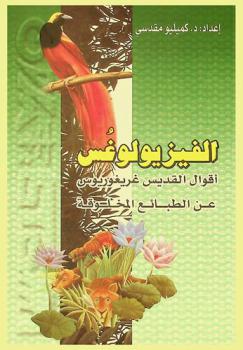
الفيزيولوغس : أقوال القديس غريغوريوس عن الطبائع المخلوقة
خلال النصف الأول من هذه الألفية، أو في الفترة التي سبقت مجيء الإسلام بوقت قصير، شهدت أقاليم الشرق الأوسط نموا مثيرا للدهشة في الأدب المكتوب باللغات المختلفة، ومنها اليونانية، والسريانية (وغيرها من اللهجات الآرامية)، والعبرية، والأرمنية، والجيورجية، والفارسية الوسطى، والقبطية، والحبشية. وكانت أحد الأعمال العائدة إلى تلك الفترة، وتمتعت بشعبية هائلة في القرون الوسطى، مجموعة من الروايات القصيرة، تتعامل على نحو رئيس مع الحيوان، عرفت باسم: الفزيولوغوس... \"أحد أكثر أعمال الأدب العالمي نجاحا\"... وهذا تكريم شاركه فيه عمل آخر ذو شعبية هائلة، وهو مجموعة روايات بلسان الحيوانات، أي: كليلة ودمنة.
Book

Philosophy at the festival: the festal orations of Gregory of Nazianzus and the classical tradition
Gregory's festal orations are foundational for Byzantine literature. This book shows how besides his priestly role, Gregory plays that of a rhetor performing philosophy for a festival audience, channeling traditions of Classical philosophy and the Second Sophistic into Christian culture.
eBook

The Poetry of Gregory of Nazianzus
Gregory of Nazianzus was a personality of first rank in the complex world of the 4th Christian century. Famous for his theological orations and for his role in the development of the Second Ecumenical Council in 381 in Constantinople, where he was the Patriarch of the Orthodox Church, he was one of the most celebrated poets of his time, even though today he is known in particular for his major contributions to the establishment of the Orthodox theology that was confronted with the heresies of the time.This book will allow the reader to discover not the theologian, but the poet in Gregory, as his poetry is the place where one can see the all-too-human aspects of his personality. As such, it represents a significant contribution to scholarship on Gregory, bringing to light new and defining characteristics of his life, thought and practice.
eBook

Philosophy at the Festival
Gregory's festal orations are foundational for Byzantine literature. This book shows how besides his priestly role, Gregory plays that of a rhetor performing philosophy for a festival audience, channeling traditions of Classical philosophy and the Second Sophistic into Christian culture.
eBook

Sons of hellenism, fathers of the church
This groundbreaking study brings into dialogue for the first time the writings of Julian, the last non-Christian Roman Emperor, and his most outspoken critic, Bishop Gregory of Nazianzus, a central figure of Christianity. Susanna Elm compares these two men not to draw out the obvious contrast between the Church and the Emperor's neo-Paganism, but rather to find their common intellectual and social grounding. Her insightful analysis, supplemented by her magisterial command of sources, demonstrates the ways in which both men were part of the same dialectical whole. Elm recasts both Julian and Gregory as men entirely of their times, showing how the Roman Empire in fact provided Christianity with the ideological and social matrix without which its longevity and dynamism would have been inconceivable.
eBook

Re-reading Gregory of Nazianzus: essays on history, theology, and culture
Re-Reading Gregory of Nazianzus offers a collection of cutting-edge research on one of the leading figures in the early church. Long recognized as a chief architect of Eastern Orthodox Christianity and the definitive articulator of the doctrine of the Trinity, Gregory \"the Theologian\" has been strangely neglected in modern patristic research. In recent decades Gregory has become the subject of careful study by scholars in a variety of humanistic disciplines, including theology, church history, classics, art history, and literature, and has attracted the renewed attention of Eastern and Western theologians and church leaders as well. This book, the newest volume in the CUA Studies in Early Christianity, presents original works by leading patristics scholars on a wide range of theological, historical, and cultural topics. It offers illuminating new readings of Gregory's writings, ranging from the systematic theology of Gregory's poetry to the Trinitarian doctrine found in his Festal Orations, and from his artful self-presentation in the mode of classical historiography to his later influence on Byzantine theologians and emperors. The book honors the work of American scholar Frederick W. Norris, who led the way in revitalizing the study of Gregory among English-speaking scholars. Its contributors are Christopher A. Beeley, Paul M. Blowers, Brian E. Daley, S.J., Susanna Elm, Everett Ferguson, Ben Fulford, Verna E. F. Harrison, Vasiliki Limberis, Andrew Louth, Brian J. Matz, John A. McGuckin, Neil McLynn, Claudio Moreschini, Suzanne Abrams Rebillard, Andrea Sterk, and William Tabbernee.
eBook


Becoming Christian
In a richly textured investigation of the transformation of Cappadocia during the fourth century, Becoming Christian: The Conversion of Roman Cappadocia examines the local impact of Christianity on traditional Greek and Roman society. The Cappadocians Basil of Caesarea, Gregory of Nyssa, Gregory of Nazianzus, and Eunomius of Cyzicus were influential participants in intense arguments over doctrinal orthodoxy and heresy. In his discussion of these prominent churchmen Raymond Van Dam explores the new options that theological controversies now made available for enhancing personal prestige and acquiring wider reputations throughout the Greek East.Ancient Christianity was more than theology, liturgical practices, moral strictures, or ascetic lifestyles. The coming of Christianity offered families and communities in Cappadocia and Pontus a history built on biblical and ecclesiastical traditions, a history that justified distinctive lifestyles, legitimated the prominence of bishops and clerics, and replaced older myths. Christianity presented a common language of biblical stories and legends about martyrs that allowed educated bishops to communicate with ordinary believers. It provided convincing autobiographies through which people could make sense of the vicissitudes of their lives.The transformation of Roman Cappadocia was a paradigm of the disruptive consequences that accompanied conversion to Christianity in the ancient world. Through vivid accounts of Cappadocians as preachers, theologians, and historians, Becoming Christian highlights the social and cultural repercussions of the formation of new orthodoxies in theology, history, language, and personal identity.
eBook

Renouncing the world yet leading the church : the monk-bishop in late antiquity
Although an ascetic ideal of leadership had both classical and biblical roots, it found particularly fertile soil in the monastic fervor of the fourth through sixth centuries. Church officials were increasingly recruited from monastic communities, and the monk-bishop became the dominant model of ecclesiastical leadership in the Eastern Roman Empire and Byzantium. In an interesting paradox, Andrea Sterk explains that \"from the world-rejecting monasteries and desert hermitages of the east came many of the most powerful leaders in the church and civil society as a whole.\"
Sterk explores the social, political, intellectual, and theological grounding for this development. Focusing on four foundational figures--Basil of Caesarea, Gregory of Nyssa, Gregory of Nazianzus, and John Chrysostom--she traces the emergence of a new ideal of ecclesiastical leadership: the merging of ascetic and episcopal authority embodied in the monk-bishop. She also studies church histories, legislation, and popular ascetic and hagiographical literature to show how the ideal spread and why it eventually triumphed. The image of a monastic bishop became the convention in the Christian east.
Renouncing the World Yet Leading the Church brings new understanding of asceticism, leadership, and the church in late antiquity.
eBook