
Catalogue Search | MBRL


Are you sure you want to remove the book from the shelf?

{{itemTitle}}
8,018
result(s) for
"Grocery trade."
Sort by:

The grocery store
\"Describes a shopping trip to the grocery store, including various departments such as the bakery and deli. Includes visual literacy activity\"--Provided by publisher.
Book

Porta Palazzo
Porta Palazzo, arguably Western Europe's largest open-air market, is a central economic, social, and cultural hub for Italians and migrants in the city of Turin. Open-air markets like Porta Palazzo have existed for centuries in Europe; although their function has changed over time-traditional markets are no longer the primary place to buy food-they remain popular destinations. In an age of supermarkets and online commerce, markets offer unique social and cultural opportunities and bring together urban and rural worldviews. These factors are often overlooked in traditional economic studies of food distribution, but anthropologist Rachel E. Black contends that social relations are essential for building and maintaining valuable links between production and consumption. From the history of Porta Palazzo to the current growing pains of the market, this book concentrates on points where trade meets cultural identities and cuisine. Its detailed and perceptive portraits of the market bring into relief the lives of the vendors, shoppers, and passersby. Black's ethnography illuminates the daily work of market-going and the anxieties of shoppers as they navigate the market. It examines migration, the link between cuisine and cultural identity, culinary tourism, the connection between the farmers' market and the production of local food, and the urban planning issues negotiated by the city of Turin and market users during a recent renovation. This vibrant study, featuring a foreword by Slow Food Movement founder Carlo Petrini, makes a strong case for why markets like Porta Palazzo are critical for fostering culinary culture and social life in cities.
eBook


Building a Housewife's Paradise
Supermarkets are a mundane feature in the landscape, but as Tracey Deutsch reveals, they represent a major transformation in the ways that Americans feed themselves. In her examination of the history of food distribution in the United States, Deutsch demonstrates the important roles that gender, business, class, and the state played in the evolution of American grocery stores.Deutsch's analysis reframes shopping as labor and embeds consumption in the structures of capitalism. The supermarket, that icon of postwar American life, emerged not from straightforward consumer demand for low prices, Deutsch argues, but through government regulations, women customers' demands, and retailers' concerns with financial success and control of the \"shop floor.\" From small neighborhood stores to huge corporate chains of supermarkets, Deutsch traces the charged story of the origins of contemporary food distribution, treating topics as varied as everyday food purchases, the sales tax, postwar celebrations and critiques of mass consumption, and 1960s and 1970s urban insurrections. Demonstrating connections between women's work and the history of capitalism, Deutsch locates the origins of supermarkets in the politics of twentieth-century consumption.
eBook

Bodega cat
Told from the perspective of a spunky bodega-dwelling cat named Chip, this picture book story describes the ins and outs of a bustling neighborhood market filled with interesting friends, great food, hard work, and lots of fun.
Book

Grocery : the buying and selling of food in America
The New York Times -bestselling author \"digs deep into the world of how we shop and how we eat.It's a marvelous, smart, revealing work\" (Susan Orlean, #1 bestselling author).In a culture obsessed with food--how it looks, what it tastes like, where it comes from, what is good for us--there are often more questions than answers.
eBook
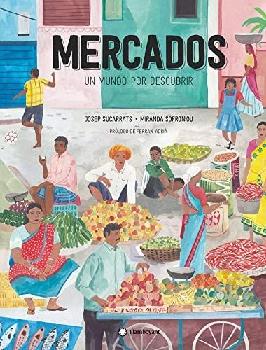
Mercados : un mundo por descubrir
\"¿Qué son y qué han significado los mercados a lo largo del tiempo? ¿Qué pueden ofrecernos? ¿Cómo funcionan? Os invitamos a dar un paseo lleno de colores, aromas y sabores para conocer y disfrutar de los mercados más originales y bonitos del mundo. ¡Buen viaje!\"--Back cover.

