
Catalogue Search | MBRL


Are you sure you want to remove the book from the shelf?

{{itemTitle}}
289
result(s) for
"Grotesque"
Sort by:

The grotesque in Western art and culture : the image at play
\"This book establishes a fresh and expansive view of the grotesque in Western art and culture, from 1500 to the present day. Following the non-linear evolution of the grotesque, Frances S. Connelly analyzes key works, situating them within their immediate social and cultural contexts, as well as their place in the historical tradition. By taking a long historical view, the book reveals the grotesque to be a complex and continuous tradition comprised of several distinct strands: the ornamental, the carnivalesque and caricatural, the traumatic, and the profound. The book articulates a model for understanding the grotesque as a rupture of cultural boundaries that compromises and contradicts accepted realities. Connelly demonstrates that the grotesque is more than a style, genre, or subject; it is a cultural phenomenon engaging the central concerns of the humanistic debate today. Hybrid, ambivalent, and changeful, the grotesque is a shaping force in the modern era\"-- Provided by publisher.
Book
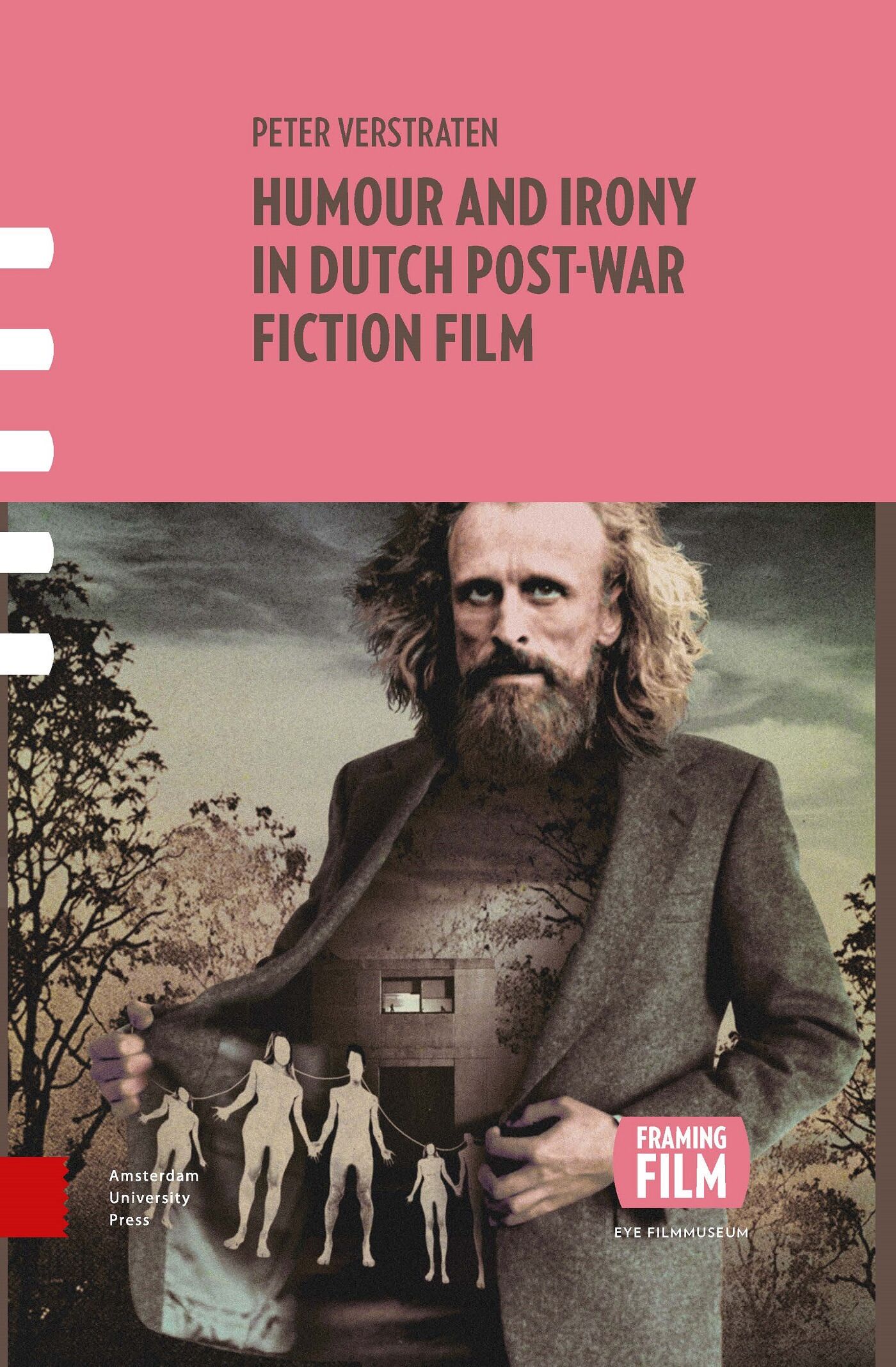
Humour and Irony in Dutch Post-war Fiction Film
Dutch cinema is typically treated only in terms of prewar films or documentaries, leaving postwar fictional film largely understudied. At the same time, a Hollandse School, first named in the 1980s, has developed through deadpan, ironic films like those of director and actor Alex van Warmerdam. Using seminal theories on humor and comedy, this book explores a number of Dutch films using the notion of categories, such as low-class comedies, neurotic romances, deliberate camp, and grotesque satire. With its original approach, this study makes surprising connections between Dutch films from various decades.
eBook


Humour and Irony in Dutch Post-war Fiction Film
If Dutch cinema is examined in academic studies, the focus is usually on pre-war films or on documentaries, but the post-war fiction film has been sporadically addressed. Many popular box-office successes have been steeped in jokes on parochial conflicts, vulgar behavior and/or on sexual display, towards which Dutch people have often felt ambivalent. At the same time, something like a 'Hollandse school', a term first coined in the 1980s, has manifested itself more firmly, with the work of Alex van Warmerdam, pervaded in deadpan irony as its biggest eye-catcher. Using seminal theories of humor and irony as an angle, this study scrutinizes a great number of Dutch films on the basis of categories such as low-class comedies; neurotic romances; deliberate camp; cosmic irony, or grotesque satire. Hence, Humour and Irony in Dutch Post-war Fiction Film makes surprising connections between films from various decades: Flodder and New Kids Turbo; Spetters and Simon; Rent a Friend and Ober;
eBook

Experimental fashion : performance art, carnival and the grotesque body
Experimental Fashion traces the proliferation of the grotesque and carnivalesque within contemporary fashion and the close relation between fashion and performance art, from Lady Gaga's raw meat dress to Leigh Bowery's performance style. The book examines the designers and performance artists at the turn of the twenty-first century whose work challenges established codes of what represents the fashionable body. These innovative people, the book argues, make their challenges through dynamic strategies of parody, humour and inversion. It explores the experimental work of modern designers such as Georgina Godley, Bernhard Willhelm, Rei Kawakubo and fashion designer, performance artist, and club figure Leigh Bowery. It also discusses the increased centrality of experimental fashion through the pop phenomenon, Lady Gaga.
Book

Everyday life, dreaming, play, and realism (On the poetics of Martin Kukučín’s novella “Neprebudený The unawakened”)
The article takes a poetological approach to the thematising of everyday life and its connections with the poetics of the “effect of the real.” Methodologically, it is part of the research concept of the new poetics. On the material of a canonical text of Slovak literary realism – the novella “Neprebudený” ([The unawakened] 1886) by Martin Kukučín (1860 – 1928) –, it identifies poetological characteristics of the novella, reveals its existential parameters, and points to the place of M. Kukučín in the ironic-polemical line of modern Slovak prose. This innovative approach allows for identification in the structure of the text the tradition of the poetics of grotesque realism as conceptualised by M. M. Bakhtin on the folk culture of the Middle Ages and the literature of the European Renaissance. The identification of elements of the poetics of the grotesque in the text of the novella is based on the emphasis of this poetics on the shape/surface of the phenomena of the life world, especially the human body. Therefore, the starting point of the interpretation of the novella as outlined here is description as the basic stylistic procedure of realistic texts – the description of the character in this case. The description and subsequent interpretation of the image of the grotesque body makes it possible to identify the presence of the poetics of discrete irony as a key strategy of authorial narration in the text of the novella.
Journal Article

Image of the Abject and Grotesque Woman in Tante Rosa by Sevgi Soysal and Sexing the Cherry by Jeanette Winterson / Sevgi Soysal’ın Tante Rosa ve Jeanette Winterson’ın Vişnenin Cinsiyeti Eserlerinde İğrenç ve Grotesk Kadın İmgesi
The female image is presented in an exaggerated and humorous manner in both social and corporeal contexts in Sevgi Soysal’s Tante Rosa (1968) and Jeanette Winterson’s Sexing the Cherry (1989). This article analyses how Kristeva’s concept of “abject” and Bakhtin’s concept of “grotesque” are employed to define this bodily image in both works. The main characters of the novels, Rosa and the Dog-Woman respectively, portray the communities they reside and/or depart as carnivalesque and position themselves in grotesque depictions. These portrayals, grounded in the notion of “abject,” illustrate how the discordant and monstrous woman manages to form her identity. While exploring the self-formation of female identity, both works engage in the representation of fairy tales in line with realistic depictions and adopt a grotesque narrative style. The monstrous feminine, encompassing both societal and physical dimensions, alongside the modes of rebellion through which these female characters navigate their own identities, serves as a lens for the examination and critique of gender and sexuality in these works. Thus, employing a comparative literature approach, this study delves into how the hyperbolic, yet non-caricaturized and non-dramatized depictions of women’s bodies and lives contribute to the formation of the female identity in accordance with her own volition within the works of Soysal and Winterson.
Journal Article

Drawing beastly beings
Step-by-step instructions for drawing several kinds of fantasy creatures such as rat warriors.
Book

The Monster in the Garden
Monsters, grotesque creatures, and giants were frequently depicted in Italian Renaissance landscape design, yet they have rarely been studied. Their ubiquity indicates that gardens of the period conveyed darker, more disturbing themes than has been acknowledged.In The Monster in the Garden, Luke Morgan argues that the monster is a key figure in Renaissance culture. Monsters were ciphers for contemporary anxieties about normative social life and identity. Drawing on sixteenth-century medical, legal, and scientific texts, as well as recent scholarship on monstrosity, abnormality, and difference in early modern Europe, he considers the garden within a broader framework of inquiry. Developing a new conceptual model of Renaissance landscape design, Morgan argues that the presence of monsters was not incidental but an essential feature of the experience of gardens.
eBook