
Catalogue Search | MBRL


Are you sure you want to remove the book from the shelf?

{{itemTitle}}
40
result(s) for
"Grotesque Fiction."
Sort by:

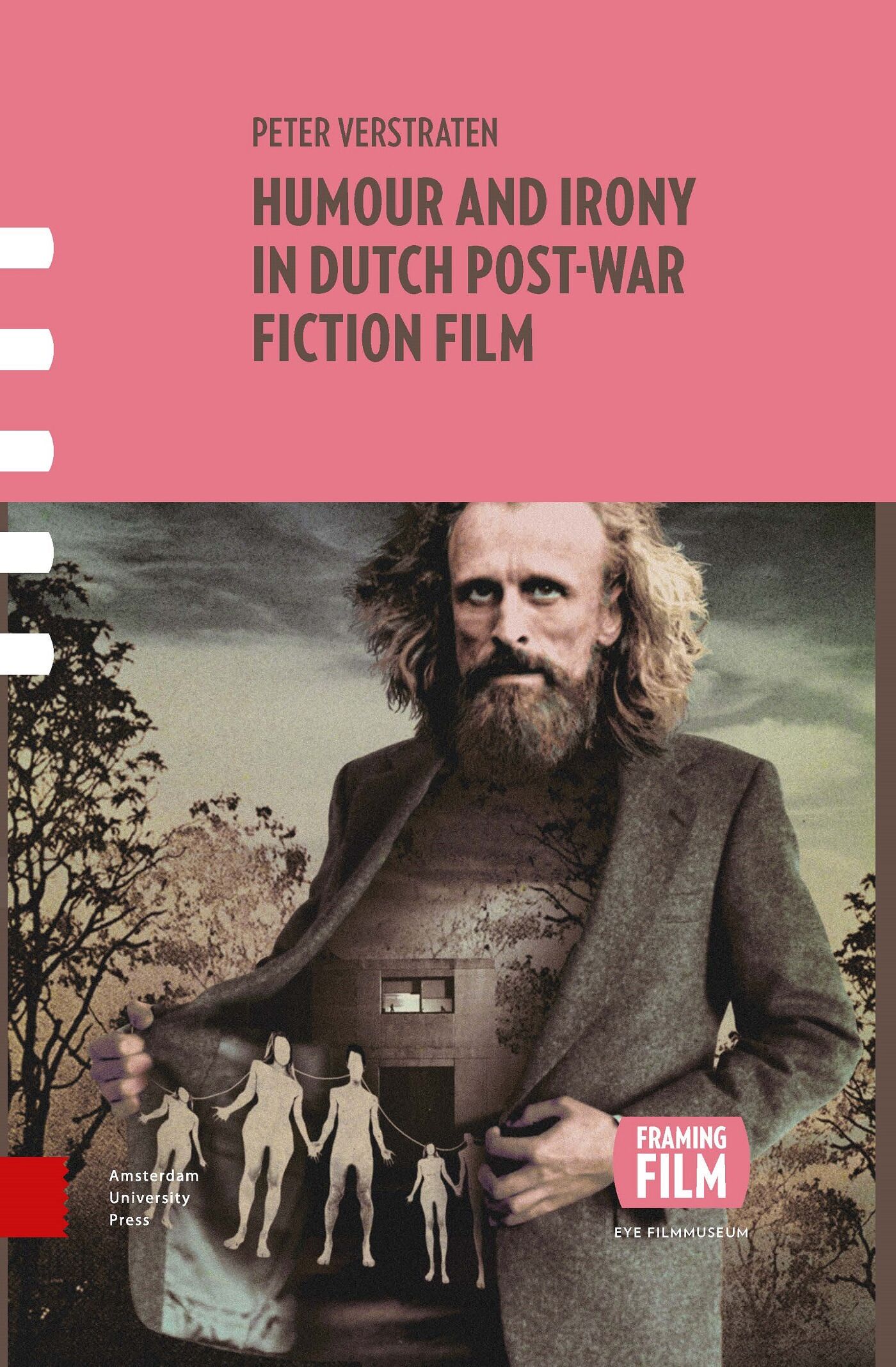
Humour and Irony in Dutch Post-war Fiction Film
Dutch cinema is typically treated only in terms of prewar films or documentaries, leaving postwar fictional film largely understudied. At the same time, a Hollandse School, first named in the 1980s, has developed through deadpan, ironic films like those of director and actor Alex van Warmerdam. Using seminal theories on humor and comedy, this book explores a number of Dutch films using the notion of categories, such as low-class comedies, neurotic romances, deliberate camp, and grotesque satire. With its original approach, this study makes surprising connections between Dutch films from various decades.
eBook

Beautiful mutants and Swallowing geography : two early novels
From the Man Booker Prize-shortlisted author of Swimming Home, a single volume comprising her first two novels: Beautiful Mutants, long out of print, and Swallowing Geography, never before published in the United States.
Book

Humour and Irony in Dutch Post-war Fiction Film
If Dutch cinema is examined in academic studies, the focus is usually on pre-war films or on documentaries, but the post-war fiction film has been sporadically addressed. Many popular box-office successes have been steeped in jokes on parochial conflicts, vulgar behavior and/or on sexual display, towards which Dutch people have often felt ambivalent. At the same time, something like a 'Hollandse school', a term first coined in the 1980s, has manifested itself more firmly, with the work of Alex van Warmerdam, pervaded in deadpan irony as its biggest eye-catcher. Using seminal theories of humor and irony as an angle, this study scrutinizes a great number of Dutch films on the basis of categories such as low-class comedies; neurotic romances; deliberate camp; cosmic irony, or grotesque satire. Hence, Humour and Irony in Dutch Post-war Fiction Film makes surprising connections between films from various decades: Flodder and New Kids Turbo; Spetters and Simon; Rent a Friend and Ober;
eBook

Walking shadows : reflections on the American fantastic and the American grotesque from Washington Irving to the postmodern era
\"Walking Shadows focuses on the American fantastic and the American grotesque, attempting in this manner for the first time to establish an overview of and a theoretical approach to two literary modes that have often been regarded as essential to an understanding of the American cultural canon. The central importance of these two literary forms has been pointed out earlier by important theorists such as Stanley Cavell, David Reynolds, and William Van O'Connor. A number of literary works, from the beginning of the nineteenth to the end of the twentieth centuries, are taken up in order to illustrate the inherent links or family resemblances between the two modes, with special reference to the way in which a Bakhtinian reading may facilitate our appreciation of their status within the canon. These excursions into the House of Fantastic and Grotesque Fiction may be of interest not only to hardcore aficionados, but also to philosophically minded readers in general, in particular perhaps to those who have paid acute attention to debates on late twentieth and early twenty-first century post-structuralism and deconstruction (where the classic positions of Foucault, Derrida, et al. still appear to be relevant).\"--Page 4 of cover.
Book

Joseph Sheridan Le Fanu: Gothic Grotesque and the Huguenot Inheritance
This chapter contains sections titled:
Comic Grotesque in Le Fanu's Irish Poetry and Fiction
The Metaphysical Grotesque: In a Glass Darkly
Feminist Grotesque
References and Further Reading
Book Chapter

Russian grotesque realism : the great reforms and the gentry decline
\"A rereading of the Russian realist novel that proposes a hybrid genre, grotesque realism, to describe changes during the postreform era\"-- Provided by publisher.
Book

Performing the Self: A Bakhtinian Carnivalistic Reading of Amita Parikh's The Circus Train
This study employs Mikhail Bakhtin's theory on \"Carnival\", to interpret Amita Parikh's novel The Circus Train (2022) as part of the broader framework of historical fiction that examines themes related to identity, belonging and psychological resilience against the backdrop of World War II. It addresses a gap in previous research by being the first to utilize a carnivalistic approach to the analysis of The Circus Train, demonstrating how Bakhtin's theory on Carnival is applicable to identity-construction processes and self-discovery within the context of chaotic, liminal spaces beyond the medieval celebrations Bakhtin made reference to. The methodology used in this study consists of a qualitative approach to literature, combining Bakhtin's carnival model with a close textual analysis in order to understand the relationship between the grotesque realism within literature and social hierarchies and the transformation of individuals. This study indicated three findings: 1. The novel critiques established power relationships of the time, allowing for the marginalized characters to re-negotiate their identities and reclaim their agency; 2. The use of grotesque imagery enhances our understanding of the themes surrounding adaptation and survival and gives us insight into how humans made sense of the world in a time of crisis; 3. The \"Carnival\" becomes a transformative strategy of individuals fostering resilience, liberation and self-definition in the face of destruction. By integrating Bakhtinian theory with contemporary literary discourse, this study offers a deeper understanding of how narrative spaces nurture emotional development and identity formation in historically disrupted contexts. It further recommends extending carnivalistic frameworks to the analysis of literature concerned with war, displacement, and belonging, as such approaches uncover hidden dimensions of human agency, trauma, and renewal, positioning The Circus Train as a pivotal contribution to modern studies of identity and transformation.
Journal Article

Grotesque Spaces and Transformative Nature in Patrick McGrath’s The Grotesque
In Patrick McGrath’s novels, the gothic elements of transgression and decay create an essential framework for his characters who experience physical, mental, and moral breakdowns. In The Grotesque (1989), McGrath’s characters are also subject to grotesque forces, through which the boundaries between animal, human, and biological are transgressed. The narrative is grotesque as well. The genres that McGrath invokes and blends to create a grotesque narrative include the gothic, the grotesque, and a scientific narrative that highlights Charles Darwin’s ideas about evolution and natural selection. McGrath’s inclusion and fusion of these different narrative strands destabilize the social and class hierarchies that have empowered the protagonist and narrator, Sir Hugo Coal. The grotesque narrative also transforms the established social structures into systems that can adapt to changing conditions.
Journal Article

Russian Grotesque Realism
Russian Grotesque Realism: The Great Reforms and the Gentry
Decline offers a comprehensive reevaluation of the Russian
realist novel and proposes that a composite style, \"grotesque
realism,\" developed in response to social upheaval during the
post-Reform era. In this compelling new study, Ani Kokobobo argues
that if the realism of pre-Reform Russia could not depict
socioeconomic change directly, the grotesque provided an indirect
means for Russian writers to capture the instability of the times
and the decline of the gentry. While realism historically
represented the psychological depth of characters, the grotesque
focused more on the body, materialism, and categorical confusions
in order to depict characters whose humanity had eroded. With
original readings of some of Russian realism's greatest novels,
Anna Karenina , Demons , and Brothers
Karamazov , as well as lesser known novels like The Family
Golovlev, The Precipice, Resurrection, and Cathedral
Folk , Russian Grotesque Realism traces the
transformation of gentry representation from spiritual strivers and
thinkers to more materialist beings. By the end of the nineteenth
century, the gentry, originally seen as society's preservers, were
represented as grotesque, reflecting a broader societal breakdown
that would eventually precipitate the end of the novel genre
itself.
eBook