
Catalogue Search | MBRL


Are you sure you want to remove the book from the shelf?

{{itemTitle}}
2,419
result(s) for
"Group facilitation."
Sort by:

Prompting Deeper Discussions
Learn how to craft better prompts and lead deeper class discussions. Class discussions are the cornerstone of successful instruction and learning a way to explore complex subject matter and help students develop critical-thinking, listening, and speaking skills. Too often, the questions teachers ask are met not with deep engagement and discovery but blank stares and silence. In order to reap the benefits of student discussion, teachers must know how to plan and facilitate great class conversations and avoid common pitfalls. Prompting Deeper Discussions offers a winning formula: a great prompt, delivered by an agile teacher, at the best time, to a group of students that has been properly prepared to discuss it. Teachers across grades and content areas will learn how to • Set goals for class discussions that are both ambitious and realistic. • Thoughtfully prepare to lead these discussions. • Craft and refine discussion prompts. • Keep well-prompted discussions from falling flat. Classroom teacher Matthew R. Kay also shares exercises that give both new and veteran teachers a chance to practice writing prompts without the pressure of a looming class. Ultimately, this book will help teachers strengthen in-class discussions so that students will have a greater depth of knowledge and develop essential skills they'll need to thrive.
eBook

Groups at Work
Lead skillful groups and effective learning communities using 78 field-tested strategies for structuring time-efficient, task-focused meetings. Reduce preparation time and maximize the learning potential for all by using the authors' six functions for productive groups: activating; assessing, goal setting and planning; dialogue and discussion; generating ideas; summarizing and synthesizing; and text and information processing. Discover facilitation tips, rich examples, and extension ideas. This book will help K–12 group leaders: * Receive clear directions for strategy application, including necessary materials, time frames, and group sizes * Experiment with strategies and design elements in low-risk situations to refine their practice * Reduce preparation time by accessing ready-made recording sheet masters and PowerPoint slides * Discover tips for facilitation and collaboration, examples for use, and ideas for extensions Contents: About This Book Strategies for Activating Strategies for Assessing, Goal Setting and Planning Strategies for Dialogue and Discussion Strategies for Generating Ideas Strategies for Summarizing and Synthesizing Strategies for Text and Information Processing Additional Resources References Resources
eBook
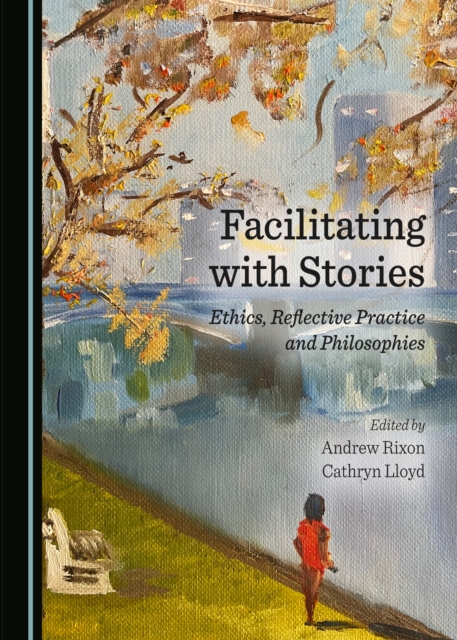
Facilitating with Stories
This book provides a rich connection between theory and practice for those seeking to work with stories in organisational, community, educative or coaching settings. With an international cast of contributors, it charters a unique inquiry into both ethics and the facilitation philosophies for working with stories supporting educators, facilitators, trainers and consultants towards more effective and considered practice. This book will be a valuable resource for professionals and reflective practitioners seeking to explore: What informs an ethics of facilitating with stories? How can we create safe spaces for story work? In what ways do we need to be attuned to power when working with stories in organisations and corporations? What are the unintended and ethical consequences of facilitating with stories?.
eBook

The Effective Facilitator's Handbook
Workshops, committees, teams, and study groups are a regular part of an educator's professional life, and any educator can find themselves in the facilitator role, with a responsibility to aid the group in achieving its goals. \"The Effective Facilitator's Handbook\" is here to help. Professional development expert Cathy A. Toll has written a guide for busy facilitators, starting with four simple rules for successful facilitation: listen, start with the end in mind, lead with productive tools, and stay organized. The processes, tools, and templates in each chapter are easy to apply and offer advice about how to create a welcoming environment, set the right tone, understand the group's dynamics, improve communication, and more. This book walks you through the unique purposes, pitfalls, and needs of specific types of groups, whether it's a professional development workshop, a committee focused on one decision or problem, a team that regularly collaborates for student success, or a study group learning about a specific issue. But Toll also considers the bigger picture and connects the patterns behind different types of facilitation skills that will serve you in a variety of situations and settings. As an effective facilitator, you'll be able to increase the value of group time, foster engagement, and help teachers improve their practice so that they can bring their best to the classroom each day.
eBook

Mastering Facilitation
With business and organisations moving at an ever-faster pace and facing evermore demanding challenges, the need for efficient, succinct and productive interaction between individuals of those businesses and organisations is more important than ever. With the bounds of communication restrictions abandoned through technological advances (we can now see and hear anyone across any manner of virtual platforms anywhere around the globe) and with a greater understanding of the underlying dynamics of human interaction, unprecedented pressure has been thrust upon the individual or individuals who, often, enable these dynamic interactions: the facilitator.
Many of us have, at one time or other, been responsible for a meeting – whether between a small number of individuals or an entire organisation of hundreds, or possibly thousands, of businessmen and women.
Or, perhaps, we’ve had to be the mediator in a family dispute closer to home or managed a discussion between two feuding friends or colleagues. One way or another, chances are, all of us has have been a facilitator at some point in our lives.
With the ever-growing demands placed on facilitators, this book delivers a methodical and structured approach to facilitation. This book is the definitive guide to instruct and assist facilitators – both new and experienced – with a set of guidelines and underlying theory that will benefit any facilitator, whether as a mediator between two individuals, single-handedly facilitating a group of 100 or working as part of a facilitation team in a multinational corporation.
The first part of the book develops the core basic skills of those new to the art of facilitating. There are many examples and exercises to show the reader how to apply them in different situations. The second part of the book is for more experienced facilitators as it focuses on more advanced skills and tackling difficult situations. Specific tools and techniques are illustrated for the reader. Essentially, this book is aimed at developing and mastering the art of facilitation. Facilitation is the art of getting the best out of groups of people to brainstorm, solve problems and gain consensus. Based on 30 years’ experience of the author and running multiple facilitation training courses across the globe, this book is aimed at upskilling people, managers and leaders to drive change and consensus with groups through running workshops and meetings.
eBook

Mastering Facilitation
With business and organizations moving at an ever -faster pace and facing evermore more and more demanding challenges, the need for efficient, succinct and productive interaction between individuals of those businesses and organizations is more important than ever. With the bounds of communication restrictions abandoned through technological advances (we can now see and hear anyone across any manner of virtual platforms anywhere around the globe) and with a greater understanding of the underlying dynamics of human interaction, unprecedented pressure has been thrust upon the individual or individuals whom, often, enable these dynamic interactions: the facilitator. Many of us have, at one time or other, been responsible for a meeting - whether between a small number of individuals or an entire organization of hundreds, or possibly thousands, of business men and women. Or, perhaps, we've had to be the mediator in a family dispute closer to home, or managed a discussion between two, feuding friends or colleagues. One way or another, chances are, all of us has have been a facilitator at some point in our lives. With the ever-growing demands placed on facilitators, this book delivers methodical, structured approach to facilitation. This book is the definitive guide to instruct and assist facilitators - both new and experienced - with a set of guidelines and underlying theory that will benefit any facilitator, whether as a mediator between two individuals, single-handedly facilitating a group of one hundred, or working as part of a facilitation team in a multinational corporation. The first part of the book, develops the core basic skills of those new to the art of facilitating. There are many examples and exercises to show the reader how to apply them in different situations. The second part of the book is for more experienced facilitators as it focuses on more advanced skills and tackling difficult situations. Specific tools and techniques are illustrated for the reader. Essentially, this book is aimed at developing and mastering the art of facilitation. Facilitation is the art of getting the best out of groups of people to brainstorm solve problems and gain consensus. Based on 30 years' experience of the author and running, multiple facilitation training courses across the globe, it is aimed at upskilling people, managers and leaders to drive change and consensus with groups through running workshops and meetings.
eBook
The discussion book : 50 great ways to get people talking
Build teams, make better decisions, energize groups, and think out of the box Do you need a resource that you can pull out of your pocket to liven up meetings, trainings, professional development, and teaching? The fifty easily applied techniques in this timely manual spur creativity, stimulate energy, keep groups focused, and increase participation. Whether you're teaching classes, facilitating employee training, leading organizational or community meetings, furthering staff and professional development, guiding town halls, or working with congregations, The Discussion Book is your go-to guide for improving any group process. Each of the concrete techniques and exercises is clearly described with guidance on selection and implementation, as well as advice on which pitfalls to avoid. All of the techniques: * Offer new ways to engage people and energize groups * Get employees, students, colleagues, constituents, and community members to participate more fully in deliberative decision-making * Encourage creativity and openness to new perspectives * Increase collaboration and build cohesive teams * Keep groups focused on important topics and hard-to-address issues Derived from the authors' decades of experience using these exercises with schools, colleges, corporations, the military, social movements, health care organizations, prisons, unions, non-profits, and elsewhere, The Discussion Book will help you guide discussions that matter.
eBook

Six steps in quality intervention development (6SQuID)
Improving the effectiveness of public health interventions relies as much on the attention paid to their design and feasibility as to their evaluation. Yet, compared to the vast literature on how to evaluate interventions, there is little to guide researchers or practitioners on how best to develop such interventions in practical, logical, evidence based ways to maximise likely effectiveness. Existing models for the development of public health interventions tend to have a strong social-psychological, individual behaviour change orientation and some take years to implement. This paper presents a pragmatic guide to six essential Steps for Quality Intervention Development (6SQuID). The focus is on public health interventions but the model should have wider applicability. Once a problem has been identified as needing intervention, the process of designing an intervention can be broken down into six crucial steps: (1) defining and understanding the problem and its causes; (2) identifying which causal or contextual factors are modifiable: which have the greatest scope for change and who would benefit most; (3) deciding on the mechanisms of change; (4) clarifying how these will be delivered; (5) testing and adapting the intervention; and (6) collecting sufficient evidence of effectiveness to proceed to a rigorous evaluation. If each of these steps is carefully addressed, better use will be made of scarce public resources by avoiding the costly evaluation, or implementation, of unpromising interventions.
Journal Article