
Catalogue Search | MBRL


Are you sure you want to remove the book from the shelf?

{{itemTitle}}
10
result(s) for
"Group identity Southern States History 19th century."
Sort by:


Confederate Minds
During the Civil War, Confederates fought for much more than their political independence. They also fought to prove the distinctiveness of the Southern people and to legitimate their desire for a separate national existence through the creation of a uniquely Southern literature and culture. In this important new book, Michael Bernath follows the activities of a group of Southern writers, thinkers, editors, publishers, educators, and ministers--whom he labels Confederate cultural nationalists--in order to trace the rise and fall of a cultural movement dedicated to liberating the South from its longtime dependence on Northern books, periodicals, and teachers.This struggle for Confederate \"intellectual independence\" was seen as a vital part of the larger war effort. For the Southern nationalists, independence won on the battlefield would be meaningless as long as Southerners remained in a state of cultural \"vassalage\" to their enemy. As new Confederate publications appeared at a surprising rate and Southerners took steps toward establishing their own system of education, cultural nationalists believed they saw the Confederacy coalescing into a true nation. Ultimately, however, Confederates proved no more able to win their intellectual independence than their political freedom.By analyzing the motives driving the struggle for Confederate intellectual independence, by charting its wartime accomplishments, and by assessing its failures, Bernath makes provocative arguments about the nature of Confederate nationalism, life within the Confederacy, and the perception of Southern cultural distinctiveness.
eBook

Making Space on the Western Frontier
When Mormon ranchers and Anglo-American miners moved into centuries-old Southern Paiute space during the last half of the nineteenth century, a clash of cultures quickly ensued. W. Paul Reeve explores the dynamic nature of that clash as each group attempted to create sacred space on the southern rim of the Great Basin according to three very different worldviews._x000B_With a promising discovery of silver at stake, the U.S. Congress intervened in an effort to shore up Nevadas mining frontier while simultaneously addressing both the Mormon Question? and the Indian Problem.? Even though federal officials redrew the Utah/Nevada/Arizona borders and created a reservation for the Southern Paiutes, the three groups continued to fashion their own space, independent of the new boundaries that attempted to keep them apart. _x000B_When the dust on the southern rim of the Great Basin finally settled, a hierarchy of power emerged that disentangled the three groups according to prevailing standards of Americanism. As Reeve sees it, the frontier proved a bewildering mixing ground of peoples, places, and values that forced Mormons, miners, and Southern Paiutes to sort out their own identity and find new meaning in the mess.
eBook

Memories of War
Even in the midst of the Civil War, its battlefields were being dedicated as hallowed ground. Today, those sites are among the most visited places in the United States. In contrast, the battlegrounds of the Revolutionary War had seemingly been forgotten in the aftermath of the conflict in which the nation forged its independence. Decades after the signing of the Constitution, the battlefields of Yorktown, Saratoga, Fort Moultrie, Ticonderoga, Guilford Courthouse, Kings Mountain, and Cowpens, among others, were unmarked except for crumbling forts and overgrown ramparts. Not until the late 1820s did Americans begin to recognize the importance of these places.
InMemories of War, Thomas A. Chambers recounts America's rediscovery of its early national history through the rise of battlefield tourism in the first half of the nineteenth century. Travelers in this period, Chambers finds, wanted more than recitations of regimental movements when they visited battlefields; they desired experiences that evoked strong emotions and leant meaning to the bleached bones and decaying fortifications of a past age. Chambers traces this impulse through efforts to commemorate Braddock's Field and Ticonderoga, the cultivated landscapes masking the violent past of the Hudson River valley, the overgrown ramparts of Southern war sites, and the scenic vistas at War of 1812 battlefields along the Niagara River. Describing a progression from neglect to the Romantic embrace of the landscape and then to ritualized remembrance, Chambers brings his narrative up to the beginning of the Civil War, during and after which the memorialization of such sites became routine, assuming significant political and cultural power in the American imagination.
eBook

Confederate daughters : coming of age during the Civil War
Confederate Daughters: Coming of Age during the Civil War explores gender, age, and Confederate identity by examining the lives of teenage daughters of Southern slaveholding, secessionist families. These young women clung tenaciously to the gender ideals that upheld marriage and motherhood as the fulfillment of female duty and to the racial order of the slaveholding South, an institution that defined their status and afforded them material privileges. Author Victoria E. Ott discusses how the loyalty of young Southern women to the fledgling nation, born out of a conservative movement to preserve the status quo, brought them into new areas of work, new types of civic activism, and new rituals of courtship during the Civil War. Social norms for daughters of the elite, their preparation for their roles as Southern women, and their material and emotional connections to the slaveholding class changed drastically during the Civil War. When differences between the North and South proved irreconcilable, Southern daughters demonstrated extraordinary agency in seeking to protect their futures as wives, mothers, and slaveholders. From a position of young womanhood and privilege, they threw their support behind the movement to create a Confederate identity, which was in turn shaped by their participation in the secession movement and the war effort. Their political engagement is evident from their knowledge of military battles, and was expressed through their clothing, social activities, relationships with peers, and interactions with Union soldiers. Confederate Daughters also reveals how these young women, in an effort to sustain their families throughout the war, adjusted to new domestic duties, confronting the loss of slaves and other financial hardships by seeking paid work outside their homes. Drawing on their personal and published recollections of the war, slavery, and the Old South, Ott argues that young women created a unique female identity different from that of older Southern women, the Confederate bellehood. This transformative female identity was an important aspect of the Lost Cause mythology—the version of the conflict that focused on Southern nationalism—and bridged the cultural gap between the antebellum and postbellum periods. Augmented by eighteen illustrations, this book offers a generational understanding of the transitional nature of wartime and its effects on women’s self-perceptions. Confederate Daughters identifies the experiences of these teenage daughters as making a significant contribution to the new woman in the New South.       
eBook
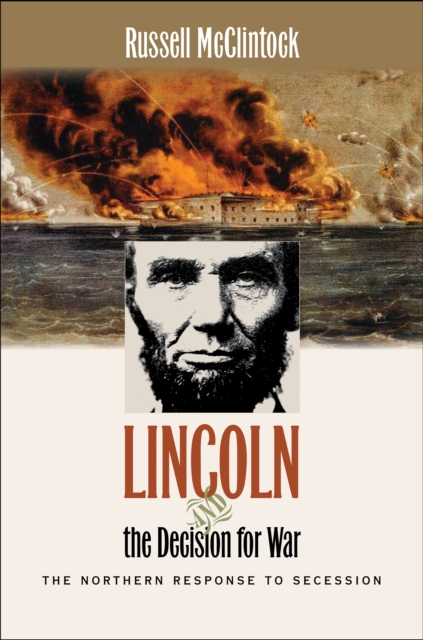
Lincoln and the Decision for War
When Abraham Lincoln's election in 1860 prompted several Southern states to secede, the North was sharply divided over how to respond. In this groundbreaking and highly praised book, McClintock follows the decision-making process from bitter partisan rancor to consensus. From small towns to big cities and from state capitals to Washington, D.C., McClintock highlights individuals both powerful and obscure to demonstrate the ways ordinary citizens, party activists, state officials, and national leaders interacted to influence the Northern response to what was essentially a political crisis. He argues that although Northerners' reactions to Southern secession were understood and expressed through partisan newspapers and officials, the decision fell into the hands of an ever-smaller group of people until finally it was Lincoln alone who would choose whether the future of the American republic was to be determined through peace or by sword.
eBook
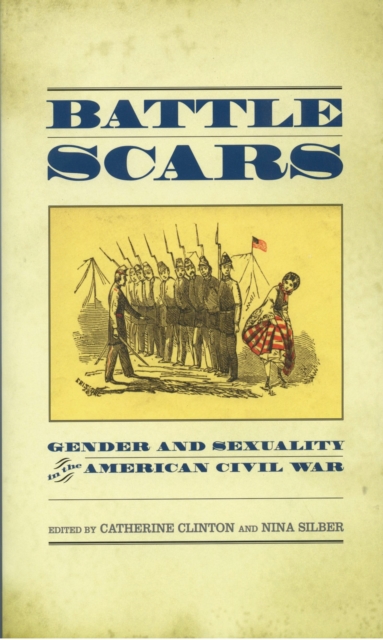
Battle scars : gender and sexuality in the American Civil War
Over a decade ago, the publication of Divided Houses ushered in a new field of scholarship on gender and the Civil War. Following in its wake, Battle Scars showcases insights from award-winning historians as well as emerging scholars. This volume depicts the ways in which gender, race, nationalism, religion, literary culture, sexual mores, and even epidemiology underwent radical transformations from when Americans went to war in 1861 through Reconstruction. Examining the interplay among such phenomena as racial stereotypes, sexual violence, trauma, and notions of masculinity, Battle Scars represents the best new scholarship on men and women in the North and South and highlights how lives were transformed by this era of tumultuous change.
eBook
A Different Shade of Colonialism
This incisive study adds a new dimension to discussions of Egypt's nationalist response to the phenomenon of colonialism as well as to discussions of colonialism and nationalism in general. Eve M. Troutt Powell challenges many accepted tenets of the binary relationship between European empires and non-European colonies by examining the triangle of colonialism marked by Great Britain, Egypt, and the Sudan. She demonstrates how central the issue of the Sudan was to Egyptian nationalism and highlights the deep ambivalence in Egyptian attitudes toward empire and the resulting ambiguities and paradoxes that were an essential component of the nationalist movement.A Different Shade of Colonialismenriches our understanding of nineteenth- and twentieth-century Egyptian attitudes toward slavery and race and expands our perspective of the \"colonized colonizer.\"
eBook

Blood & irony : Southern white women's narratives of the Civil War, 1861-1937
Blood and Irony: Southern White Women's Narratives of the Civil War, 1861-1937.
eBook

Travel, Ritual, and National Identity: Planters on the European Tour, 1820-1860
Kilbride comments on how travel in Europe simultaneously allowed planters to situate themselves in the English genteel tradition of the Grand Tour, engaged them in a secular pilgrimage to quasi-sacred sites of Western culture, and empowered them selectively to differentiate themselves from this tradition in ways that affirmed their own nation's superiority. Both a highly meaningful event and a conventionalized practice, travel had the potential to reshape individual and group identity, since European tourism, as a quintessentially ruled-governed and culturally sanctioned activity, encouraged planting women and men to reflect upon their social and individual identities.
Journal Article