
Catalogue Search | MBRL


Are you sure you want to remove the book from the shelf?

{{itemTitle}}
1,138
result(s) for
"Group identity Study and teaching."
Sort by:


The role of mentoring, supervision, coaching, teaching and instruction on professional identity formation: a systematic scoping review
Background
Mentoring’s pivotal role in nurturing professional identity formation (PIF) owes much to its combined use with supervision, coaching, tutoring, instruction, and teaching. However the effects of this combination called the ‘mentoring umbrella’ remains poorly understood. This systematic scoping review thus aims to map current understanding.
Methods
A Systematic Evidence-Based Approach guided systematic scoping review seeks to map current understanding of the ‘mentoring umbrella’ and its effects on PIF on medical students and physicians in training. It is hoped that insights provided will guide structuring, support and oversight of the ‘mentoring umbrella’ in nurturing PIF. Articles published between 2000 and 2021 in PubMed, Scopus, ERIC and the Cochrane databases were scrutinised. The included articles were concurrently summarised and tabulated and concurrently analysed using content and thematic analysis and tabulated. The themes and categories identified were compared with the summaries of the included articles to create accountable and reproducible domains that guide the discussion.
Results
A total of 12201 abstracts were reviewed, 657 full text articles evaluated, and 207 articles included. The three domains identified were definitions; impact on PIF; and enablers and barriers. The mentoring umbrella shapes PIF in 3 stages and builds a cognitive base of essential knowledge, skills and professional attitudes. The cognitive base informs thinking, conduct and opinions in early supervised clinical exposure in Communities of practice (COP). The COPs’ individualised approach to the inculcation of desired professional characteristics, goals, values, principles and beliefs reshapes the individual’s identity whilst the socialisation process sees to their integration into current identities.
Conclusion
The mentoring umbrella’s provides personalised longitudinal support in the COP and socialisation process. Understanding it is key to addressing difficulties faced and ensuring holistic and timely support.
Journal Article


Failed Citizenship and Transformative Civic Education
Global migration, the quest by diverse groups for equality, and the rise of populist nationalism have complicated the development of citizenship and citizenship education in nations around the world. Many racial, ethnic, cultural, linguistic, and religious groups are denied structural inclusion into their nation-state. Consequently, they do not fully internalize the values and symbols of the nation-state, develop a strong identity with it, or acquire political efficacy. They focus primarily on particularistic group needs and goals rather than the overarching goals of the nation-state. I conceptualize this process as failed citizenship and present a typology that details failed, recognized, participatory, and transformative citizenship. I describe the role of the schools in reducing failed citizenship and helping marginalized groups become efficacious and participatory citizens in multicultural nation-states.
Journal Article

History education in the formation of social identity : toward a culture of peace
\"Despite the widespread acknowledgement that how people and groups understand their history plays a key role in the formation of their social identity, there has heretofore been only limited research on the mechanisms that bring this about. This book examines the critical points in identity formation that history education helps to create. It establishes how history curricula and textbooks shape the identities of their readers through their portrayals of borders and boundaries between social groups, their depictions of relations between minority and majority groups, the value systems they embody, the leaders they hold up as exemplars, and the stories they choose to tell. Korostelina shows how all these attributes of history curricula can be harnessed to reduce conflict attitudes and intentions and create a culture of peace, beginning with the history curriculum\"-- Provided by publisher.
Book
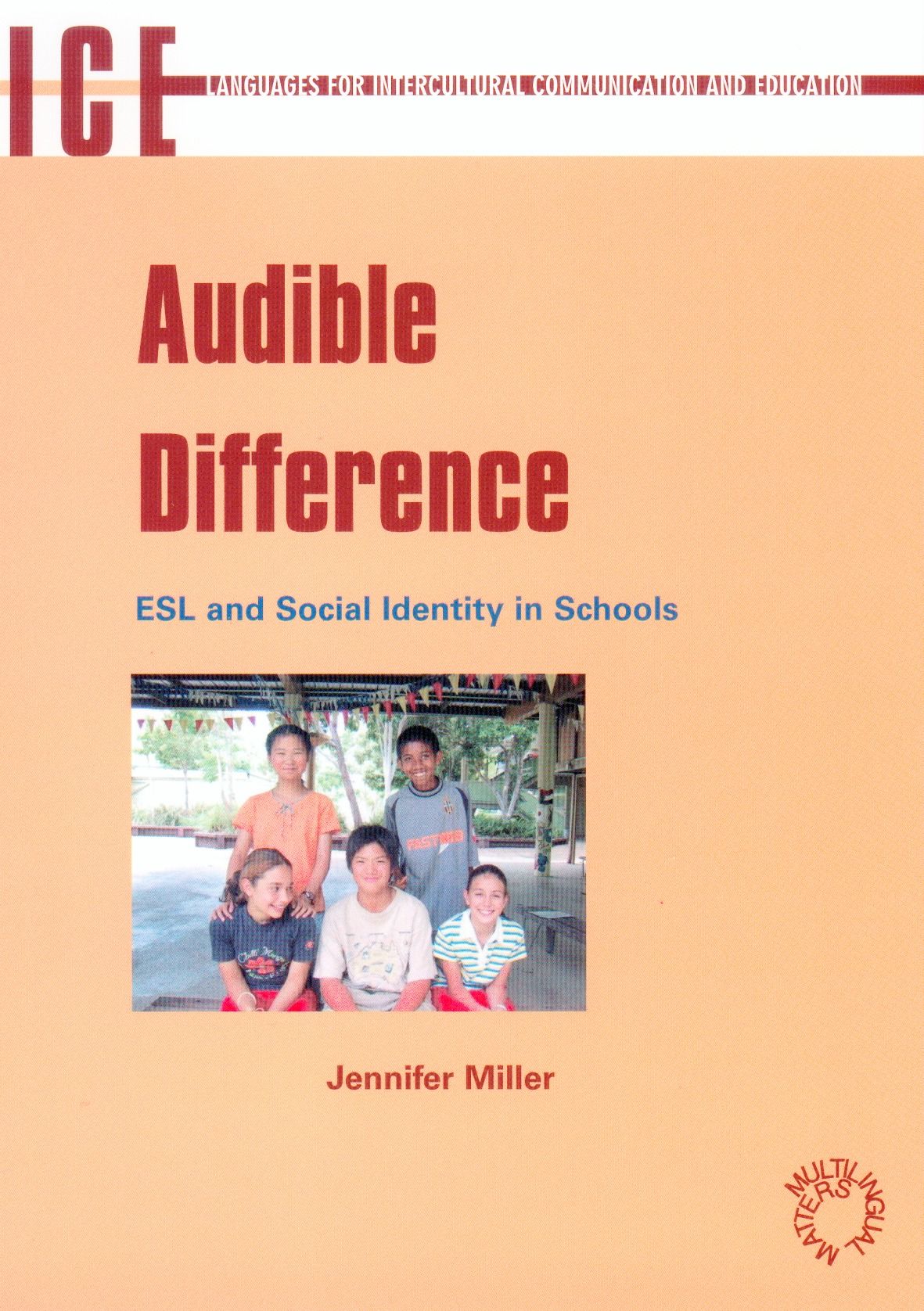
Audible Difference
This book is about the relationship between learning English as an additional language and the ways in which immigrant students are able to represent their identities at school. In high schools, how such students are heard by others may be just as important as how they speak.
eBook

Roots quest : inside America's genealogy boom
\"In Roots Quest, sociologist Jackie Hogan digs into our current genealogy boom to ask why we are so interested in our family history. She shows how the surging popularity of genealogy is a response to large-scale social changes, and she explores the way our increasingly rootless society fuels the quest for an elemental sense of belonging--for roots.\"--Provided by publisher.
Book

School Context and the Gender Gap in Educational Achievement
Today, boys generally underperform relative to girls in schools throughout the industrialized world. Building on theories about gender identity and reports from prior ethnographic classroom observations, we argue that school environment channels conceptions of masculinity in peer culture, fostering or inhibiting boys' development of anti-school attitudes and behavior. Girls' peer groups, by contrast, vary less strongly with the social environment in the extent to which school engagement is stigmatized as un-feminine. As a consequence, boys are more sensitive than girls to school resources that create a learning-oriented environment. To evaluate this argument, we use a quasi-experimental research design and estimate the gender difference in the causal effect of peer socioeconomic status (SES) as an important school resource on test scores. Our design is based on the assumption that assignment to 5th-grade classrooms within Berlin's schools is as good as random, and we evaluate this selection process with an examination of Berlin's school regulations, a simulation analysis, and qualitative interviews with school principals. Estimates of the effect of SES composition on male and female performance strongly support our central hypothesis, and other analyses support our proposed mechanism as the likely explanation for gender differences in the causal effect.
Journal Article
The American Institute of Iranian Studies
The American Institute of Iranian Studies is devoted to fostering research in the field of Iranian studies and promoting scholarly exchange between the United States and Iran. This collection of essays addresses the history and development of Iranian studies in the United States and the pivotal role of the Institute in furthering research in the field. The purview of the Institute is vast, covering Iranology—the study of Iranian peoples and cultures both within and across regions of Central and South Asia and the Middle East, where various forms of the Persian language are spoken. In keeping with the Institute’s dedication to facilitating research in Iran, the chapters in this volume represent fields of inquiry that have benefited from direct access to materials in the country. The essays describe the founding and work of the Institute, the emergence of Iranian studies in American universities, the Encyclopaedia Iranica , early archaeological research in Iran by the University of Pennsylvania and the University of Chicago, the birth and development of American museum collections of art from Iran, and case histories of areas of Iranian Studies that have been the traditional focus of Institute-sponsored research, including art history, history, philology, religion, and sociology. The contributors to this volume are Ahmad Ashraf, Shiva Balaghi, Medhi Bozorgmehr, Elton L. Daniel, Erica Ehrenberg, Carl W. Ernst, Stephen C. Fairbanks, Prudence O. Harper, Linda Komaroff, Judith A. Lerner, Franklin D. Lewis, Beatrice Forbes Manz, Alessandro Pezzati, Holly Pittman, D. T. Potts, Richard L. Spees, Mathew W. Stolper, Keyvan Tabari, and Christopher Thortnon.
eBook

Assessing professional identity formation (PIF) amongst medical students in Oncology and Palliative Medicine postings: a SEBA guided scoping review
Background
Introduction to a multi-professional team who are working and caring for the dying, and facing complex moral and ethical dilemmas during Oncology and Palliative Medicine postings influence a medical student’s professional identity formation (PIF). However, limited appreciation of PIF, inadequate assessments and insufficient support jeopardise this opportunity to shape how medical students think, feel and act as future physicians. To address this gap, a systematic scoping review (SSR) of PIF assessment methods is proposed.
Methods
A Systematic Evidence-based Approach (SEBA) guided SSR of assessments of PIF in medical schools published between 1
st
January 2000 and 31
st
December 2021 in PubMed, Embase, ERIC and Scopus databases was carried out. Included articles were concurrently content and thematically analysed using SEBA’s Split Approach and the themes and categories identified were combined using SEBA’s Jigsaw Perspective. The review hinged on the following questions:
“what is known about the assessment of professional identity formation amongst medical students?”, “what are the theories and principles guiding the assessment of professional identity formation amongst medical students?”, “what factors influence PIF in medical students?”, “what are the tools used to assess PIF in medical students?”, and “what considerations impact the implementation of PIF assessment tools amongst medical students?”
.
Results
Two thousand four hundred thirty six abstracts were reviewed, 602 full-text articles were evaluated, and 88 articles were included. The 3 domains identified were 1) theories, 2) assessment, and 3) implementation in assessing PIF. Differing attention to the different aspects of the PIF process impairs evaluations, jeopardise timely and appropriate support of medical students and hinder effective implementation of PIF assessments.
Conclusion
The Krishna-Pisupati model combines current theories and concepts of PIF to provide a more holistic perspective of the PIF process. Under the aegis of this model, Palliative Care and Oncology postings are envisaged as Communities of Practice influencing self-concepts of personhood and identity and shaping how medical students see their roles and responsibilities as future physicians. These insights allow the forwarding of nine recommendations to improve assessments of PIF and shape the design of a PIF-specific tool that can direct timely and personalized support of medical students.
Journal Article