
Catalogue Search | MBRL


Are you sure you want to remove the book from the shelf?

{{itemTitle}}
6,113
result(s) for
"Group randomized trials"
Sort by:

Powerful and Robust Test Statistic for Randomization Inference in Group‐Randomized Trials with Matched Pairs of Groups
For group‐randomized trials, randomization inference based on rank statistics provides robust, exact inference against nonnormal distributions. However, in a matched‐pair design, the currently available rank‐based statistics lose significant power compared to normal linear mixed model (LMM) test statistics when the LMM is true. In this article, we investigate and develop an optimal test statistic over all statistics in the form of the weighted sum of signed Mann‐Whitney‐Wilcoxon statistics under certain assumptions. This test is almost as powerful as the LMM even when the LMM is true, but it is much more powerful for heavy tailed distributions. A simulation study is conducted to examine the power.
Journal Article
Sample Size Determination for GEE Analyses of Stepped Wedge Cluster Randomized Trials
In stepped wedge cluster randomized trials, intact clusters of individuals switch from control to intervention from a randomly assigned period onwards. Such trials are becoming increasingly popular in health services research. When a closed cohort is recruited from each cluster for longitudinal follow-up, proper sample size calculation should account for three distinct types of intraclass correlations: the within-period, the inter-period, and the within-individual correlations. Setting the latter two correlation parameters to be equal accommodates cross-sectional designs. We propose sample size procedures for continuous and binary responses within the framework of generalized estimating equations that employ a block exchangeable within-cluster correlation structure defined from the distinct correlation types. For continuous responses, we show that the intraclass correlations affect power only through two eigenvalues of the correlation matrix. We demonstrate that analytical power agrees well with simulated power for as few as eight clusters, when data are analyzed using bias-corrected estimating equations for the correlation parameters concurrently with a bias-corrected sandwich variance estimator.
Journal Article

The mixed model for repeated measures for cluster randomized trials: a simulation study investigating bias and type I error with missing continuous data
Background
Cluster randomized trials (CRTs) are a design used to test interventions where individual randomization is not appropriate. The mixed model for repeated measures (MMRM) is a popular choice for individually randomized trials with longitudinal continuous outcomes. This model’s appeal is due to avoidance of model misspecification and its unbiasedness for data missing completely at random or at random.
Methods
We extended the MMRM to cluster randomized trials by adding a random intercept for the cluster and undertook a simulation experiment to investigate statistical properties when data are missing at random. We simulated cluster randomized trial data where the outcome was continuous and measured at baseline and three post-intervention time points. We varied the number of clusters, the cluster size, the intra-cluster correlation, missingness and the data-generation models. We demonstrate the MMRM-CRT with an example of a cluster randomized trial on cardiovascular disease prevention among diabetics.
Results
When simulating a treatment effect at the final time point we found that estimates were unbiased when data were complete and when data were missing at random. Variance components were also largely unbiased. When simulating under the null, we found that type I error was largely nominal, although for a few specific cases it was as high as 0.081.
Conclusions
Although there have been assertions that this model is inappropriate when there are more than two repeated measures on subjects, we found evidence to the contrary. We conclude that the MMRM for CRTs is a good analytic choice for cluster randomized trials with a continuous outcome measured longitudinally.
Trial registration
ClinicalTrials.gov, ID:
NCT02804698
.
Journal Article

Changing Work and Work-Family Conflict: Evidence from the Work, Family, and Health Network
Schedule control and supervisor support for family and personal life may help employees manage the work-family interface. Existing data and research designs, however, have made it difficult to conclusively identify the effects of these work resources. This analysis utilizes a group-randomized trial in which some units in an information technology workplace were randomly assigned to participate in an initiative, called STAR, that targeted work practices, interactions, and expectations by (1) training supervisors on the value of demonstrating support for employees' personal lives and (2) prompting employees to reconsider when and where they work. We find statistically significant, although modest, improvements in employees' work-family conflict and family time adequacy, and larger changes in schedule control and supervisor support for family and personal life. We find no evidence that this intervention increased work hours or perceived job demands, as might have happened with increased permeability of work across time and space. Subgroup analyses suggest the intervention brought greater benefits to employees more vulnerable to work-family conflict. This study uses a rigorous design to investigate deliberate organizational changes and their effects on work resources and the work-family interface, advancing our understanding of the impact of social structures on individual lives.
Journal Article

Toward Causal Inference With Interference
A fundamental assumption usually made in causal inference is that of no interference between individuals (or units); that is, the potential outcomes of one individual are assumed to be unaffected by the treatment assignment of other individuals. However, in many settings, this assumption obviously does not hold. For example, in the dependent happenings of infectious diseases, whether one person becomes infected depends on who else in the population is vaccinated. In this article, we consider a population of groups of individuals where interference is possible between individuals within the same group. We propose estimands for direct, indirect, total, and overall causal effects of treatment strategies in this setting. Relations among the estimands are established; for example, the total causal effect is shown to equal the sum of direct and indirect causal effects. Using an experimental design with a two-stage randomization procedure (first at the group level, then at the individual level within groups), unbiased estimators of the proposed estimands are presented. Variances of the estimators are also developed. The methodology is illustrated in two different settings where interference is likely: assessing causal effects of housing vouchers and of vaccines.
Journal Article
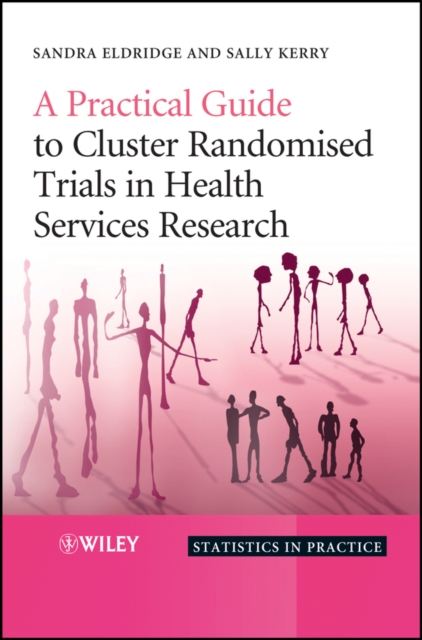
A Practical Guide to Cluster Randomised Trials in Health Services Research
Cluster randomised trials are trials in which groups (or clusters) of individuals are randomly allocated to different forms of treatment. In health care, these trials often compare different ways of managing a disease or promoting healthy living, in contrast to conventional randomised trials which randomise individuals to different treatments, classically comparing new drugs with a placebo. They are increasingly common in health services research. This book addresses the statistical, practical, and ethical issues arising from allocating groups of individuals, or clusters, to different interventions. Key features: * Guides readers through the stages of conducting a trial, from recruitment to reporting. * Presents a wide range of examples with particular emphasis on trials in health services research and primary care, with both principles and techniques explained. * Topics are specifically presented in the order in which investigators think about issues when they are designing a trial. * Combines information on the latest developments in the field together with a practical guide to the design and implementation of cluster randomised trials. * Explains principles and techniques through numerous examples including many from the authors own experience. * Includes a wide range of references for those who wish to read further. This book is intended as a practical guide, written for researchers from the health professions including doctors, psychologists, and allied health professionals, as well as statisticians involved in the design, execution, analysis and reporting of cluster randomised trials. Those with a more general interest will find the plentiful examples illuminating.
eBook
Analysis of multiple-period group randomized trials: random coefficients model or repeated measures ANOVA?
Background
Multiple-period parallel group randomized trials (GRTs) analyzed with linear mixed models can represent time in mean models as continuous or categorical. If time is continuous, random effects are traditionally group- and member-level deviations from condition-specific slopes and intercepts and are referred to as random coefficients (RC) analytic models. If time is categorical, random effects are traditionally group- and member-level deviations from time-specific condition means and are referred to as repeated measures ANOVA (RM-ANOVA) analytic models. Longstanding guidance recommends the use of RC over RM-ANOVA for parallel GRTs with more than two periods because RC exhibited nominal type I error rates for both time parameterizations while RM-ANOVA exhibited inflated type I error rates when applied to data generated using the RC model. However, this recommendation was developed assuming a variance components covariance matrix for the RM-ANOVA, using only cross-sectional data, and explicitly modeling time × group variation. Left unanswered were how well RM-ANOVA with an unstructured covariance would perform on data generated according to the RC mechanism, if similar patterns would be observed in cohort data, and the impact of not modeling time × group variation if such variation was present in the data-generating model.
Methods
Continuous outcomes for cohort and cross-sectional parallel GRT data were simulated according to RM-ANOVA and RC mechanisms at five total time periods. All simulations assumed time × group variation. We varied the number of groups, group size, and intra-cluster correlation. Analytic models using RC, RM-ANOVA, RM-ANOVA with unstructured covariance, and a Saturated random effects structure were applied to the data. All analytic models specified time × group random effects. The analytic models were then reapplied without specifying random effects for time × group.
Results
Results indicated the RC and saturated analytic models maintained the nominal type I error rate in all data sets, RM-ANOVA with an unstructured covariance did not avoid type I error rate inflation when applied to cohort RC data, and analytic models omitting time-varying group random effects when such variation exists in the data were prone to substantial type I error inflation unless the residual error variance is high relative to the time × group variance.
Conclusion
The time × group RC and saturated analytic models are recommended as the default for multiple period parallel GRTs.
Journal Article

The Essential Role of Pair Matching in Cluster-Randomized Experiments, with Application to the Mexican Universal Health Insurance Evaluation
A basic feature of many field experiments is that investigators are only able to randomize clusters of individuals—such as households, communities, firms, medical practices, schools or classrooms—even when the individual is the unit of interest. To recoup the resulting efficiency loss, some studies pair similar clusters and randomize treatment within pairs. However, many other studies avoid pairing, in part because of claims in the literature, echoed by clinical trials standards organizations, that this matched-pair, cluster-randomization design has serious problems. We argue that all such claims are unfounded. We also prove that the estimator recommended for this design in the literature is unbiased only in situations when matching is unnecessary; its standard error is also invalid. To overcome this problem without modeling assumptions, we develop a simple design-based estimator with much improved statistical properties. We also propose a model-based approach that includes some of the benefits of our design-based estimator as well as the estimator in the literature. Our methods also address individual-level noncompliance, which is common in applications but not allowed for in most existing methods. We show that from the perspective of bias, efficiency, power, robustness or research costs, and in large or small samples, pairing should be used in cluster-randomized experiments whenever feasible; failing to do so is equivalent to discarding a considerable fraction of one's data. We develop these techniques in the context of a randomized evaluation we are conducting of the Mexican Universal Health Insurance Program.
Journal Article

Effect Sizes in Cluster-Randomized Designs
Multisite research designs involving cluster randomization are becoming increasingly important in educational and behavioral research. Researchers would like to compute effect size indexes based on the standardized mean difference to compare the results of cluster-randomized studies (and corresponding quasi-experiments) with other studies and to combine information across studies in meta-analyses. This article addresses the problem of defining effect sizes in multilevel designs and computing estimates of those effect sizes and their standard errors from information that is likely to be reported in journal articles. Three effect sizes are defined corresponding to different standardizations. Estimators of each effect size index are also presented along with their sampling distributions (including standard errors).
Journal Article
A website for cluster randomised trials including stepped wedge: facilitating quality trials and methodological research
Background
A cluster randomised trial is a randomised controlled trial in which groups of individuals (clusters) are randomised to treatment arms. Stepped wedge cluster randomised trials are a type of cluster randomised trial where clusters are randomised to sequences. These trial designs are important for impacting decision-making, and it is therefore important that they be well-conducted and reported.
Main body
In November 2018, we created a new website dedicated to cluster randomised trials, including stepped wedge designs:
https://clusterrandomisedtrials.qmul.ac.uk/
. The idea for the website emerged from the conference on Current Developments in Cluster Randomised Trials and Stepped Wedge Designs held in November 2016 at Queen Mary University of London, with the aim to provide an online resource to facilitate quality trials and methodological research on these types of trial. The website is divided into sections covering Design, Analysis and Reporting for traditional (i.e. parallel two-arm) cluster randomised trials and stepped wedge designs and contains resources in the form of hyperlinks to relevant papers along with brief explanations. A noticeboard page provides details on announcements, events, and past events.
Conclusion
We aim to keep the site updated with the latest publications and events related to cluster randomised trials, and welcome suggestions from the research community on further resources or events to add. We hope that the site will facilitate high-quality traditional and stepped wedge cluster randomised trials.
Journal Article