
Catalogue Search | MBRL


Are you sure you want to remove the book from the shelf?

{{itemTitle}}
66
result(s) for
"Grundbildung"
Sort by:

PIAAC-L: the longitudinal follow-up to PIAAC in Germany
Dieser Beitrag beschreibt die Grundzüge von PIAAC-L, der Nachfolgestudie von PIAAC (Programme for the International Assessment of Adult Competencies) in Deutschland und stellt die PIAAC-L-Daten vor. PIAAC-L war eine gemeinschaftliche Studie von drei groß angelegten Erhebungen in Deutschland, PIAAC, dem Nationalen Bildungspanel (NEPS) und dem Sozio-oekonomischen Panel (SOEP). Die Befragungspersonen der deutschen PIAAC-Stichprobe (2011/2012) und die erwachsenen Mitglieder ihrer Haushalte wurden über drei Wellen (2014, 2015, 2016) befragt. PIAAC-L kombinierte Designmerkmale und Instrumente aus PIAAC, NEPS und dem SOEP und beinhaltete eine erneute Messung von grundlegenden Kompetenzen. Die Lesekompetenz und die Alltagsmathematische Kompetenz wurden mit Instrumenten aus PIAAC und NEPS gemessen. Die Messung wurde auf mit den PIAAC-Befragungspersonen zusammenlebende (Ehe)partnerinnen und -partner ausgeweitet. Die Interviewer-administrierten Personen- und Haushaltsfragebögen deckten ein breites Spektrum an Inhalten ab. Die PIAAC-L-Daten, die Forscherinnen und Forschern für Sekundäranalysen zur Verfügung stehen, erlauben es, grundlegende Kompetenzen im Zeitverlauf und Faktoren, die mit ihrem Erwerb und Erhalt zusammenhängen, zu untersuchen. Im Hinblick auf den deutschen Kontext ist die Studie von Interesse, da sie Expertise und Inhalte aus drei nationalen Großerhebungen kombiniert.
This paper describes the main features of PIAAC-L, the German longitudinal follow-up to PIAAC (Programme for the International Assessment of Adult Competencies), and presents the PIAAC-L data. PIAAC-L was a collaborative study by three large-scale surveys in Germany, PIAAC, the National Educational Panel Study (NEPS), and the German Socio-Economic Panel (SOEP). Respondents from the German PIAAC sample (2011/2012) and the adult members of their households were interviewed over three waves (2014, 2015, 2016). PIAAC-L combined design features and instruments from PIAAC, NEPS, and the SOEP and included a re-assessment of basic cognitive skills. Literacy and numeracy were measured with instruments from PIAAC and NEPS and the assessment was extended to include cohabiting spouses/partners of PIAAC respondents. Interviewer-administered person and household questionnaires covered a broad range of content. The PIAAC-L data, which are available to researchers for secondary analyses, allow to explore cognitive skills over time and factors related to their acquisition and maintenance. In the German context, the study is of interest because it combined expertise and content from three national large-scale surveys.
Journal Article
Raising the Basic Skills of Workers in England, United Kingdom
This report provides examples and recommendations to help overcome obstacles to engage low-skilled workers and their employers in skills development. England has implemented impressive measures aimed at helping workers and employers to upskill. Nonetheless, there remains room for improvement. More can be done to identify workers with low basic skills, raise awareness of why improving those skills is important, increase the accessibility to relevant courses, ensure these courses are flexible enough to accommodate adult learners who are already employed, and finally make the provision relevant to career aspirations. This report urges England to establish and promote a vision for raising the skills of low-skilled workers, identify their needs more systematically, and provide targeted guidance and information to them and their employers. It highlights that accessible and flexible adult learning opportunities in the workplace, home, community and by other means such as online and distance learning can better meet the varied needs of low-skilled workers. It also makes the case for the use of contextualised learning approaches, which create connections between basic skills and vocational context, and a more effective use of basic skills in workplaces to maintain, develop and realise the benefits of prior skills investments.
Journal Article

Thinking Inclusive Science Education from two Perspectives: Inclusive Pedagogy and Science Education
In the last decades, subject-matter education (Fachdidaktik) has been addressing the idea of inclusion rather incidentally. Although inclusive teaching and learning became more and more prominent in research and practice, a theoretical scheme combining inclusive pedagogy with respective subject-specific characteristics is still missing. This article by members of NinU (\"Netzwerk inklusiver naturwissenschaftlicher Unterricht\"/\"Network Inclusive Science Education\") focuses on this challenge with science as an exemplary subject. To systematically combine the two perspectives, the article presents selected and significant characteristics of inclusive pedagogy and science education, before a scheme is suggested adjoining the two perspectives. NinU itself, as well as the presented scheme, can serve as a successful example of cooperation beyond disciplinary boundaries. Educators of other subjects are invited to identify significant aspects of their own subject that could be brought together with inclusive pedagogy in the same manner. (Orig.).
Journal Article

Political education of young children
* Teachers emphasise political aspects of the initial social studies education despite not being asked about them directly.* Teachers seems to focus on building a foundation for thinking and acting politicallyPurpose:This study investigated the political aspects of 1st- to 4th-grade social studies education in Norwegian primary schools through qualitative interviews with 30 social studies teachers. The research examined how and to what extent politics is in focus in initial social studies education using the pre-political perspective as a theoretical starting point.Findings:The political sphere is, to a large extent, focused on initial social studies education, in the form of either political actions or preparation – e.g. building a foundation on which pupils can think and act politically. Despite the fact that not all aspects of the political are equally emphasised in initial social studies education and often seem to tend towards harmony and common agreement, pupils have the potential to be politically orientated or socialised in initial social studies education.
Journal Article

Bildung - Schulzwang - Recht auf Bildung. Historische Traditionen und systematische Optionen
Der Beitrag gilt der Tradition und Diskussion des vom Bundesverfassungsgericht formulierten \"Rechts auf (schulische) Bildung\". Von Formulierungen des Menschenrechts auf Bildung in der französischen Revolution aus wird gezeigt, wie dabei, auch gegen eine egalitaristische Perspektive, dieses Recht immer nur in der Einheit von Egalität und Differenz formuliert war, auf der Basis von \"Elementarbildung\" als Ermöglichung allen weiteren, separierenden, Lernens. Für alle Lernenden gleich gilt die Schulpflicht und die Beschulung in separierenden Bildungssystemen. Seit dem 20. Jahrhundert wird für das Bildungssystem über den Ausgleich von Bildungsbenachteiligung, bei fortdauernder Ungleichheit, politisch gestritten; in der Erziehungsphilosophie ist bis heute kontrovers, was Bildungsgerechtigkeit und die Einlösung des Rechts auf Bildung bedeuten. (DIPF/Orig.).
This contribution is concerned with the tradition and discussion of the \"right to (school) education\" formulated by the German Bundesverfassungsgericht (Federal Constitutional Court). Starting from the formulations of the human right to education in the French Revolution, it is shown how this right was always formulated only in the unity of equality and difference, even against an egalitarian perspective, on the basis of \"elementary education\" as an enabling of all further, separating, learning. Compulsory schooling and schooling in separative educational systems equally apply to all learners. Since the 20th century, the educational system has been the subject of political disputes about the equalization of educational disadvantages in the face of continuing inequality; in philosophy of education, the question of what constitutes educational justice and the fulfilment of the right to education is still controversial. (DIPF/Orig.).
Journal Article

The Relationship between Educational Pathways and Occupational Outcomes at the Intersection of Gender and Social Origin
In this article, we are interested in the differences in the educational pathways and subsequent labour market outcomes by social origin and gender. We apply sequence analyses to model the educational trajectories and conduct regression analyses to determine how the individual's own social status and the salary at labour market entry differs. First, our results show that educational pathways vary by parental status and gender when controlling for reading and mathematics/science skills. Men and pupils with a lower socioeconomic background are overrepresented in vocational education, whereas women and pupils with a more privileged socioeconomic background more often pursue general and academic tracks. Second, these different trajectories lead to unequal occupational status and income. Besides these indirect effects, significant direct effects of parental status and gender on the individual's own occupational status and salary can be found. Together, these findings provide a broad overview of the emergence of inequalities by gender and social origin over the early life course, ranging from differences in skills learned in school to labour market outcomes.
Journal Article

Alphabetisierungs- und Grundbildungsbedarf bei Auszubildenden. Konsequenzen für die Lehramtsausbildung
Lehramtsstudierende der beruflichen Fachrichtung Ernährungs- und Hauswirtschaftswissenschaften sind im Unterricht damit konfrontiert, dass Auszubildende Schwierigkeiten im Lesen und Schreiben und anderer Grundbildung haben. Die geringe Literalität erschwert die Qualifikation. Der vorliegende Beitrag gibt Anregungen zur Sensibilisierung von Studierenden für diese heterogene Zielgruppe und bietet Konzepte und Methoden für einen passgenauen Unterricht, der Berufs- und Grundbildung integriert. (DIPF/Orig.).
Student teachers in vocational education are faced in the classroom with trainees, who have difficulties in reading, writing and other basic education. This low literacy makes it more difficult to achieve qualification requirements. This article provides suggestions for sensitizing students to this diverse target group and offers concepts and methods for appropriate teaching that integrates vocational and basic education. (DIPF/Orig.).
Journal Article

Einführung in die Grundschulpädagogik
Diese [...] Einführung stellt das komplexe Geschehen in der Grundschule und die dynamische Disziplin der Grundschulpädagogik aus verschiedenen Perspektiven vor: Von konkreten Handlungsstrategien in der schulischen Praxis über theoretische Verortungen bis zu rechtlichen Grundlagen. Dabei legt das Buch besonderen Wert auf die vielschichtige, kooperative Expertise von Grundschulpädagogik und Sonderpädagogik. Mit inklusivem Fokus werden aktuelle Forschung, Methoden und Entwicklungen, Chancen sowie Herausforderungen beleuchtet. Das Buch erlaubt einen differenzierten Blick auf die Stellschrauben einer inklusiven Schule und deren Weiterentwicklung für alle AkteurInnen. (DIPF/Orig.).
Book
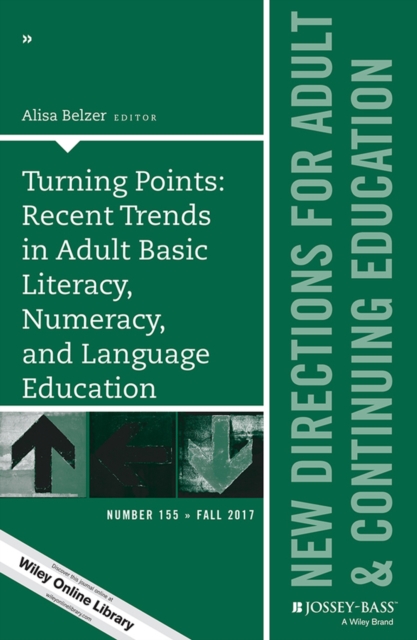
Turning Points: Recent Trends in Adult Basic Literacy, Numeracy, and Language Education
Milestones for adult basic education include: It was first federally funded in 1964. The National Literacy Act passed in 1991. The Workforce Investment Act (WIA) of 1998 was enacted. The field then remained relatively static until 2014 when: a new version of the GED® test was launched, new content standards were developed, new data on adult cognitive skills were released, and the Workforce Innovation and Opportunity Act (WIOA), with its laser focus on employment and training, was enacted. This volume reviews where the field is in relation to these turning points and discusses where it could go. Taking up critical discussions of the many recent and influential changes as well as topics of enduring interest, this volume will be valuable to practitioners, researchers, and policy makers. This is the 155th volume of the Jossey Bass series New Directions for Adult and Continuing Education. Noted for its depth of coverage, it explores issues of common interest to instructors, administrators, counselors, and policymakers in a broad range of education settings, such as colleges and universities, extension programs, businesses, libraries, and museums.
eBook

New Labour and teacher education
This paper traces the development of teacher education policy during the first two terms of the New Labour government. It argues that there is substantial evidence to support the claim that during their two terms of office, New Labour forged a policy on teacher education that was distinctively different from the Conservative administrations that preceded them. Like the Conservatives, they have seen the maintenance of a competitive market as essential for the governance of the system. But beyond that, they have significantly moved away from a concern with individual professional formation; individual professional formation has been seen as far less critical than it was, especially at the level of initial training. In the lives of young teachers, the state now provides far greater direct guidance than ever before in the definition of effective teaching, learning and assessment in both primary and secondary schools. And at more senior levels, opportunities for extended professional development are increasingly focused on and achieved through the school as an institution. Teacher education itself is no longer seen as a key site for the 're-formation' of professionalism. As a result, teacher education is no longer accorded the key political significance that it had under the Conservatives. In this sense, New Labour policies mark 'the end of an era'. (DIPF/Orig.).
Journal Article