
Catalogue Search | MBRL


Are you sure you want to remove the book from the shelf?

{{itemTitle}}
158
result(s) for
"Gulag"
Sort by:

The Gulag : a very short introduction
A vast system of prisons, camps, and exile settlements, the Gulag was one of the defining attributes of the Stalinist Soviet Union and one of the most heinous examples of mass incarceration in the twentieth century. It combined a standard prison system with the goal of isolating and punishing alleged enemies of the Soviet regime. More than 25 million people passed through the Gulag from its creation in 1930 to its dismantling in the 1950s. By presenting both the everyday experiences of ordinary prisoners and the overall political and economic background of the system, this book offers a succinct and comprehensive study of the Gulag and its legacy in the former USSR.
BOOK

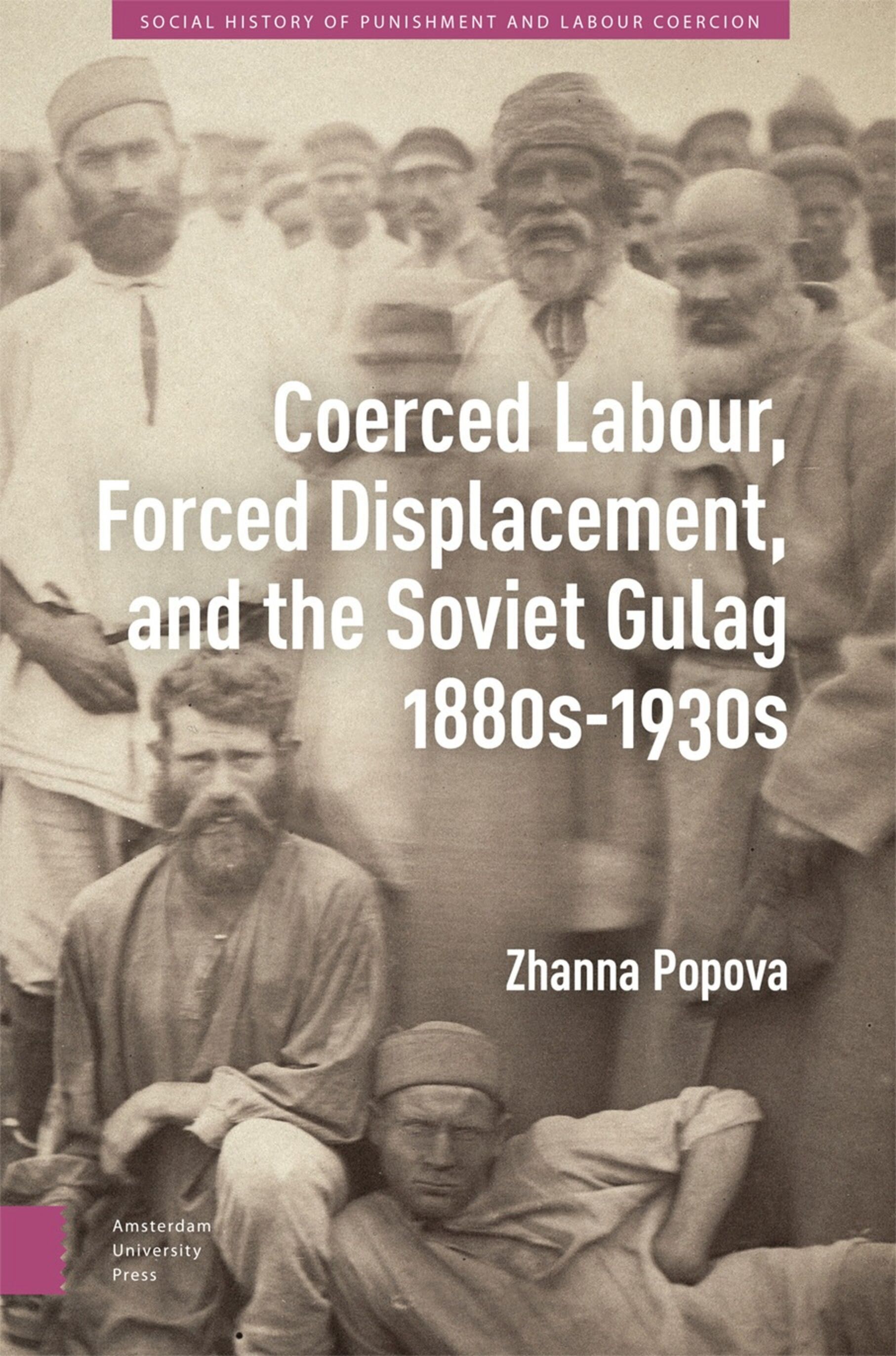
Coerced Labour, Forced Displacement, and the Soviet Gulag, 1880s-1930s
The Gulag remains one of the key symbols of twentieth-century mass political violence. Thanks to recent archive-based investigations, we now understand the scope of the system, variations between different camp complexes, and modalities of the use of forced labour of convicts. At the same time, the work of historicizing the Gulag and systematically evaluating its position within the global history of repression is still to be done. Exploring the emergence of this vast Soviet system of concentration camps in long-term perspective, this book aims to inscribe this process within global histories of coerced labour, forced displacement, and punishment. It highlights the inextricable interconnection of coerced labour and forced displacement as tools of punishment in the multitude of their historical forms.
eBook

The Gulag doctors : life, death, and medicine in Stalin's labour camps
A byword for injustice, suffering, and mass mortality, the Gulag exploited prisoners, compelling them to work harder for better rations in shocking conditions. From 1930 to 1953, eighteen million people passed through this penal-industrial empire. Many inmates, not reaching their quotas, succumbed to exhaustion, emaciation, and illness. It seems paradoxical that any medical care was available in the camps. But it was in fact ubiquitous. By 1939 the Gulag Sanitary Department employed 10,000 doctors, nurses and paramedics - about 40 percent of whom were prisoners. Dan Healey explores the lives of the medical staff who treated inmates in the Gulag.
BOOK


The Soviet Gulag : evidence, interpretation, and comparison
\"Before the collapse of the Soviet Union and the subsequent archival revolution, Aleksandr Solzhenitsyn's famous \"literary investigation\" The Gulag Archipelago was the most authoritative overview of the Stalinist system of camps. But modern research is developing a much more thorough and nuanced understanding of the Gulag. There is a greater awareness of the wide variety of camps, many not isolated in far-off Siberia; prisoners often intermingled with local populations. The forced labor system was not completely distinct from the \"free\" labor of ordinary Soviet citizens, as convicts and non-prisoners often worked side-by-side. Nor was the Gulag unique when viewed in a global historical context. Still, the scale and scope of the Soviet Gulag was unprecedented. Intrinsic to Stalinist modernization, the Gulag was tasked with the construction of massive public works, scientific and engineering projects, and such mundane work as road repairs. Along with the collectivization of agriculture, the Soviet economy (including its military exertions in World War II) was in large part dependent on compulsory labor. The camp system took on an outsized economic significance, and the vast numbers of people taken in by zealous secret police were meant to fulfill material, not just political, goals. While the Soviet system lacked the explicitly dedicated extermination camps of its Nazi counterpart, it did systematically extract work from inmates to the verge of death then cynically \"released\" them to reduce officially reported mortality rates. In an original turn, the book offers a detailed consideration of the Gulag in the context of the similar camps and systems of internment. Chapters are devoted to the juxtaposition of nineteenth-century British concentration camps in Africa and India, the Tsarist-era system of exile in Siberia, Chinese and North Korean reeducation camps, the post-Soviet penal system in the Russian Federation, and of course the infamous camp system of Nazi Germany. This not only reveals the close relatives, antecedents, and descendants of the Soviet Gulag--it shines a light on a frighteningly widespread feature of late modernity. Overall, The Soviet Gulag offers fascinating new interpretations of the interrelationship and importance of the Gulag to the larger Soviet political and economic system, and how they were in fact parts of the same entity\"-- Provided by publisher.
Book

Illness and inhumanity in Stalin's Gulag
A new and chilling study of lethal human exploitation in the Soviet forced labor camps, one of the pillars of Stalinist terror In a shocking new study of life and death in Stalin's Gulag, historian Golfo Alexopoulos suggests that Soviet forced labor camps were driven by brutal exploitation and often administered as death camps. The first study to examine the Gulag penal system through the lens of health, medicine, and human exploitation, this extraordinary work draws from previously inaccessible archives to offer a chilling new view of one of the pillars of Stalinist terror.
Book

A Sense of Stalinism
This article compares visitor experiences at the Gulag History Museum in Moscow and the NKVD Prison Museum in Tomsk, Siberia. The museums differ in the production of authenticity in the museum experience. The Moscow museum has no direct relationship to a site of memory and therefore utilizes constructed forms of authenticity. In contrast, the Tomsk museum makes use of objective authenticity given its location in an original prison building. The museums share a stated mission to produce a cosmopolitan mode of remembering based on universal values and empathy for victims with a preventive mission for the sake of the future. The article examines original data from visitor focus groups to understand the emotional impact of these museums. The Moscow museum manufactures the atmosphere of the Gulag through interactive sensory stimulation. We found that this can meet resistance from visitors who sense that their emotions are being manipulated. We found that the Tomsk museum directly elicits strong emotional responses but responses could also include dark tourist titillation. In conclusion, we consider how these findings speak to debates around the tension between cosmopolitan, antagonistic, and agonistic modes of remembering.
Journal Article

Stalin's Gulag at war : forced labour, mass death, and Soviet victory in the Second World War
\"Stalin's Gulag at War places the Gulag within the story of the regional wartime mobilization of Western Siberia during the Second World War. Far from Moscow, Western Siberia was a key area for evacuated factories and for production in support of the war effort. Wilson T. Bell explores a diverse array of issues, including mass death, informal practices such as black markets, and the responses of prisoners and personnel to the war. The region's camps were never prioritized, and faced a constant struggle to mobilize for the war. Prisoners in these camps, however, engaged in such activities as sewing Red Army uniforms, manufacturing artillery shells, and constructing and working in major defense factories. The myriad responses of prisoners and personnel to the war reveal the Gulag as a complex system, but one that was closely tied to the local, regional, and national war effort, to the point where prisoners and non-prisoners frequently interacted. At non-priority camps, moreover, the area's many forced labour camps and colonies saw catastrophic death rates, often far exceeding official Gulag averages. Ultimately, prisoners played a tangible role in Soviet victory, but the cost was incredibly high, both in terms of the health and lives of the prisoners themselves, and in terms of Stalin's commitment to total, often violent, mobilization to achieve the goals of the Soviet state.\"-- Provided by publisher.
Book

State secrets and compromises with capitalism: Lev Theremin and regimes of intellectual property
Known as a pioneer of electronic music, Lev Theremin (1896–1993) had a career as an inventor which stretched the entire span of the Soviet Union’s existence. He witnessed the upheavals of war, terror and revolution firsthand but also tried his luck as an inventor in the United States. With an emphasis on the Soviet Union, this paper uses the case of Theremin – including the years he spent in the United States – as a lens through which intellectual property can be analysed. Soviet attempts to control and reward inventors, inventions and inventiveness to a large extent took place outside the formal legal framework. Theremin’s inventive career embodied the contradictions and tensions of intellectual property politics and its attempts to encourage, reward and control both inventions and inventors. As the case of Theremin will show, many of the dealings between inventor and state were classified and unrecognized, shaped by both voluntary cooperation and force. Using the methodological approach of the meta-archive, this paper traces the overarching structural context for owning and controlling knowledge and ideas through the personal trajectory of Theremin.
Journal Article