
Catalogue Search | MBRL


Are you sure you want to remove the book from the shelf?

{{itemTitle}}
16
result(s) for
"HBG"
Sort by:

Effects of supplementation with milk protein on glycemic parameters: a GRADE-assessed systematic review and dose–response meta-analysis
Background
It is suggested that supplementation with milk protein (MP) has the potential to ameliorate the glycemic profile; however, the exact impact and certainty of the findings have yet to be evaluated. This systematic review and dose–response meta-analysis of randomized controlled trials (RCTs) assessed the impact of MP supplementation on the glycemic parameters in adults.
Methods
A systematic search was carried out among online databases to determine eligible RCTs published up to November 2022. A random-effects model was performed for the meta-analysis.
Results
A total of 36 RCTs with 1851 participants were included in the pooled analysis. It was displayed that supplementation with MP effectively reduced levels of fasting blood glucose (FBG) (weighted mean difference (WMD): -1.83 mg/dL, 95% CI: -3.28, -0.38;
P
= 0.013), fasting insulin (WMD: -1.06 uU/mL, 95% CI: -1.76, -0.36;
P
= 0.003), and homeostasis model assessment of insulin resistance (HOMA-IR) (WMD: -0.27, 95% CI: -0.40, -0.14;
P
< 0.001) while making no remarkable changes in serum hemoglobin A1c (HbA1c) values (WMD: 0.01%, 95% CI: -0.14, 0.16;
P
= 0.891). However, there was a significant decline in serum levels of HbA1c among participants with normal baseline body mass index (BMI) based on sub-group analyses. In addition, HOMA-IR values were significantly lower in the MP supplement-treated group than their untreated counterparts in short- and long-term supplementation (≤ 8 and > 8 weeks) with high or moderate doses (≥ 60 or 30–60 g/d) of MP or whey protein (WP). Serum FBG levels were considerably reduced upon short-term administration of a low daily dose of WP (< 30 g). Furthermore, the levels of serum fasting insulin were remarkably decreased during long-term supplementation with high or moderate daily doses of WP.
Conclusion
The findings of this study suggest that supplementation with MP may improve glycemic control in adults by reducing the values of fasting insulin, FBG, and HOMA-IR. Additional trials with longer durations are required to confirm these findings.
Journal Article

TALEN-Mediated Gene Editing of HBG in Human Hematopoietic Stem Cells Leads to Therapeutic Fetal Hemoglobin Induction
Elements within the γ-hemoglobin promoters (
and
) function to bind transcription complexes that mediate repression of fetal hemoglobin expression. Sickle cell disease (SCD) subjects with a 13-bp deletion in the
promoter exhibit a clinically favorable hereditary persistence of fetal hemoglobin (HPFH) phenotype. We developed TALENs targeting the homologous
promoters to de-repress fetal hemoglobin. Transfection of human CD34
cells with TALEN mRNA resulted in indel generation in
(43%) and
(74%) including the 13-bp HPFH deletion (∼6%). Erythroid differentiation of edited cells revealed a 4.6-fold increase in γ-hemoglobin expression as detected by HPLC. Assessment of TALEN-edited CD34
cells
in a humanized mouse model demonstrated sustained presence of indels in hematopoietic cells up to 24 weeks. Indel rates remained unchanged following secondary transplantation consistent with editing of long-term repopulating stem cells (LT-HSCs). Human γ-hemoglobin expressing F cells were detected by flow cytometry approximately 50% more frequently in edited animals compared to mock. Together, these findings demonstrate that TALEN-mediated indel generation in the γ-hemoglobin promoter leads to high levels of fetal hemoglobin expression
and
, suggesting that this approach can provide therapeutic benefit in patients with SCD or β-thalassemia.
Journal Article

Managing the unknown
Information is crucial when it comes to the management of resources. But what if knowledge is incomplete, or biased, or otherwise deficient? How did people define patterns of proper use in the absence of cognitive certainty? Discussing this challenge for a diverse set of resources from fish to rubber, these essays show that deficient knowledge is a far more pervasive challenge in resource history than conventional readings suggest. Furthermore, environmental ignorance does not inevitably shrink with the march of scientific progress: these essays suggest more of a dialectical relationship between knowledge and ignorance that has different shapes and trajectories. With its combination of empirical case studies and theoretical reflection, the essays make a significant contribution to the interdisciplinary debate on the production and resilience of ignorance. At the same time, this volume combines insights from different continents as well as the seas in between and thus sketches outlines of an emerging global resource history.
eBook

Lectotypification, epitypification and history of the name Plagiothecium neglectum Mönk. (Plagiotheciaceae)
In the protologue of Plagiothecium neglectum , Mönkemeyer (1927) does not indicate any herbarium specimen as a type. The author only gave a short description and attached a figure illustrating selected features of this taxon. The original materials from the Mönkemeyer collection were deposited in the HBG herbarium; however, it is not currently possible to determine their location. Furthermore, one specimen of P. neglectum , currently known from the original Mönkemeyer collections, was found in the Herbarium B (B 30 0105646). The features given in the diagnosis of this taxon are consistent with those of the lectotype of Stereodon nemoralis Mitt.; only the leaf apex from Figure 207c (Mönkemeyer 1927) is different and thus suggests mixed material. According to Art. 9.1 of the Shenzhen Code , Figure 207c represents a holotype of P. neglectum . However, due to differences in the leaf apex and according to Art. 9.3 of the Shenzhen Code , the part representing the apex should be excluded from the holotype, and the remainder of Figure 207c is consequently designated as a lectotype of the name P. neglectum . However, because the lectotype does not include a complete set of significant distinguishing features, an epitype (B 30 0105646) was designated.
Journal Article

Gender history in a transnational perspective
The transnational approach sheds new light on international women´s history by bringing up new topics beyond the level of official state interaction By questioning universal claims, the transnational approach unfolds a critical potential Has a huge comparative range that covers not only Western, Northern and Eastern Europe and the US but also Africa.
eBook

MicroRNA29B induces fetal hemoglobin via inhibition of the HBG repressor protein MYB in vitro and in humanized sickle cell mice
IntroductionTherapeutic strategies aimed at reactivating HBG gene transcription and fetal hemoglobin (HbF) synthesis remain the most effective strategy to ameliorate the clinical symptoms of sickle cell disease (SCD). We previously identified microRNA29B (MIR29B) as a novel HbF inducer via targeting enzymes involved in DNA methylation. We provided further evidence that the introduction of MIR29B into KU812 leukemia cells significantly reduced MYB protein expression. Therefore, the aim of this study was to determine the extent to which MIR29B mediates HbF induction via targeting MYB in KU812 leukemia cells and human primary erythroid progenitors and to investigate the role of MIR29B in HbF induction in vivo in the humanized Townes SCD mouse model.Materials and methodsHuman KU812 were cultured and normal CD34 cells ( n = 3) were differentiated using a two-phase erythropoiesis culturing system and transfected with MIR29B (50 and 100 nM) mimic or Scrambled (Scr) control in vitro . A luciferase reporter plasmid overexpressing MYB was transfected into KU812 cells. Luciferase activity was quantified after 48 h. Gene expression was determined by quantitative real-time PCR. In vivo studies were conducted using Townes SCD mice (6 per group) treated with MIR29B (2, 3, and 4 mg/kg/day) or Scr control by 28-day continuous infusion using subcutaneous mini osmotic pumps. Blood samples were collected and processed for complete blood count (CBC) with differential and reticulocytes at weeks 0, 2, and 4. Flow cytometry was used to measure the percentage of HbF-positive cells.ResultsIn silico analysis predicted complementary base-pairing between MIR29B and the 3′-untranslated region (UTR) of MYB . Overexpression of MIR29B significantly reduced MYB mRNA and protein expression in KU812 cells and erythroid progenitors. Using a luciferase reporter vector that contained the full-length MYB 3′-UTR, we observed a significant reduction in luciferase activity among KU812 cells that co-expressed MIR29B and the full-length MYB 3′-UTR as compared to cells that only expressed MYB 3′-UTR. We confirmed the inhibitory effect of a plasmid engineered to overexpress MYB on HBG activation and HbF induction in both KU812 cells and human primary erythroid progenitors. Co-expression of MIR29B and MYB in both cell types further demonstrated the inhibitory effect of MIR29B on MYB expression, resulting in HBG reactivation by real-time PCR, Western blot, and flow cytometry analysis. Finally, we confirmed the ability of MIR29B to reduce sickling and induce HbF by decreasing expression of MYB and DNMT3 gene expression in the humanized Townes sickle cell mouse model.DiscussionOur findings support the ability of MIR29B to induce HbF in vivo in Townes sickle cell mice. This is the first study to provide evidence of the ability of MIR29B to modulate HBG transcription by MYB gene silencing in vivo . Our research highlights a novel MIR-based epigenetic approach to induce HbF supporting the discovery of new drugs to expand treatment options for SCD.
Journal Article

America's mission
America's Missionargues that the global strength and prestige of democracy today are due in large part to America's impact on international affairs. Tony Smith documents the extraordinary history of how American foreign policy has been used to try to promote democracy worldwide, an effort that enjoyed its greatest triumphs in the occupations of Japan and Germany but suffered huge setbacks in Latin America, Vietnam, and elsewhere. With new chapters and a new introduction and epilogue, this expanded edition also traces U.S. attempts to spread democracy more recently, under presidents Clinton, Bush, and Obama, and assesses America's role in the Arab Spring.
eBook

The hidden history of crime, corruption, and states
Renowned historical sociologist Charles Tilly wrote many years ago that \"banditry, piracy, gangland rivalry, policing, and war-making all belong on the same continuum.\" This volume pursues the idea by revealing how lawbreakers and lawmakers have related to one another on the shadowy terrains of power over wide stretches of time and space. Illicit activities and forces have been more important in state building and state maintenance than conventional histories have acknowledged. Covering vast chronological and global terrain, this book traces the contested and often overlapping boundaries between these practices in such very different polities as the pre-modern city-states of Europe, the modern nation-states of France and Japan, the imperial power of Britain in India and North America, Africa's and Southeast Asia's postcolonial states, and the emerging postmodern regional entity of the Mediterranean Sea. Indeed, the contemporary explosion of transnational crime raises the question of whether or not the relationship of illicit to licit practices may be mutating once more, leading to new political forms beyond the nation-state.
eBook

Masters of the universe
How did American and British policymakers become so enamored with free markets, deregulation, and limited government? This book--the first comprehensive transatlantic history of the rise of neoliberal politics--presents a surprising answer. Based on archival research and interviews with leading participants in the movement,Masters of the Universetraces the ascendancy of neoliberalism from the academy of interwar Europe to supremacy under Reagan and Thatcher and in the decades since. Daniel Stedman Jones argues that there was nothing inevitable about the victory of free-market politics. Far from being the story of the simple triumph of right-wing ideas, the neoliberal breakthrough was contingent on the economic crises of the 1970s and the acceptance of the need for new policies by the political left.
Masters of the Universedescribes neoliberalism's road to power, beginning in interwar Europe but shifting its center of gravity after 1945 to the United States, especially to Chicago and Virginia, where it acquired a simple clarity that was developed into an uncompromising political message. Neoliberalism was communicated through a transatlantic network of think tanks, businessmen, politicians, and journalists that was held together by Friedrich Hayek and Milton Friedman. After the collapse of Bretton Woods in 1971, and the \"stagflation\" that followed, their ideas finally began to take hold as Keynesianism appeared to self-destruct. Later, after the elections of Reagan and Thatcher, a guileless faith in free markets came to dominate politics.
Fascinating, important, and timely, this is a book for anyone who wants to understand the history behind the Anglo-American love affair with the free market, as well as the origins of the current economic crisis.
eBook
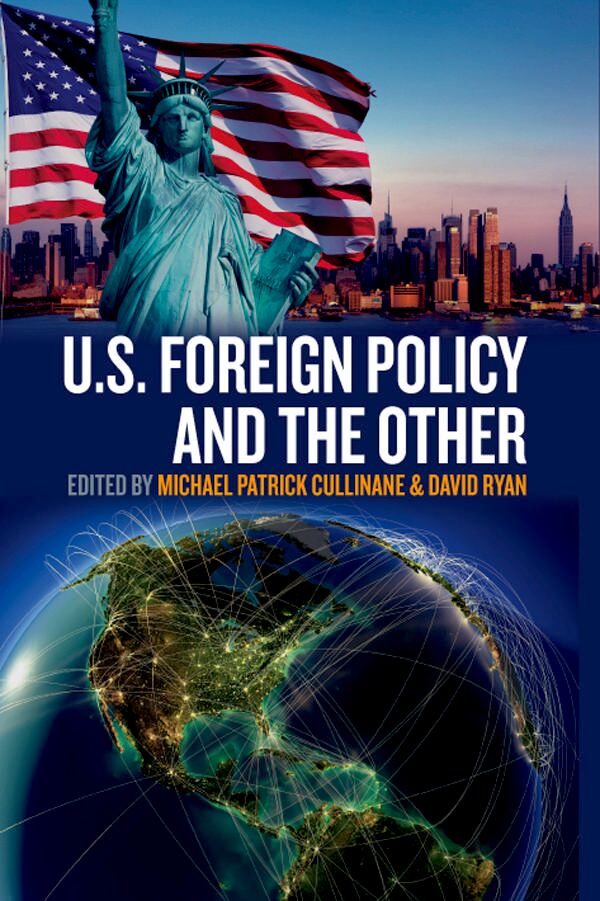
U.S. foreign policy and the other
John Quincy Adams warned Americans not to search abroad for monsters to destroy, yet such figures have frequently habituated the discourses of U.S. foreign policy. This collection of essays focuses on counter-identities in American consciousness to explain how foreign policies and the discourse surrounding them develop. Whether it is the seemingly ubiquitous evil of Hitler during World War II or the more complicated perceptions of communism throughout the Cold War, these essays illuminate the cultural contexts that constructed rival identities. The authors challenge our understanding of \"others,\" looking at early applications of the concept in the eighteenth century to recent twenty-first century conflicts, establishing how this phenomenon is central to decision making through centuries of conflict.
eBook