
Catalogue Search | MBRL


Are you sure you want to remove the book from the shelf?

{{itemTitle}}
1,497
result(s) for
"HEPATOBILIARY DISEASE"
Sort by:
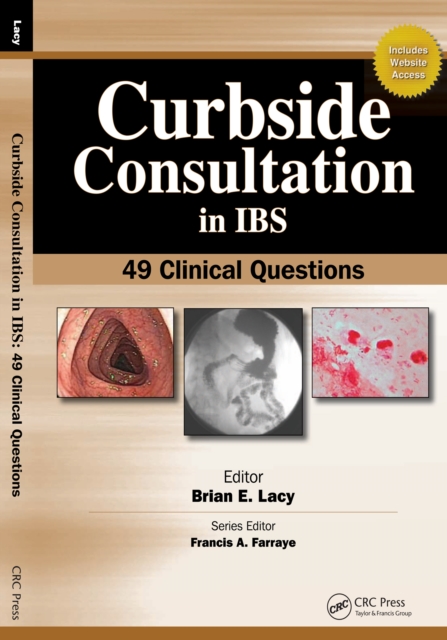
Curbside Consultation in IBS
Are you looking for concise, practical answers to questions that are often left unanswered by traditional IBS references that are not designed for gastroenterologists? Are you seeking brief, evidence-based advice for complicated cases or patients with complications that need management?
Curbside Consultation in IBS: 49 Clinical Questions
provides quick and direct answers to the thorny questions commonly posed during a \"curbside consultation\" between colleagues.
Dr. Brian E. Lacy has designed this unique reference, which offers expert advice, preferences, and opinions on tough clinical questions commonly associated with IBS. The unique Q&A format provides quick access to current information related to IBS with the simplicity of a conversation between two colleagues. Numerous images, diagrams, and references are included to enhance the text and to illustrate the treatment of IBS patients.
Some of the questions that are answered:
How can you safely and effectively diagnose IBS? Are diagnostic tests required, and if so, what are they?
What should I tell my patient about the natural history of IBS? What other disorders are commonly found in IBS patients?
What dietary interventions will help my patient?
What is the role of probiotics in my patient? Why do they work and are they all the same?
Are there new therapies for IBS? What about antibiotics? What is linaclotide and why might it help my patient?
Curbside Consultation in IBS: 49 Clinical Questions
provides information basic enough for residents while also incorporating expert advice that even high-volume clinicians will appreciate. Gastroenterologists, fellows and residents in training, surgical attendings, and surgical residents will benefi t from the user-friendly and casual format and the expert advice contained within.
Bonus Material: With each new book purchase, gain full access to a
fully searchable
website for 3 months. At the website you will be able to:
Access all 49 questions and answers from the book
Access additional questions added each month
Access video clips to supplement the material presented in the book and online
Submit your own suggested questions and/or questions and answers
Suggest alternate answers to the 49 questions
Submit your own images and video content
eBook
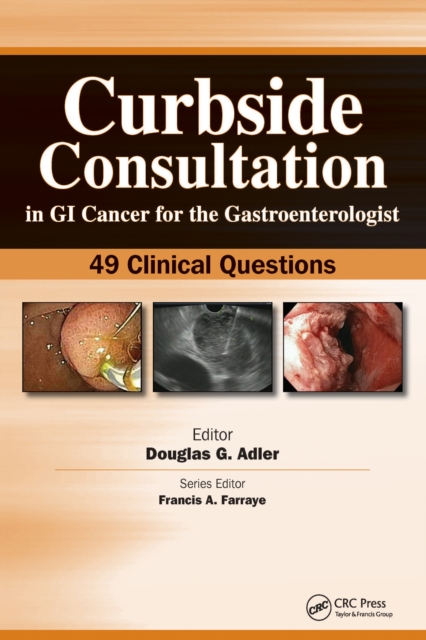
Curbside Consultation in GI Cancer for the Gastroenterologist
Are you looking for concise, practical answers to questions that are often left unanswered by traditional cancer references that are not designed for gastroenterologists? Are you seeking brief, evidence-based advice for complicated cases or patients with complications that need management? Curbside Consultation in GI Cancer for the Gastroenterologist: 49 Clinical Questions provides quick and direct answers to the thorny questions commonly posed during a \"curbside consultation\" between colleagues.
Dr. Douglas G. Adler has designed this unique reference, which offers expert advice, preferences, and opinions on tough clinical questions commonly associated with GI cancer. The unique Q&A format provides quick access to current information related to GI cancer with the simplicity of a conversation between two colleagues. Numerous images, diagrams, and references are included to enhance the text and to illustrate the treatment of GI cancer patients.
Curbside Consultation in GI Cancer for the Gastroenterologist: 49 Clinical Questions provides information basic enough for residents while also incorporating expert advice that even high-volume clinicians will appreciate. Gastroenterologists, fellows and residents in training, surgical attendings, and surgical residents will benefit from the user-friendly and casual format and the expert advice contained within.
Some of the questions that are answered:
An 81-year-old man is found to have unresectable esophageal cancer and malignant dysphagia. Should he have a stent? A nasogastric feeding tube? A PEG tube?
How is tumor-related bleeding from gastric cancers best approached?
Do patients with pancreatic cancer and jaundice need to have an ERCP preoperatively?
What is the role of ERCP and EUS in patients with suspected cholangiocarcinoma?
Why are rectal cancers so different from colon cancers with regards to medical and surgical management?
Curbside Consultation in GI Cancer for the Gastroenterologist: 49 Clinical Questions illustrates how patients at different points in their treatment may go back and forth between specialists to receive coordination of care, and incorporates input from gastroenterologists, surgeons, radiologists, and oncologists. While providing up-to-date information, this book will help gastroenterologists to manage complex cancer-related issues and guide physicians through the maze of cancer-related treatments available.
Ideal for practicing gastroenterologists, gastroenterology fellows, surgeons, oncologists, residents, and medical students, Curbside Consultation in GI Cancer for the Gastroenterologist: 49 Clinical Questions is sure to benefit anyone caring for patients with gastrointestinal cancers.
eBook

Combination therapy for non-alcoholic steatohepatitis: rationale, opportunities and challenges
Non-alcoholic steatohepatitis (NASH) is becoming a leading cause of cirrhosis with the burden of NASH-related complications projected to increase massively over the coming years. Several molecules with different mechanisms of action are currently in development to treat NASH, although reported efficacy to date has been limited. Given the complexity of the pathophysiology of NASH, it will take the engagement of several targets and pathways to improve the results of pharmacological intervention, which provides a rationale for combination therapies in the treatment of NASH. As the field is moving towards combination therapy, this article reviews the rationale for such combination therapies to treat NASH based on the current therapeutic landscape as well as the advantages and limitations of this approach.
Journal Article

Increasing prevalence of NAFLD/NASH among children, adolescents and young adults from 1990 to 2017: a population-based observational study
ObjectiveTo describe the prevalence and variations of non-alcoholic fatty liver disease/non-alcoholic steatohepatitis (NAFLD/NASH) among children and adolescents (CADs) and young adults (YADs).DesignA population-based observational study.SettingAnnual cases and prevalence of NAFLD/NASH from 1990 to 2017, by sex, region and country were collected from the Global Burden of Disease database.Main outcome measuresThe estimated annual percentage change, which was calculated by a regression line, was used to quantify the temporal trends in NAFLD/NASH burden among young people at the global, regional and national levels.ResultsGlobally, NAFLD/NASH incidence increased from 19.34 million in 1990 to 29.49 million in 2017 among CADs, with an annual increase of 1.35%. Additionally, in YADs, the number of cases and NAFLD/NASH prevalence significantly increased during this period, independent of sex and region. The greatest NAFLD/NASH increase was in North Africa and the Middle East. Almost all countries showed an increasing trend from 1990 to 2017, with the most pronounced increase observed in the developed regions.ConclusionsThe epidemiology of NAFLD/NASH in young people has changed considerably over the last three decades. Both the prevalence and number of cases have increased irrespective of sex, age and region. This phenomenon can result in a predictable increase in chronic liver disease burden in the near future. Understanding the prevalence of NAFLD/NASH and its variations is of paramount importance to develop strategies to implement public health policy.
Journal Article
Altered faecal microbiome and metabolome in IgG4-related sclerosing cholangitis and primary sclerosing cholangitis
ObjectiveMultiple clinical similarities exist between IgG4-related sclerosing cholangitis (IgG4-SC) and primary sclerosing cholangitis (PSC), and while gut dysbiosis has been extensively studied in PSC, the role of the gut microbiota in IgG4-SC remains unknown. Herein, we aimed to evaluate alterations of the gut microbiome and metabolome in IgG4-SC and PSC.DesignWe performed 16S rRNA gene amplicon sequencing of faecal samples from 135 subjects with IgG4-SC (n=34), PSC (n=37) and healthy controls (n=64). A subset of the samples (31 IgG4-SC, 37 PSC and 45 controls) also underwent untargeted metabolomic profiling.ResultsCompared with controls, reduced alpha-diversity and shifted microbial community were observed in IgG4-SC and PSC. These changes were accompanied by differences in stool metabolomes. Importantly, despite some common variations in the microbiota composition and metabolic activity, integrative analyses identified distinct host–microbe associations in IgG4-SC and PSC. The disease-associated genera and metabolites tended to associate with the transaminases in IgG4-SC. Notable depletion of Blautia and elevated succinic acid may underlie hepatic inflammation in IgG4-SC. In comparison, potential links between the microbial or metabolic signatures and cholestatic parameters were detected in PSC. Particularly, concordant decrease of Eubacterium and microbiota-derived metabolites, including secondary bile acids, implicated novel host–microbial metabolic pathways involving cholestasis of PSC. Interestingly, the predictive models based on metabolites were more effective in discriminating disease status than those based on microbes.ConclusionsOur data reveal that IgG4-SC and PSC possess divergent host–microbe interplays that may be involved in disease pathogenesis. These data emphasise the uniqueness of IgG4-SC.
Journal Article
Prevalence trends in non-alcoholic fatty liver disease at the global, regional and national levels, 1990–2017: a population-based observational study
ObjectiveNon-alcoholic fatty liver disease (NAFLD) is the leading cause of end-stage liver diseases worldwide. Understanding NAFLD prevalence and trends over time at the global, regional and national levels is critical to understanding the NAFLD disease burden and creating more tailored prevention strategies.DesignPopulation-based observational study.SettingThe study was global, including 21 regions and 195 countries or territories.Main outcomes measureThe estimated annual percentage change for NAFLD prevalence.ResultsWorldwide, cases of NAFLD have increased from 391.2 million in 1990 to 882.1 million in 2017, with the prevalence rate increasing from 8.2% to 10.9% during the same period. The increasing trends were consistent across sexes. Case numbers were highest in East Asia, followed by South Asia, then North Africa and the Middle East. The highest prevalence of NAFLD was observed in North Africa and the Middle East, while the greatest increase was detected in Western Europe, followed by Tropical Latin America, then high-income North America.ConclusionNearly all countries or territories worldwide have experienced a significant increase in NAFLD prevalence. The greatest increase was observed in Oman. Almost all countries showed a significant increasing trend in NAFLD prevalence over the past three decades. This drastic increase is alarming and suggests that NAFLD has emerged as a new public health concern worldwide. As such, more efficient prevention strategies are urgently needed.
Journal Article

Study of the relationship between vitamin D deficiency, sunlight incidence and skeletal/extra skeletal diseases
It is estimated that more than 1 billion people worldwide have vitamin D insufficiency or deficiency. Vitamin D participates in bone mineralization, and is therefore important in osteoporosis, osteomalacia and rickets prevention. However, vitamin D deficiency could also be associated with several other pathologies. The present study aimed to investigate the relationships between vitamin D deficiency and vitamin D deficiency-related disorders in patients. In addition, this study aims to verify if countries with low solar incidence have higher extraskeletal disease death rates when compared to countries with high solar incidence. The vitamin D concentrations were obtained from the Heart Hospital database (Natal/Brazil). The relationship between solar incidence and death rate for vitamin D deficiency-related disorders was verified. Death rate data were extracted from the ‘World Life Expectancy’ repository and data about solar incidence were obtained from NASA’s Surface Meteorology and Solar Energy project. These data were statistically processed with IBM SPSS v23.0 software and R programming language. Our results showed that patients with vitamin D insufficiency/deficiency showed significantly more bone diseases, thyroid diseases, hypercholesterolemy, hypertriglyceridemia, cancers, diabetes, hepatobiliary diseases, and urinary system diseases. Moreover, countries with high solar incidence have low cancer and multiple sclerosis death rates. This work suggests the participation of vitamin D and sunlight incidence in several diseases.
Journal Article
Drug-induced liver injury: recent advances in diagnosis and risk assessment
Idiosyncratic drug-induced liver injury (IDILI) is a rare but potentially severe adverse drug reaction that should be considered in patients who develop laboratory criteria for liver injury secondary to the administration of a potentially hepatotoxic drug. Although currently used liver parameters are sensitive in detecting DILI, they are neither specific nor able to predict the patient's subsequent clinical course. Genetic risk assessment is useful mainly due to its high negative predictive value, with several human leucocyte antigen alleles being associated with DILI. New emerging biomarkers which could be useful in assessing DILI include total keratin18 (K18) and caspase-cleaved keratin18 (ccK18), macrophage colony-stimulating factor receptor 1, high mobility group box 1 and microRNA-122. From the numerous in vitro test systems that are available, monocyte-derived hepatocytes generated from patients with DILI show promise in identifying the DILI-causing agent from among a panel of coprescribed drugs. Several computer-based algorithms are available that rely on cumulative scores of known risk factors such as the administered dose or potential liabilities such as mitochondrial toxicity, inhibition of the bile salt export pump or the formation of reactive metabolites. A novel DILI cluster score is being developed which predicts DILI from multiple complimentary cluster and classification models using absorption–distribution–metabolism–elimination-related as well as physicochemical properties, diverse substructural descriptors and known structural liabilities. The provision of more advanced scientific and regulatory guidance for liver safety assessment will depend on validating the new diagnostic markers in the ongoing DILI registries, biobanks and public–private partnerships.
Journal Article
RECIST 1.1 versus mRECIST for assessment of tumour response to molecular targeted therapies and disease outcomes in patients with hepatocellular carcinoma: a systematic review and meta-analysis
ObjectivesResponse Evaluation Criteria in Solid Tumours version 1.1 (RECIST 1.1) and modified RECIST (mRECIST) are commonly used to assess tumour response. Which one is better to evaluate efficacy after molecular targeted therapies in hepatocellular carcinoma (HCC) patients is still controversial. A systemic review was performed to compare the objective response rate (ORR) and disease control rate (DCR) and a meta-analysis was conducted to compare the correlation between objective response and overall survival (OS).DesignSystematic review and meta-analysis using the Grading of Recommendations Assessment, Development and Evaluation approach.Data sourcesEMBASE, PubMed, Web of Science and Cochrane Library were searched through 31 December 2021.Eligibility criteriaWe included studies assessing the efficacy of molecular targeted therapy for HCC according to both RECIST 1.1 and mRECIST.Data extraction and synthesisTwo investigators extracted data independently. The consistency between RECIST 1.1 vs mRECIST is measured by the k coefficient. HRs with corresponding 95% CIs were used for meta-analysis.Results23 studies comprising 2574 patients were included in systematic review. The ORR according to mRECIST is higher than RECIST1.1 (15.9% vs 7.8%, p<0.001). The DCR is similar (68.4% vs 67.2%, p=0.5). The agreement of tumour response is moderate for objective response (k=0.499) and perfect for progressive disease (k=0.901), calculated from 8 studies including 372 patients. OS was significantly longer in response group than non-response group according to mRECIST (HR 0.56, 95% CI 0.41 to 0.78, p=0.0004) calculated from 7 studies including 566 patients, however, the RECIST1.1 could not distinguish the OS well (HR 0.68, 95% CI 0.44 to 1.05, p=0.08). Subgroup analusis by type of treatment was conducted.ConclusionsmRECIST may be more accurate than RECIST 1.1 in assessing ORR after molecular targeted therapies in HCC patients and can better assess the prognosis. However, the performance of both criteria in assessing disease progression is identical.PROSPERO registration numberCRD42020200895.Ethics approvalEthics approval is not required in this meta-analysis.
Journal Article

Colorectal Surgery
Using a case-based approach, Colorectal Surgery: Clinical Care and Management provides practical, clinical and expert guidance to illustrate the best care and clinical management of patients requiring colorectal surgery for colorectal disease. Real-life cases illustrate the entire syllabus of GI/colorectal surgery, being specially selected to highlight topical or controversial aspects of colorectal care. Cases have a consistent approach throughout and as well as outlining the actual management of each individual case, also offer an honest appraisal of the chosen management route, its successes and areas that could have been managed differently. Pedagogic features such as learning and decision points boxes aid rapid understanding/learning, enabling the reader to improve their patient management. In full colour and containing over 100 outstanding clinical photos and slides to support the cases, each section also covers recent developments/ landmark papers/ scoring systems and a thorough discussion of clinical management based on the major society guidelines from NICE, ASCRS and ECCO. Reliable, well-written and perfect for consultation in the clinical setting, Colorectal Surgery: Modern Clinical Care and Management is the perfect tool for all members of the multi-disciplinary team managing patients suffering from colorectal disease, specifically GI surgeons, gastroenterologists, oncologists and general surgeons.
eBook