
Catalogue Search | MBRL


Are you sure you want to remove the book from the shelf?

{{itemTitle}}
2,875
result(s) for
"HISTORY / Middle East / Israel "
Sort by:
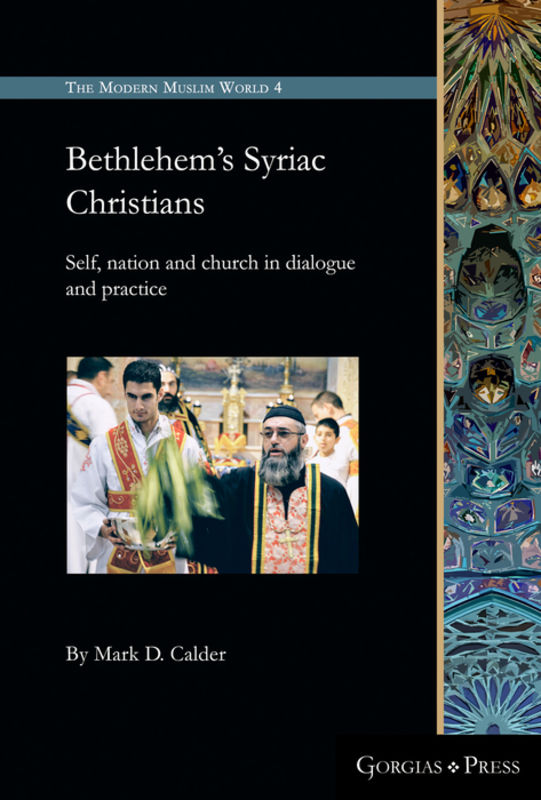
Bethlehem's Syriac Christians
An anthropological study of Syriac Orthodox Christian identity in a time of displacement, upheaval, and conflict. For some Syriac Orthodox Christians in Bethlehem, their self-articulation - the means by which they connect themselves to others, things, places and symbols - is decisively influenced by their eucharistic ritual. This ritual connects being siry?ni to a redeemed community or 'body', and derives its identity in large part from the Incarnation of God as an Aramaic-speaking Bethlehemite.
eBook

Mo(ve)ments of resistance : politics, economy and society in Israel/Palestine 1931-2013
In Mo(ve)ments of Resistance, Grinberg summarizes both his own work and that of other political economists, providing a coherent historical narrative covering the time from the beginning of Socialist Zionism (1904) to the Oslo Accords and the neoliberalization of the economy (1994-1996).
eBook

Gaza
Gaza is among the most densely populated places in the world. Two-thirds of its inhabitants are refugees, and more than half the population is under eighteen years of age. Since Israel occupied Gaza in 1967, it has systematically de-developed the economy. After Hamas won democratic elections in 2006, Israel intensified its blockade of Gaza, and after Hamas consolidated its control of the territory in 2007, Israel tightened its illegal siege another notch. In the meantime, Israel has launched no less than eight military operations against Gaza--culminating in Operation Cast Lead in 2008-9 and Operation Protective Edge in 2014--that left behind over three million tons of rubble. Recent UN reports predict that Gaza will be unlivable by 2020. Norman G. Finkelstein presents a meticulously researched and devastating inquest into Israel's actions of the last decade. He argues that although Israel justified its blockade and violent assaults in the name of self-defense, in fact these actions were cynical exercises of brutal power against an essentially defenseless civilian population. Based on hundreds of human rights reports, the book scrutinizes multifarious violations of international law Israel committed both during its operations and in the course of its decade-long siege of Gaza. It is a monument to Gaza's martyrs and a scorching accusation against their tormenters
eBook

Chances for Peace
Drawing on a newly developed theoretical definition of “missed opportunity,\" Chances for Peace uses extensive sources in English, Hebrew, and Arabic to systematically measure the potentiality levels of opportunity across some ninety years of attempted negotiations in the Arab-Israeli conflict. With enlightening revelations that defy conventional wisdom, this study provides a balanced account of the most significant attempts to forge peace, initiated by the world’s superpowers, the Arabs (including the Palestinians), and Israel. From Arab-Zionist negotiations at the end of World War I to the subsequent partition, the aftermath of the 1967 War and the Sadat Initiative, and numerous agreements throughout the 1980s and 1990s, concluding with the Annapolis Conference in 2007 and the Abu Mazen-Olmert talks in 2008, pioneering scholar Elie Podeh uses empirical criteria and diverse secondary sources to assess the protagonists’ roles at more than two dozen key junctures. A resource that brings together historiography, political science, and the practice of peace negotiation, Podeh’s insightful exploration also showcases opportunities that were not missed. Three agreements in particular (Israeli-Egyptian, 1979; Israeli-Lebanese, 1983; and Israeli-Jordanian, 1994) illuminate important variables for forging new paths to successful negotiation. By applying his framework to a broad range of power brokers and time periods, Podeh also sheds light on numerous incidents that contradict official narratives. This unique approach is poised to reshape the realm of conflict resolution.
eBook

Connecting with the Enemy
Thousands of ordinary people in Israel and Palestine have engaged in a dazzling array of daring and visionary joint nonviolent initiatives for more than a century. They have endured despite condemnation by their own societies, repetitive failures of diplomacy, harsh inequalities, and endemic cycles of violence. Connecting with the Enemy presents the first comprehensive history of unprecedented grassroots efforts to forge nonviolent alternatives to the lethal collision of the two national movements. Bringing to light the work of over five hundred groups, Sheila H. Katz describes how Arabs and Jews, children and elders, artists and activists, educators and students, garage mechanics and physicists, and lawyers and prisoners have spoken truth to power, protected the environment, demonstrated peacefully, mourned together, stood in resistance and solidarity, and advocated for justice and security. She also critiques and assesses the significance of their work and explores why these good-will efforts have not yet managed to end the conflict or occupation. This previously untold story of Palestinian-Israeli joint nonviolence will challenge the mainstream narratives of terror and despair, monsters and heroes, that help to perpetuate the conflict. It will also inspire and encourage anyone grappling with social change, peace and war, oppression and inequality, and grassroots activism anywhere in the world.
eBook
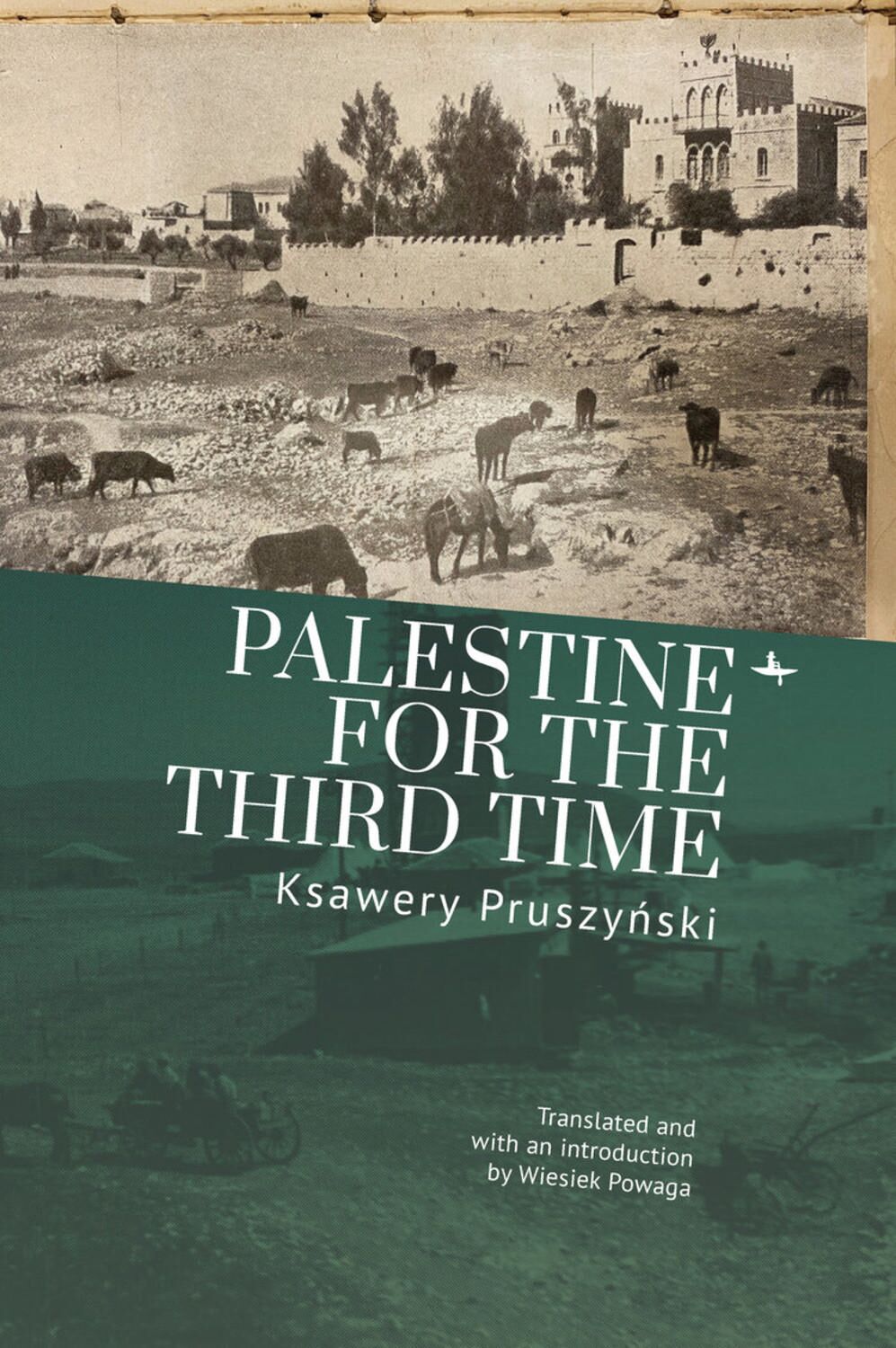
Palestine for the Third Time
Written in 1933 by a Polish reporter travelling across Mandate Palestine, this book is an eye-witness account of the early stages in formation of the state and nation of Israel, as well as a collection of founding myths. It extends the historical perspective beyond the immediate context of the current debates in and outside Israel.
eBook

State of Shock
Argues that the foundation of Israel was a trauma that destabilized the kibbutz's conceptual grounding State of Shock decodes one of the most iconic images of Zionism and Israel: the kibbutz. Lior Libman offers original theoretical and historiographical insights into the imagery and the history of the kibbutz, and, through them, of Hebrew literature and Israeli culture more broadly. Arguing that the establishment of the State of Israel was a rupture that destabilized the kibbutz's deepest conceptual ground and shifted its history, the book uncovers the seemingly surprising Hasidic resonances in the identity of the kibbutz and its self-perception as fulfilling the metaphysical in the physical.By interrogating the changes and upheavals brought about by Jewish sovereignty, their impact on the kibbutz, and its response to them, Libman defines the kibbutz's transition into Israeli statehood as a cultural trauma which robbed it of its familiar frames for interpreting historical experience. Disoriented, the kibbutz reacted in shock: it was unable to reimagine itself in the new conditions. Libman charts how the demise of the kibbutz, originally avant-garde —a political and aesthetic form that acts in history—began in 1948. Turning from its origin as a breakaway human-creation engaged in a constant process of becoming—of history-making—the kibbutz, Libman shows, transformed into a fetish in the early years of the State of Israel: a sanctified, substitutional, fossilized political and aesthetic object of compulsive metaphysical longing, frozen in time and detached from history.
eBook
A Jewish State
Israel is a “Jewish state.” What is the meaning of this and how does it align with the democratic nature of the country? These are the questions at the core of a contentious debate that has been raging since the establishment of the state. This volume includes 75 essays on the question of Jewish — Israeli identity, by some of today’s best thinkers — Jews and non-Jews, from Israel and around the world. Its pages include dreams and nightmares, poetic visions and rational analyses, harsh critiques and songs of praise.
This collection is a first-of-its-kind nexus of thought on nationality, religion, politics, culture, society, environment, economics, and security. It is essential reading for any future discussion of Israeli identity.
eBook

The One State Reality
The One State Reality argues
that a one state reality already predominates in the territories
controlled by the state of Israel. The editors show that
starting with the one state reality rather than hoping for a two
state solution reshapes how we regard the conflict, what we
consider acceptable and unacceptable solutions, and how we discuss
difficult normative questions. The One State Reality
forces a reconsideration of foundational concepts such as state,
sovereignty, and nation; encourages different readings of history;
shifts conversation about solutions from two states to alternatives
that borrow from other political contexts; and provides context for
confronting uncomfortable questions such as whether
Israel/Palestine is an \"apartheid state.\"
eBook
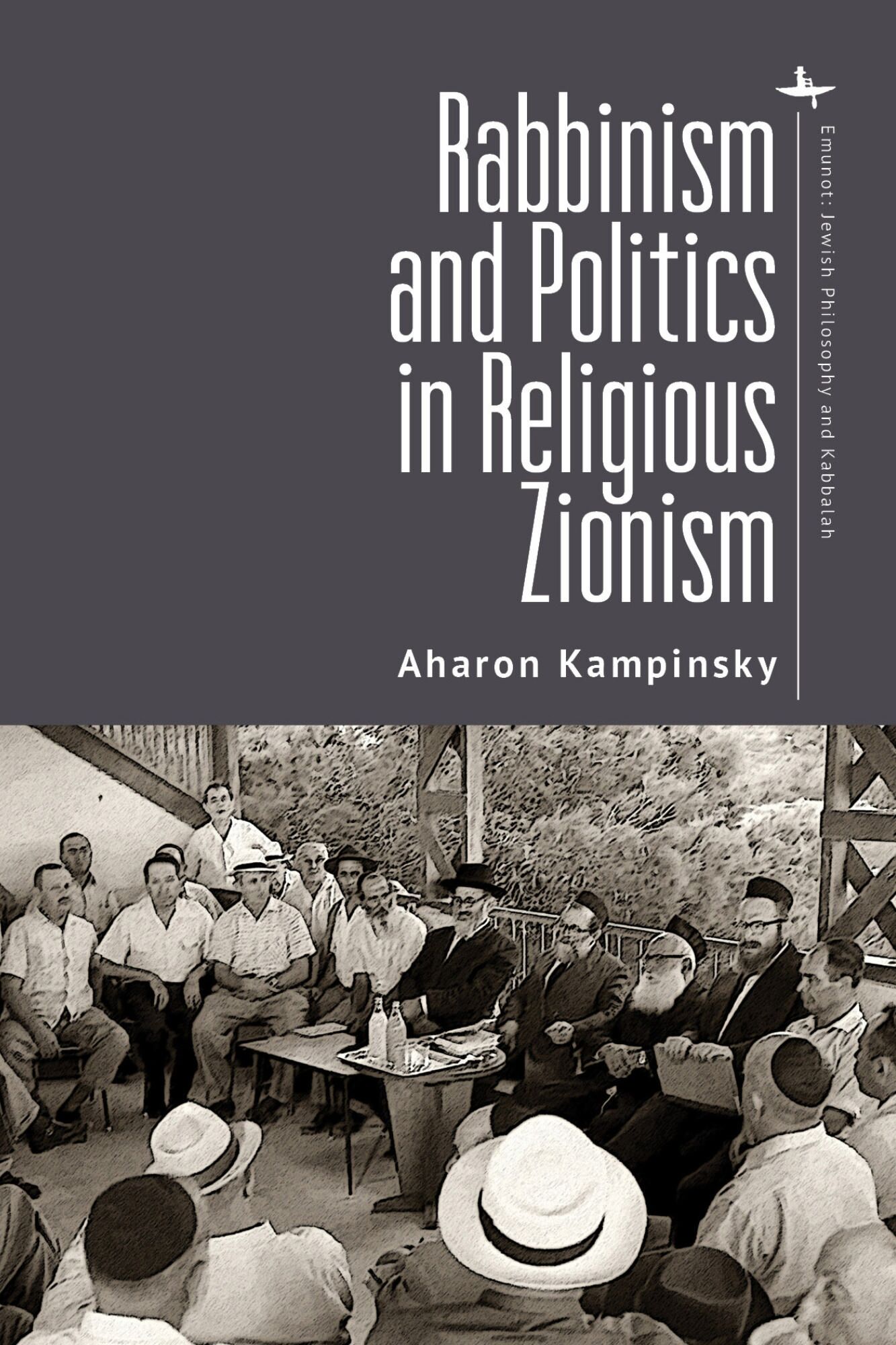
Rabbinism and Politics in Religious Zionism
This book examines the relationship between the rabbinate and politics in religious Zionism during the early years of the State of Israel. What fundamental issues did the rabbis of the party face? Did all religious Zionist rabbis follow the same ideological line? Why did the relationship between rabbis and politicians experience ups and downs? And is there a chance for rabbis to have significant influence over religious Zionism in the future?
Rabbinism and Politics in Religious Zionism seeks to answer these questions.
eBook