
Catalogue Search | MBRL


Are you sure you want to remove the book from the shelf?

{{itemTitle}}
46,821
result(s) for
"HISTORY / Civilization"
Sort by:

The Eastern Origins of Western Civilisation
John Hobson challenges the ethnocentric bias of mainstream accounts of the Rise of the West. It is often assumed that since Ancient Greek times Europeans have pioneered their own development, and that the East has been a passive by-stander in the story of progressive world history. Hobson argues that there were two processes that enabled the Rise of the 'Oriental West'. First, each major developmental turning point in Europe was informed in large part by the assimilation of Eastern inventions (e.g. ideas, technologies and institutions) which diffused from the more advanced East across the Eastern-led global economy between 500–1800. Second, the construction of European identity after 1453 led to imperialism, through which Europeans appropriated many Eastern resources (land, labour and markets). Hobson's book thus propels the hitherto marginalised Eastern peoples to the forefront of the story of progress in world history.
eBook

Medieval Robots
A thousand years before Isaac Asimov set down his Three Laws of Robotics, real and imagined automata appeared in European courts, liturgies, and literary texts. Medieval robots took such forms as talking statues, mechanical animals, and silent metal guardians; some served to entertain or instruct while others performed disciplinary or surveillance functions. Variously ascribed to artisanal genius, inexplicable cosmic forces, or demonic powers, these marvelous fabrications raised fundamental questions about knowledge, nature, and divine purpose in the Middle Ages.
Medieval Robotsrecovers the forgotten history of fantastical, aspirational, and terrifying machines that especially captivated Europe in imagination and reality between the ninth and fourteenth centuries. E. R. Truitt traces the different forms of self-moving or self-sustaining manufactured objects from their earliest appearances in the Latin West through centuries of mechanical and literary invention. Chronicled in romances and song as well as histories and encyclopedias, medieval automata were powerful cultural objects that probed the limits of natural philosophy, illuminated and challenged definitions of life and death, and epitomized the transformative and threatening potential of foreign knowledge and culture. This original and wide-ranging study reveals the convergence of science, technology, and imagination in medieval culture and demonstrates the striking similarities between medieval and modern robotic and cybernetic visions.
eBook

The Power of Knowledge
Information is power. For more than five hundred years the success or failure of nations has been determined by a country's ability to acquire knowledge and technical skill and transform them into strength and prosperity. Leading historian Jeremy Black approaches global history from a distinctive perspective, focusing on the relationship between information and society and demonstrating how the understanding and use of information have been the primary factors in the development and character of the modern age.
Black suggests that the West's ascension was a direct result of its institutions and social practices for acquiring, employing, and retaining information and the technology that was ultimately produced. His cogent and well-reasoned analysis looks at cartography and the hardware of communication, armaments and sea power, mercantilism and imperialism, science and astronomy, as well as bureaucracy and the management of information, linking the history of technology with the history of global power while providing important indicators for the future of our world.
eBook

The nature of the beasts
It is widely known that such Western institutions as the museum, the university, and the penitentiary shaped Japan’s emergence as a modern nation-state. Less commonly recognized is the role played by the distinctly hybrid institution—at once museum, laboratory, and prison—of the zoological garden. In this eye-opening study of Japan’s first modern zoo, Tokyo’s Ueno Imperial Zoological Gardens, opened in 1882, Ian Jared Miller offers a refreshingly unconventional narrative of Japan’s rapid modernization and changing relationship with the natural world. As the first zoological garden in the world not built under the sway of a Western imperial regime, the Ueno Zoo served not only as a staple attraction in the nation’s capital—an institutional marker of national accomplishment—but also as a site for the propagation of a new “natural” order that was scientifically verifiable and evolutionarily foreordained. As the Japanese empire grew, Ueno became one of the primary sites of imperialist spectacle, a microcosm of the empire that could be traveled in the course of a single day. The meaning of the zoo would change over the course of Imperial Japan’s unraveling and subsequent Allied occupation. Today it remains one of Japan’s most frequently visited places. But instead of empire in its classic political sense, it now bespeaks the ambivalent dominion of the human species over the natural environment, harkening back to its imperial roots even as it asks us to question our exploitation of the planet’s resources.
eBook

The Black campus movement : Black students and the racial reconstitution of higher education, 1965-1972
This book provides the first national study of this intense and challenging struggle which disrupted and refashioned institutions in almost every state. It also illuminates the context for one of the most transformative educational movements in American history through a history of black higher education and black student activism before 1965.
eBook

Before and After Muhammad
Islam emerged amid flourishing Christian and Jewish cultures, yet students of Antiquity and the Middle Ages mostly ignore it. Despite intensive study of late Antiquity over the last fifty years, even generous definitions of this period have reached only the eighth century, whereas Islam did not mature sufficiently to compare with Christianity or rabbinic Judaism until the tenth century.Before and After Muhammadsuggests a new way of thinking about the historical relationship between the scriptural monotheisms, integrating Islam into European and West Asian history.
Garth Fowden identifies the whole of the First Millennium--from Augustus and Christ to the formation of a recognizably Islamic worldview by the time of the philosopher Avicenna--as the proper chronological unit of analysis for understanding the emergence and maturation of the three monotheistic faiths across Eurasia. Fowden proposes not just a chronological expansion of late Antiquity but also an eastward shift in the geographical frame to embrace Iran.
InBefore and After Muhammad, Fowden looks at Judaism, Christianity, and Islam alongside other important developments in Greek philosophy and Roman law, to reveal how the First Millennium was bound together by diverse exegetical traditions that nurtured communities and often stimulated each other.
eBook
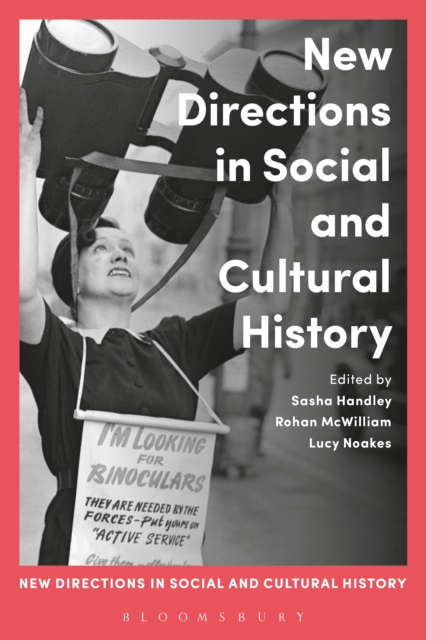
New directions in social and cultural history
What does it mean to be a social and cultural historian today?In the wake of the 'cultural turn', and in an age of digital and public history, what challenges and opportunities await historians in the early 21st century?.
eBook

The Royal Hunt in Eurasian History
From antiquity to the nineteenth century, the royal hunt was a vital component of the political cultures of the Middle East, India, Central Asia, and China. Besides marking elite status, royal hunts functioned as inspection tours and imperial progresses, a means of asserting kingly authority over the countryside. The hunt was, in fact, the \"court out-of-doors,\" an open-air theater for displays of majesty, the entertainment of guests, and the bestowal of favor on subjects. In the conduct of interstate relations, great hunts were used to train armies, show the flag, and send diplomatic signals. Wars sometimes began as hunts and ended as celebratory chases. Often understood as a kind of covert military training, the royal hunt was subject to the same strict discipline as that applied in war and was also a source of innovation in military organization and tactics. Just as human subjects were to recognize royal power, so was the natural kingdom brought within the power structure by means of the royal hunt. Hunting parks were centers of botanical exchange, military depots, early conservation reserves, and important links in local ecologies. The mastery of the king over nature served an important purpose in official renderings: as a manifestation of his possession of heavenly good fortune he could tame the natural world and keep his kingdom safe from marauding threats, human or animal. The exchanges of hunting partners-cheetahs, elephants, and even birds-became diplomatic tools as well as serving to create an elite hunting culture that transcended political allegiances and ecological frontiers. This sweeping comparative work ranges from ancient Egypt to India under the Raj. With a magisterial command of contemporary sources, literature, material culture, and archaeology, Thomas T. Allsen chronicles the vast range of traditions surrounding this fabled royal occupation.
eBook

Water 4.0
Turn on the faucet, and water pours out. Pull out the drain plug, and the dirty water disappears. Most of us give little thought to the hidden systems that bring us water and take it away when we're done with it. But these underappreciated marvels of engineering face an array of challenges that cannot be solved without a fundamental change to our relationship with water, David Sedlak explains in this enlightening book. To make informed decisions about the future, we need to understand the three revolutions in urban water systems that have occurred over the past 2,500 years and the technologies that will remake the system.
The author starts by describing Water 1.0, the early Roman aqueducts, fountains, and sewers that made dense urban living feasible. He then details the development of drinking water and sewage treatment systems-the second and third revolutions in urban water. He offers an insider's look at current systems that rely on reservoirs, underground pipe networks, treatment plants, and storm sewers to provide water that is safe to drink, before addressing how these water systems will have to be reinvented. For everyone who cares about reliable, clean, abundant water, this book is essential reading.
eBook
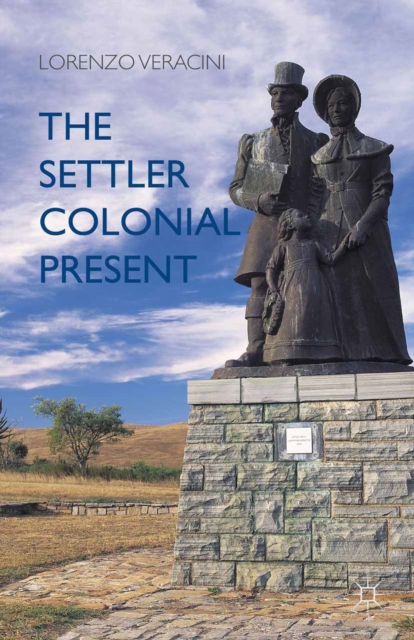
The Settler Colonial Present
What is Settler Colonialism? explores the ways in which settler colonialism as a specific mode of domination informs the global present. It presents an argument regarding its extraordinary resilience and diffusion and reflects on the need to imagine its decolonisation.
eBook