
Catalogue Search | MBRL


Are you sure you want to remove the book from the shelf?

{{itemTitle}}
31
result(s) for
"HISTORY / Civilization.-bisacsh"
Sort by:

Regimes of Happiness
‘Regimes of Happiness’ is a comparative and historical analysis of how human societies have articulated and enacted distinctive notions of human fulfillment, determining divergent moral, ethical and religious traditions and incommensurate and conflicting understanding of the meaning of the ‘good life’.
eBook

The Rise and Fall of Classical Greece
Lord Byron described Greece as great, fallen, and immortal, a characterization more apt than he knew. Through most of its long history, Greece was poor. But in the classical era, Greece was densely populated and highly urbanized. Many surprisingly healthy Greeks lived in remarkably big houses and worked for high wages at specialized occupations. Middle-class spending drove sustained economic growth and classical wealth produced a stunning cultural efflorescence lasting hundreds of years.
Why did Greece reach such heights in the classical period-and why only then? And how, after \"the Greek miracle\" had endured for centuries, did the Macedonians defeat the Greeks, seemingly bringing an end to their glory? Drawing on a massive body of newly available data and employing novel approaches to evidence, Josiah Ober offers a major new history of classical Greece and an unprecedented account of its rise and fall.
Ober argues that Greece's rise was no miracle but rather the result of political breakthroughs and economic development. The extraordinary emergence of citizen-centered city-states transformed Greece into a society that defeated the mighty Persian Empire. Yet Philip and Alexander of Macedon were able to beat the Greeks in the Battle of Chaeronea in 338 BCE, a victory made possible by the Macedonians' appropriation of Greek innovations. After Alexander's death, battle-hardened warlords fought ruthlessly over the remnants of his empire. But Greek cities remained populous and wealthy, their economy and culture surviving to be passed on to the Romans-and to us.
A compelling narrative filled with uncanny modern parallels, this is a book for anyone interested in how great civilizations are born and die.
This book is based on evidence available on a new interactive website. To learn more, please visit: http://polis.stanford.edu/.
eBook

Pacific Worlds
Asia, the Pacific Islands and the coasts of the Americas have long been studied separately. This essential single-volume history of the Pacific traces the global interactions and remarkable peoples that have connected these regions with each other and with Europe and the Indian Ocean, for millennia. From ancient canoe navigators, monumental civilisations, pirates and seaborne empires, to the rise of nuclear testing and global warming, Matt Matsuda ranges across the frontiers of colonial history, anthropology and Pacific Rim economics and politics, piecing together a history of the region. The book identifies and draws together the defining threads and extraordinary personal narratives which have contributed to this history, showing how localised contacts and contests have often blossomed into global struggles over colonialism, tourism and the rise of Asian economies. Drawing on Asian, Oceanian, European, American, ancient and modern narratives, the author assembles a fascinating Pacific region from a truly global perspective.
eBook

Egypt and the Limits of Hellenism
In a series of studies, Ian Moyer explores the ancient history and modern historiography of relations between Egypt and Greece from the fifth century BCE to the early Roman empire. Beginning with Herodotus, he analyzes key encounters between Greeks and Egyptian priests, the bearers of Egypt's ancient traditions. Four moments unfold as rich micro-histories of cross-cultural interaction: Herodotus' interviews with priests at Thebes; Manetho's composition of an Egyptian history in Greek; the struggles of Egyptian priests on Delos; and a Greek physician's quest for magic in Egypt. In writing these histories, the author moves beyond Orientalizing representations of the Other and colonial metanarratives of the civilizing process to reveal interactions between Greeks and Egyptians as transactional processes in which the traditions, discourses and pragmatic interests of both sides shaped the outcome. The result is a dialogical history of cultural and intellectual exchanges between the great civilizations of Greece and Egypt.
eBook
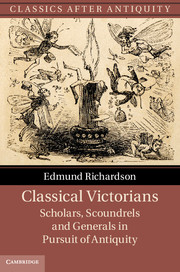
Classical Victorians
Victorian Britain set out to make the ancient world its own. This is the story of how it failed. It is the story of the headmaster who bludgeoned his wife to death, then calmly sat down to his Latin. It is the story of the embittered classical prodigy who turned to gin and opium – and the virtuoso forger who fooled the greatest scholars of the age. It is a history of hope: a general who longed to be an Homeric hero, a bankrupt poet who longed to start a revolution. Victorian classicism was defined by hope – but shaped by uncertainty. Packed with forgotten characters and texts, with the roar of the burlesque-stage and the mud of the battlefield, this book offers a rich insight into nineteenth-century culture and society. It explores just how difficult it is to stake a claim on the past.
eBook
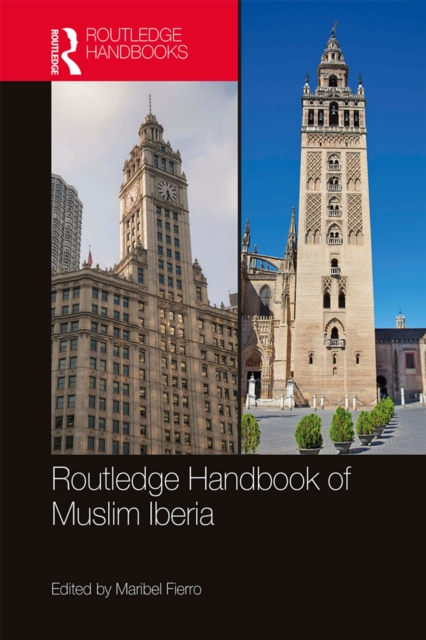
The Routledge Handbook of Muslim Iberia
This handbook offers an overview of the main issues regarding the political, economic, social, religious, intellectual and artistic history of the Iberian Peninsula during the period of Muslim rule (eighth–fifteenth centuries). A comprehensive list of primary and secondary sources attests the vitality of the academic study of al-Andalus (= Muslim Iberia) and its place in present-day discussions about the past and the present.
The contributors are all specialists with diverse backgrounds providing different perspectives and approaches. The volume includes chapters dealing with the destiny of the Muslim population after the Christian conquest and with the posterity of al-Andalus in art, literature and different historiographical traditions. The chapters are organized in the following sections:
Political history, concentrating on rulers and armies
Social, religious and economic groups
Intellectual and cultural developments
Legacy and memory of al-Andalus
Offering a synthetic and updated academic treatment of the history and society of Muslim Iberia, this comprehensive and up-to-date collection provides an authoritative and interdisciplinary guide. It is a valuable resource for both specialists and the general public interested in the history of the Iberian Peninsula, Islamic and Medieval studies.
eBook

Hybrid knowledge in the early East India Company world
Hybrid Knowledge in the Early East India Company World presents a new reading of the English East India Company 1660-1720. It shows how innovative works covering natural history, ethnography, theology, linguistics, medicine, and agriculture - were created amid early modern struggles for supremacy in Asia, the Indian Ocean and the Atlantic.
eBook
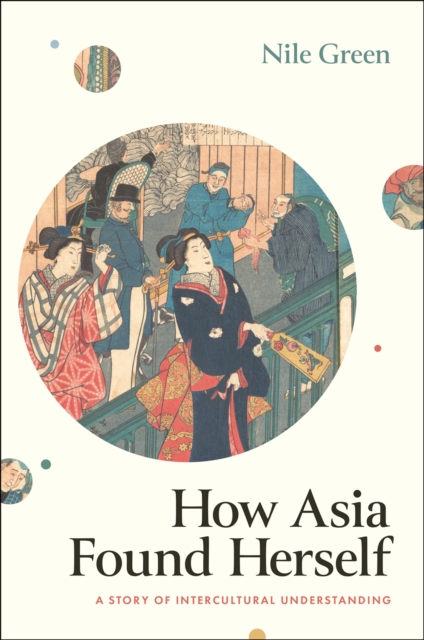
How Asia Found Herself
A pioneering history of cross-cultural knowledge that
exposes enduring fractures in unity across the world's largest
continent The nineteenth century saw European empires
build vast transport networks to maximize their profits from trade,
and it saw Christian missionaries spread printing across Asia to
bring Bibles to the colonized. The unintended consequence was an
Asian communications revolution: the maritime public sphere
expanded from Istanbul to Yokohama. From all corners of the
continent, curious individuals confronted the challenges of
studying each other's cultures by using the infrastructure of
empire for their own exploratory ends. Whether in Japanese or
Persian, Bengali or Arabic, they wrote travelogues, histories, and
phrasebooks to chart the vastly different regions that European
geographers labeled \"Asia.\" Yet comprehension does not always keep
pace with connection. Far from flowing smoothly, inter-Asian
understanding faced obstacles of many kinds, especially on a
landmass with so many scripts and languages. Here is the dramatic
story of cross-cultural knowledge on the world's largest continent,
exposing the roots of enduring fractures in Asian unity.
eBook

Re-Evaluating Education in Japan and Korea
International comparisons of student achievement in mathematics, science, and reading have consistently shown that Japanese and Korean students outperform their peers in other parts of world. Understandably, this has attracted many policymakers and researchers seeking to emulate this success, but it has also attracted strong criticism and a range of misconceptions of the Japanese and Korean education system.
Directly challenging these misconceptions, which are prevalent in both academic and public discourses, this book seeks to provide a more nuanced view of the Japanese and Korean education systems. This includes the idea that the highly standardized means of education makes outstanding students mediocre; that the emphasis on memorization leads to a lack of creativity and independent thinking; that students' successes are a result of private supplementary education; and that the Japanese and Korean education systems are homogenous to the point of being one single system. Using empirical data Hyunjoon Park re-evaluates the strengths and weaknesses of the existing education systems in Japan and Korea and reveals whether the issues detailed above are real or unfounded and misinformed.
Offering a balanced view of the evolving and complex nature of academic achievement among Japanese and Korean students, this book will appeal to students and scholars of Asian, international and comparative education, as well as those interested in Asian society more broadly.
eBook

From Near and Far
From Near and Far relates the history of modern France
from the French Revolution to the present. Noted historian Tyler
Stovall considers how the history of France interacts with both the
broader history of the world and the local histories of French
communities, examining the impacts of Karl Marx, Ho Chi Minh, Paul
Gauguin, and Josephine Baker alongside the rise of haute couture
and the contemporary role of hip hop. From Near and Far
focuses on the interactions between France and three other parts of
the world: Europe, the United States, and the French colonial
empire. Taking this transnational approach to the history of modern
France, Stovall shows how the theme of universalism, so central to
modern French culture, has manifested itself in different ways over
the last few centuries. Moreover, it emphasizes the importance of
narrative to French history, that historians tell the story of a
nation and a people by bringing together a multitude of stories and
tales that often go well beyond its boundaries. In telling these
stories From Near and Far gives the reader a vision of
France both global and local at the same time.
eBook