
Catalogue Search | MBRL


Are you sure you want to remove the book from the shelf?

{{itemTitle}}
1,489
result(s) for
"HISTORY / Europe / Spain "
Sort by:

Spain, Europe and the Wider World 1500-1800
When J. H. Elliott publishedSpain and Its World, 1500-1700some twenty years ago, one of many enthusiasts declared, \"For anyone interested in the history of empire, of Europe and of Spain, here is a book to keep within reach, to read, to study and to enjoy\" (Times Literary Supplement). Since then Elliott has continued to explore the history of Spain and the Hispanic world with originality and insight, producing some of the most influential work in the field. In this new volume he gathers writings that reflect his recent research and thinking on politics, art, culture, and ideas in Europe and the colonial worlds between 1500 and 1800.
The volume includes fourteen essays, lectures, and articles of remarkable breadth and freshness, written with Elliott's characteristic brio. It includes an unpublished lecture in honor of the late Hugh Trevor-Roper. Organized around three themes-early modern Europe, European overseas expansion, and the works and historical context of El Greco, Velázquez, Rubens, and Van Dyck-the book offers a rich survey of the themes at the heart of Elliott's interests throughout a career distinguished by excellence and innovation.
eBook

Catalonia's Human Towers
The building of human towers (
castells ) is a centuries-old
traditional sport where hundreds of men, women, and children gather
in Catalan squares to create breathtaking edifices through a feat
of collective athleticism. The result is a great spectacle of
effort and overcoming, tension and release.
Catalonia's Human Towers is an ethnographic look at the
thriving castells practice-a symbol of Catalan cultural heritage
and identity amid debates around national autonomy and secession
from Spain. While the main function of building castells is to grow
community through a low-cost, intergenerational, and inclusive
leisure activity, Mariann Vaczi reveals how this unique sport also
provides a social base, image, and vocabulary for the independence
movement.
Highlighting the intersection of folklore, performance, and
sport, Catalonia's Human Towers captures the subtle
processes by which the body becomes politicized and ideology
becomes embodied, with all the desires, risks and precarities of
collective constructions.
eBook
Armada
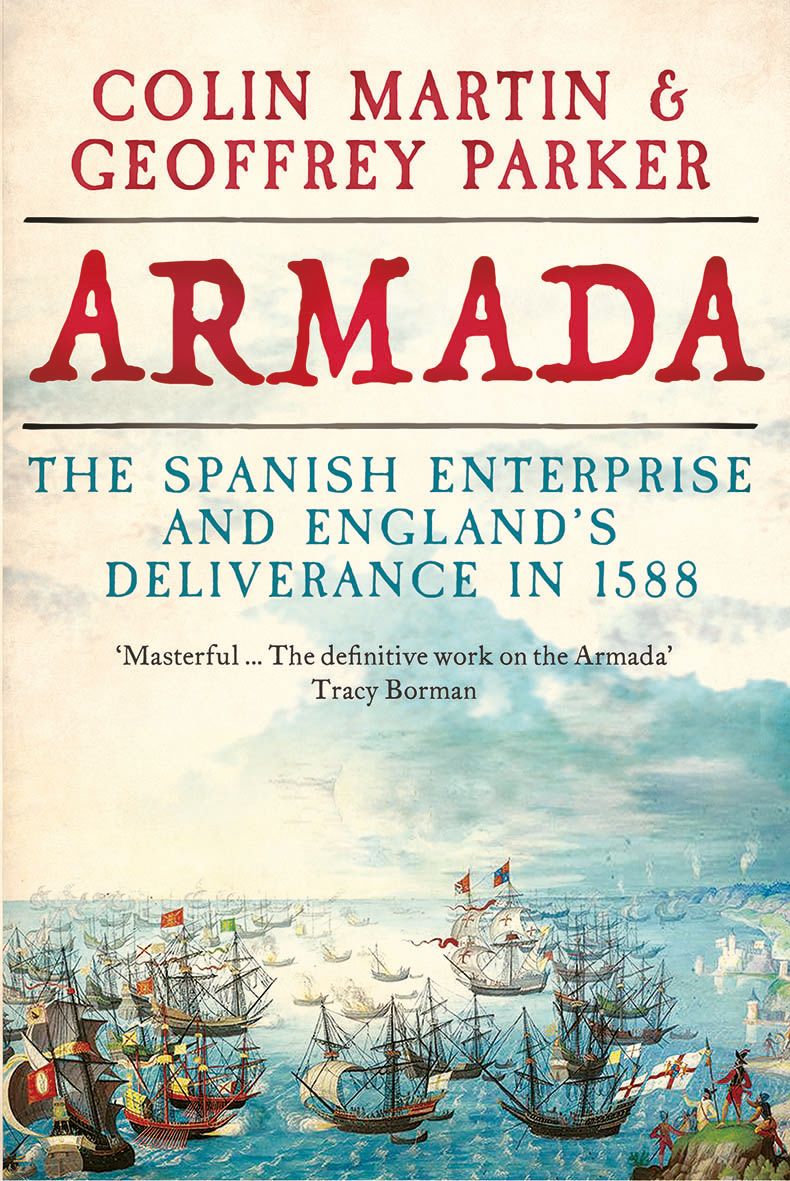
The definitive history of the Spanish Armada, lavishly illustrated and fully revised\"Will surely become the definitive account.\"-Stephen Brumwell, Wall Street Journal In July 1588 the Spanish Armada sailed from Corunna to conquer England. Three weeks later an English fireship attack in the Channel-and then a fierce naval battle-foiled the planned invasion. Many myths still surround these events. The genius of Sir Francis Drake is exalted, while Spain's efforts are belittled. But what really happened during that fateful encounter? Drawing on archives from around the world, Colin Martin and Geoffrey Parker also deploy vital new evidence from Armada shipwrecks off the coasts of Ireland and Scotland. Their gripping, beautifully illustrated account provides a fresh understanding of how the rival fleets came into being; how they looked, sounded, and smelled; and what happened when they finally clashed. Looking beyond the events of 1588 to the complex politics which made war between England and Spain inevitable, and at the political and dynastic aftermath, Armada deconstructs the many legends to reveal why, ultimately, the bold Spanish mission failed.
eBook

The Stolen Bones of St. John of Matha
On the night of March 18, 1655, two Spanish friars broke into a church to steal the bones of the founder of their religious institution, the Order of the Most Holy Trinity. This book investigates this little-known incident of relic theft and the lengthy legal case that followed, together with the larger questions that surround the remains of saints in seventeenth-century Catholic Europe.
Drawing on a wealth of manuscript and print sources from the era, A. Katie Harris uses the case of St. John of Matha’s stolen remains to explore the roles played by saints’ relics, the anxieties invested in them, their cultural meanings, and the changing modes of thought with which early modern Catholics approached them. While in theory a relic’s authenticity and identity might be proved by supernatural evidence, in practice early modern Church authorities often reached for proofs grounded in the material, human world—preferences that were representative of the standardizing and streamlining of sixteenth- and seventeenth-century saint-making. Harris examines how Matha’s advocates deployed material and documentary proofs, locating them within a framework of Scholastic concepts of individuation, identity, change, and persistence, and applying moral certainty to accommodate the inherent uncertainty of human evidence and relic knowledge.
Engaging and accessible, The Stolen Bones of St. John of Matha raises an array of important questions surrounding relic identity and authenticity in seventeenth-century Europe. It will be of interest to students, scholars, and casual readers interested in European history, religious history, material culture, and Renaissance studies.
eBook

At the First Table
Research on European food culture has expanded substantially in recent years, telling us more about food preparation, ingredients, feasting and fasting rituals, and the social and cultural connotations of food.At the First Tabledemonstrates the ways in which early modern Spaniards used food as a mechanism for the performance of social identity. People perceived themselves and others as belonging to clearly defined categories of gender, status, age, occupation, and religion, and each of these categories carried certain assumptions about proper behavior and appropriate relationships with others. Food choices and dining customs were effective and visible ways of displaying these behaviors in the choreography of everyday life. In contexts from funerals to festivals to their treatment of the poor, Spaniards used food to display their wealth, social connections, religious affiliation, regional heritage, and membership in various groups and institutions and to reinforce perceptions of difference.Research on European food culture has been based largely on studies of England, France, and Italy, but more locally on Spain. Jodi Campbell combines these studies with original research in household accounts, university and monastic records, and municipal regulations to provide a broad overview of Spanish food customs and to demonstrate their connections to identity and social change in the sixteenth and seventeenth centuries.
eBook
The Routledge Handbook of Muslim Iberia
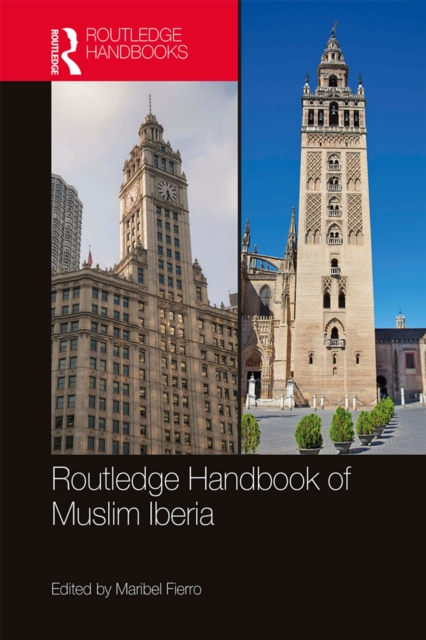
This handbook offers an overview of the main issues regarding the political, economic, social, religious, intellectual and artistic history of the Iberian Peninsula during the period of Muslim rule (eighth-fifteenth centuries). A comprehensive list of primary and secondary sources attests the vitality of the academic study of al-Andalus (= Muslim Iberia) and its place in present-day discussions about the past and the present.
The contributors are all specialists with diverse backgrounds providing different perspectives and approaches. The volume includes chapters dealing with the destiny of the Muslim population after the Christian conquest and with the posterity of al-Andalus in art, literature and different historiographical traditions. The chapters are organized in the following sections:
Political history, concentrating on rulers and armies
Social, religious and economic groups
Intellectual and cultural developments
Legacy and memory of al-Andalus
Offering a synthetic and updated academic treatment of the history and society of Muslim Iberia, this comprehensive and up-to-date collection provides an authoritative and interdisciplinary guide. It is a valuable resource for both specialists and the general public interested in the history of the Iberian Peninsula, Islamic and Medieval studies.
eBook

Spain in the nineteenth century
The nineteenth-century Hispanic world was shattered to its core by war, civil war, and revolution. At the same time, it confronted a new period of European and North-American expansion and development. In these essays, authors explore major, dynamic ways that people in Spain envisaged how they would adapt and change, or simply continue as they were. Each chapter title begins with the words “How to...”, and examines the ways in which Spaniards conceived or undertook major activities that shaped their lives. These range from telling the time to being a man. Adaptability, paradox, and inconsistency come to the fore in many of the essays. We find before us a human quest for opportunity and survival in a complex and changing world. This wide-ranging book contains chapters by leading scholars from the United States, United Kingdom, and Spain.
eBook

Bilingual Legacies
Bilingual Legacies examines fatherhood in the work of four canonical Spanish authors born in Barcelona and raised during the dictatorship of Francisco Franco. Drawing on the autobiographical texts of Juan Goytisolo, Carlos Barral, Terenci Moix, and Clara Janes, the book explores how these authors understood gender roles and paternal figures as well as how they positioned themselves in relation to Spanish and Catalan literary traditions.Anna Casas Aguilar contends that through their presentation of father figures, these authors subvert static ideas surrounding fatherhood. She argues that this diversity was crucial in opening the door to revised gender models in Spain during the democratic period. Moving beyond the shadow of the dictator, Casas Aguilar shows how these writers distinguished between the patriarchal \"father of the nation\" and their own paternal figures. In doing so, Bilingual Legacies sheds light on the complexity of Spanish conceptions of gender, language, and family and illustrates how notions of masculinity, authorship, and canon are interrelated.
eBook

Sex, Drugs, and Fashion in 1970s Madrid
During the last decade of Franco’s repressive rule, the Spanish outlook on sex, drugs, and fashion shifted dramatically, creating a favourable cultural environment for the return of democracy. Exploring changes in urban planning, narratives of sexual and gender identity, recreational drug use, and fashion design during the seventies, Sex, Drugs, and Fashion in 1970s Madrid argues that it was during this decade that the material and emotional conditions for the groundbreaking transition to democracy first began to develop.
Thanks in part to a mass media saturated with international trends, citizens of Madrid began to adopt practices, behaviours, and attitudes that would ultimately render Franco’s military dictatorship obsolete. This cultural history examines these modest but irreversible changes in the way people lived and thought about their lives during the last decade of the regime’s creed. Not a revolution necessarily, but transformational nevertheless, these changes in collective sensibility eased the political transition to democracy and the emergence of the 1980s’ cultural movement la Movida .
eBook

Alfonso X of Castile-León
This book analyses text, image and manuscript layout to deepen our understanding of the different ways in which Alfonso is presented as a learned king in the manuscripts he commissioned, and reassesses the number of manuscripts copied for him.
eBook