
Catalogue Search | MBRL


Are you sure you want to remove the book from the shelf?

{{itemTitle}}
3,321
result(s) for
"HISTORY / Europe / Western"
Sort by:

Feminism and motherhood in Western Europe, 1890-1970 : the maternal dilemma
According to Allen, motherhood and citizenship are terms that are closely linked and have been redefined over the past century due to changes in women's status, feminist movements, and political developments. Mother-child relationships were greatly affected by political decisions during the early 1900s, and the maternal role has been transformed over the years. To understand the dilemmas faced by women concerning motherhood and work, for example, Allen argues that the problem must be examined in terms of its demographic and political development through history. Allen highlights the feminist movements in Western Europe - primarily Britain, France, Germany and the Netherlands, and explores the implications of the maternal role for women's aspirations to the rights of citizenship. Among the topics Allen explores the history of the maternal role, psychoanalysis and theories on the mother-child relationship, changes in family law from 1890-1914, the economic status of mothers, and reproductive responsibility.
eBook

Not Dead Things
This collection explores the surprising ways by which cheap print moved across Europe, focussing on Italy, the Netherlands and Britain. Looking at pedlars, commerce and communication, it presents a model of textual dissemination and the material and economic premises of European landscapes of print.
eBook

Participation, responsibility and choice
Responsibility, participation and choice are key policy framings of active citizenship, summoning the citizen to take on new roles in welfare state reform. This volume traces the emergence of new discourses and the ways in which they take up and rework struggles of social movements for greater independence, power and control. It explores the changing cultural and political inflections of active citizenship in Germany, Finland, Norway, the Netherlands, France, Italy and the UK, with ethnographic research complementing policy analysis. The editors then look across the volume to assess some of the tensions and contradictions arising in the turn to active citizenship. Two final chapters address the reworking of citizen/professional relationships and the remaking of public, private and personal responsibilities, with a particular focus on the contribution of feminist research and theory.
eBook

The Logics and Politics of Post-WWII Migration to Western Europe
Few phenomena have been more disruptive to West European politics and society than the accumulative experience of post-WWII immigration. Against this backdrop spring two questions: Why have the immigrant-receiving states historically permitted high levels of immigration? To what degree can the social and political fallout precipitated by immigration be politically managed? Utilizing evidence from a variety of sources, this study explores the links between immigration and the surge of popular support for anti-immigrant groups; its implications for state sovereignty; its elevation to the policy agenda of the European Union; and its domestic legacies. It argues that post-WWII migration is primarily an interest-driven phenomenon that has historically served the macroeconomic and political interests of the receiving countries. Moreover, it is the role of politics in adjudicating the claims presented by domestic economic actors, foreign policy commitments, and humanitarian norms that creates a permissive environment for significant migration to Western Europe.
eBook
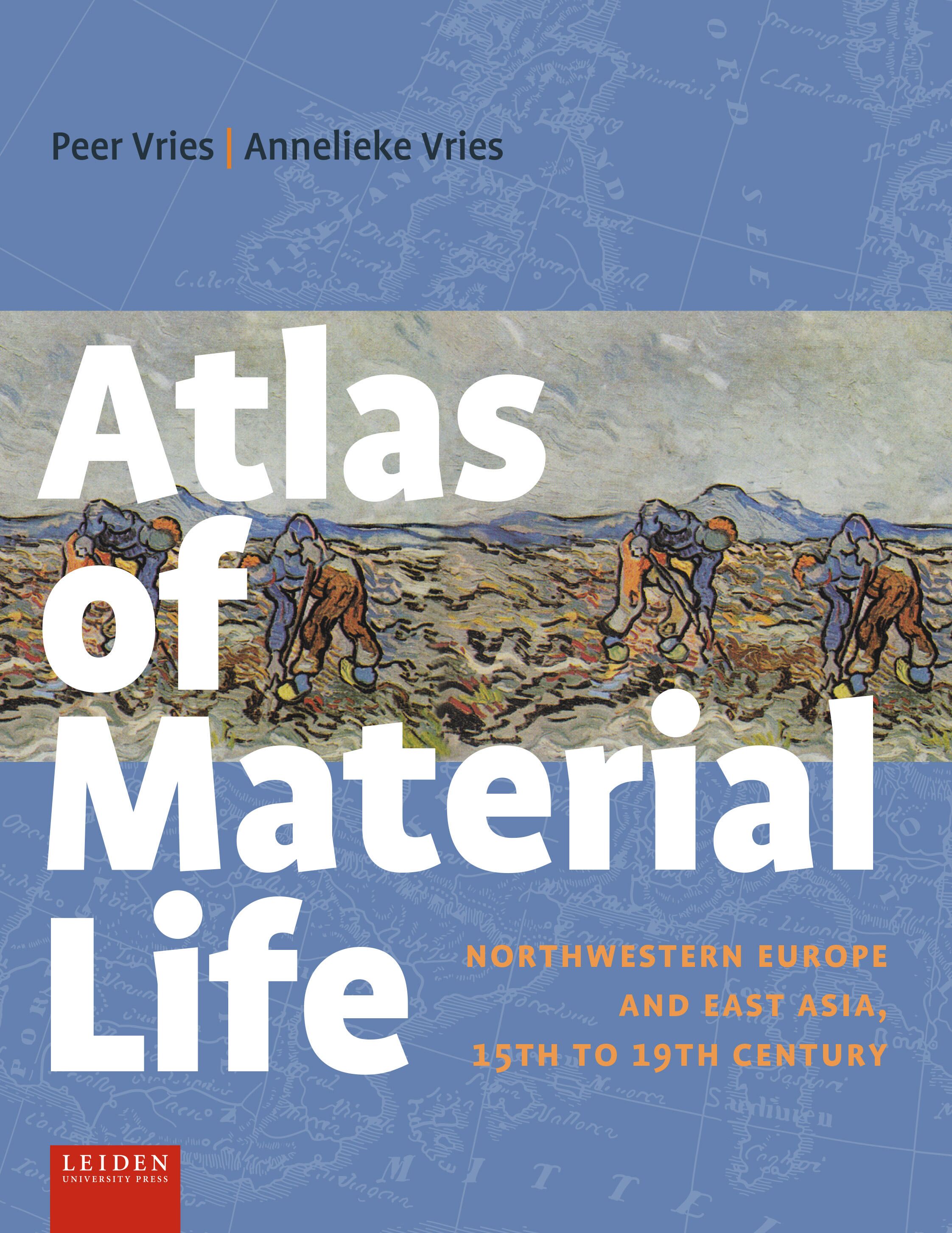
Atlas of Material Life
Large-scale comparative economic history of westernmost and easternmost Eurasia can be beneficial for the understanding of global history. This book provides a description of material life in North-western Europe and East Asia, for the period from the late fifteenth to the late nineteenth centuries, with a focus on developments in Great Britain and the Dutch Republic on the one hand and China and Japan on the other hand. With maps, tables, graphs and figures as a prominent and integral part of the book, it provides information, in an accessible format, on the main characteristics of the economic landscape of this period. It demonstrates the constraints to which all pre-industrial economies were subjected because of their dependence on organic natural resources but also the different ways in which the societies discussed dealt with those constraints. To provide a better understanding of this economy of limited possibilities, the final chapter of the book is devoted to the emergence of modern economic growth in Western Europe.
eBook

Negotiating Conflict and Controversy in the Early Modern Book World
This volume offers fifteen chapters written by leading specialists which explore the range of ways in which the book industry negotiated conflicts and controversies in the early modern European world.
eBook

Delegation and accountability in parliamentary democracies
Parliamentary democracy is the most common way of organizing delegation and accountability in contemporary democracies. Yet knowledge of this type of regime has been incomplete and often unsystematic. Delegation and Accountability in Parliamentary Democracies offers new conceptual clarity on the topic. Taking principal-agent theory as its framework, the work illustrates how a variety of apparently unrelated representation issues can now be understood. This procedure allows scholarship to move well beyond what have previously been cloudy and confusing debates aimed at defining the virtues and perils of parliamentarism. This new empirical investigation includes all 17 West European parliamentary democracies. These countries are compared in a series of cross-national tables and figures, and 17 country chapters provide a wealth of information on four discrete stages in the delegation process: delegation from voters to parliamentary representatives, delegation from parliament to the prime minister and cabinet, delegation within the cabinet, and delegation from cabinet ministers to civil servants. Each chapter illustrates how political parties serve as bonding instruments, which align incentives and permit citizen control of the policy process. This is complemented by a consideration of external constraints, such as courts, central banks, corporatism, and the European Union, which can impinge on national-level democratic delegation. The concluding chapters go on to consider how well the problems of delegation and accountability are solved in these countries. Delegation and Accountability in Parliamentary Democracies provides an unprecedented guide to contemporary European parliamentary democracies. As democratic governance is transformed at the dawn of the twenty-first century, it illustrates the important challenges faced by the parliamentary democracies of Western Europe.
eBook

The Cultural Cold War in Western Europe 1945-1960
The idea of the Cold War as a propaganda contest as opposed to a military conflict is being increasingly accepted. This has led to a re-evaluation of the relationship between economic policies, political agendas and cultural activities in Western Europe post 1945. This book provides an important cross-section of case studies that highlight the connections between overt/covert activities and cultural/political agendas during the early Cold War. It therefore provides a valuable bridge between diplomatic and intelligence research and represents an important contribution towards our understanding of the significance and consequences of this linkage for the shaping of post-war democratic societies.
eBook

The Roman West, AD 200–500
This book describes and analyses the development of the Roman West from Gibraltar to the Rhine, using primarily the extensive body of published archaeological evidence rather than the textual evidence underlying most other studies. It situates this development within a longer-term process of change, proposing the later second century rather than the 'third-century crisis' as the major turning-point, although the latter had longer-term consequences owing to the rise in importance of military identities. Elsewhere, more 'traditional' forms of settlement and display were sustained, to which was added the vocabulary of Christianity. The longer-term rhythms are also central to assessing the evidence for such aspects as rural settlement and patterns of economic interaction. The collapse of Roman imperial authority emphasised trends such as militarisation and regionalisation along with economic and cultural disintegration. Indicators of 'barbarian/Germanic' presence are reassessed within such contexts and the traditional interpretations questioned and alternatives proposed.
eBook

Modernity and Bourgeois Life
To be modern may mean many different things, but for nineteenth-century Europeans 'modernity' suggested a new form of life in which bourgeois activities, people, attitudes and values all played key roles. Jerrold Seigel's panoramic new history offers a magisterial and highly original account of the ties between modernity and bourgeois life, arguing that they can be best understood not in terms of the rise and fall of social classes, but as features of a common participation in expanding and thickening 'networks of means' that linked together distant energies and resources across economic, political and cultural life. Exploring the different configurations of these networks in England, France and Germany, he shows how their patterns gave rise to distinctive forms of modernity in each country and shaped the rhythm and nature of change across spheres as diverse as politics, money and finance, gender relations, morality, and literary, artistic and musical life.
eBook