
Catalogue Search | MBRL


Are you sure you want to remove the book from the shelf?

{{itemTitle}}
9,629
result(s) for
"HISTORY / Modern / General"
Sort by:

The Palgrave Handbook of Contemporary Heritage Research
01
02
This book explores heritage from a wide range of perspectives and disciplines and in doing so provides a distinctive and deeply relevant survey of the field as it is currently researched, understood and practiced around the world. Furthermore it establishes and develops through its various sections and chapters an accessible and clearly presented vision of heritage as a cultural process designed for use by students, advance scholars and practitioners alike. This book provides both critical insight and food for thought, directing the reader to key texts in the various aspects of the field and charting a course for future research.
13
02
Emma Waterton is a DECRA Fellow at the University of Western Sydney's Institute for Culture and Society, Australia. Her research explores the interface between heritage, identity, memory and affect. She is author of Politics, Policy and the Discourses of Heritage in Britain (2010, Palgrave Macmillan) and The Semiotics of Heritage Tourism (with Steve Watson; 2014).
Steve Watson is Principal Lecturer at York St John University, UK, where he teaches cultural and heritage tourism. His research is concerned primarily with the representation and experience of heritage and he has a particular interest in Spanish travel writing. His most recent book is The Semiotics of Heritage Tourism (with Emma Waterton; 2014).
04
02
Introduction: Heritage as a Focus of Research – Past, Present and New Directions; Emma Waterton and Steve Watson
PART I: HERITAGE MEANINGS
1. Heritage Methods and Methodologies; Emma Waterton and Steve Watson
2. Heritage and Discourse; Zongjie Wu and Song Hou
3. Heritage as Performance; Michael Haldrup and Jørgen Ole Bærenholdt
4. Heritage and Authenticity; Helaine Silverman
PART II: HERITAGE IN CONTEXT
5. From Heritage to Archaeology and Back Again; Shatha Abu Khafajah and Arwa Badren
6. Heritage and History; Jessica Moody
7. Thinking About Others through Museums and Heritage; Andrea Witcomb
8. Heritage and Tourism; Duncan Light
9. Heritage and Geography; Nuala C. Johnson
PART III: HERITAGE AND CULTURAL EXPERIENCE
10. Affect, Heritage, Feeling; David Crouch
11. Heritage and Memory; Joy Sather-Wagstaff
12. Heritage and the Visual Arts; Russell Staiff
13. Industrial Heritage and Tourism: A Review of the Literature; Alfonso Vargas Sanchez
14. Curating Sound for Future Communities; Noel Lobley
15. Heritage and Sport; Gregory Ramshaw and Sean Gammon
PART IV: CONTESTED HERITAGE AND EMERGING ISSUES
16. Heritage in Multicultural Times; Cristóbal Gnecco
17. Cultural Heritage and Armed Conflict: New Questions for an Old Relationship; Dacia Viejo Rose and Marie Louise Stig Sørensen
18. Heritage and Globalisation; Rodney Harrison
19. Critical Approaches to Post-Colonial (Post-Conflict) Heritage; John Giblin
PART V: HERITAGE, IDENTITY AND AFFILIATION
20. Heritage and Nationalism: An Unbreachable Couple?; Tim Winter
21. Heritage and Participation; Cath Neal
22. Heritage and Social Class; Bella Dicks
23. Of Routes and Roots: Paths for Understanding Diasporic Heritage; Ann Reed
24. Making Feminist Heritage Work: Gender and Heritage; Anna Reading
PART VI: HERITAGE AND SOCIAL PRACTICE
25. 'Thinkers and Feelers' a Psychological Perspective on Heritage and Society; John Schofield
26. Heritage and Policy; John Pendlebury
27. Heritage, Power and Ideology; Katharina Schramm
28. Heritage and Economic Development; Steve Watson and María del Rosario González-Rodríguez
29. Heritage in Consumer Marketing; Georgios C. Papageorgiou
30. Heritage and Sustainable Development: Transdisciplinary Imaginings of a Wicked Philosophy; Robyn Bushell
PART VII: CONCLUSIONS
31. Contemporary Heritage and the Future; Cornelius Holtorf and Anders Högberg
32. Themes, Thoughts, Reflections; Steve Watson and Emma Waterton
02
02
This book explores heritage from a wide range of perspectives and disciplines and in doing so provides a distinctive and deeply relevant survey of the field as it is currently researched, understood and practiced around the world.
eBook

How to be a historian
This volume offers a stimulating new perspective on the history of historical studies. Through the prism of ‘scholarly personae’, it explores why historians care about attitudes or dispositions that they consider necessary for studying the past, yet often disagree about what virtues, skills, or competencies are most important. More specifically, the volume explains why models of virtue known as ‘personae’ have always been contested, yet also can prove remarkably stable, especially with regard to their race, class, and gender assumptions. Covering historical studies across Europe, North America, Africa, and East Asia, How to be a historian will appeal not only to historians of historiography, but to all historians who occasionally wonder: What kind of a historian do I want to be?
eBook

Piracy in World History
In a modern global historical context, scholars have often regarded piracy as an essentially European concept which was inappropriately applied by the expanding European powers to the rest of the world, mainly for the purpose of furthering colonial forms of domination in the economic, political, military, legal and cultural spheres. By contrast, this edited volume highlights the relevance of both European and non-European understandings of piracy to the development of global maritime security and freedom of navigation. It explores the significance of ‘legal posturing’ on the part of those accused of piracy, as well as the existence of non-European laws and regulations regarding piracy and related forms of maritime violence in the early modern era. The authors in Piracy in World History highlight cases from various parts of the early-modern world, thereby explaining piracy as a global phenomenon.
eBook

Silvio Berlusconi
This book is about one of the most remarkable European politicians of recent decades, Silvio Berlusconi, and about his contribution to the dramatic changes that have overtaken Italian politics since the early 1990s. From the vantage point of 2017, would Italian political history of the past twenty-five years look substantially different had Berlusconi not had the high-profile role in it that he did? Asking the question makes it possible to contribute to a broader debate of recent years concerning the significance of leaders in post-Cold War democratic politics. Having considered Berlusconi’s legacy in the areas of political culture, voting and party politics, public policy and the quality of Italian democracy, the book concludes by considering the international significance of the Berlusconi phenomenon in relation to the recent election of Donald Trump, with whom Berlusconi is often compared.
eBook
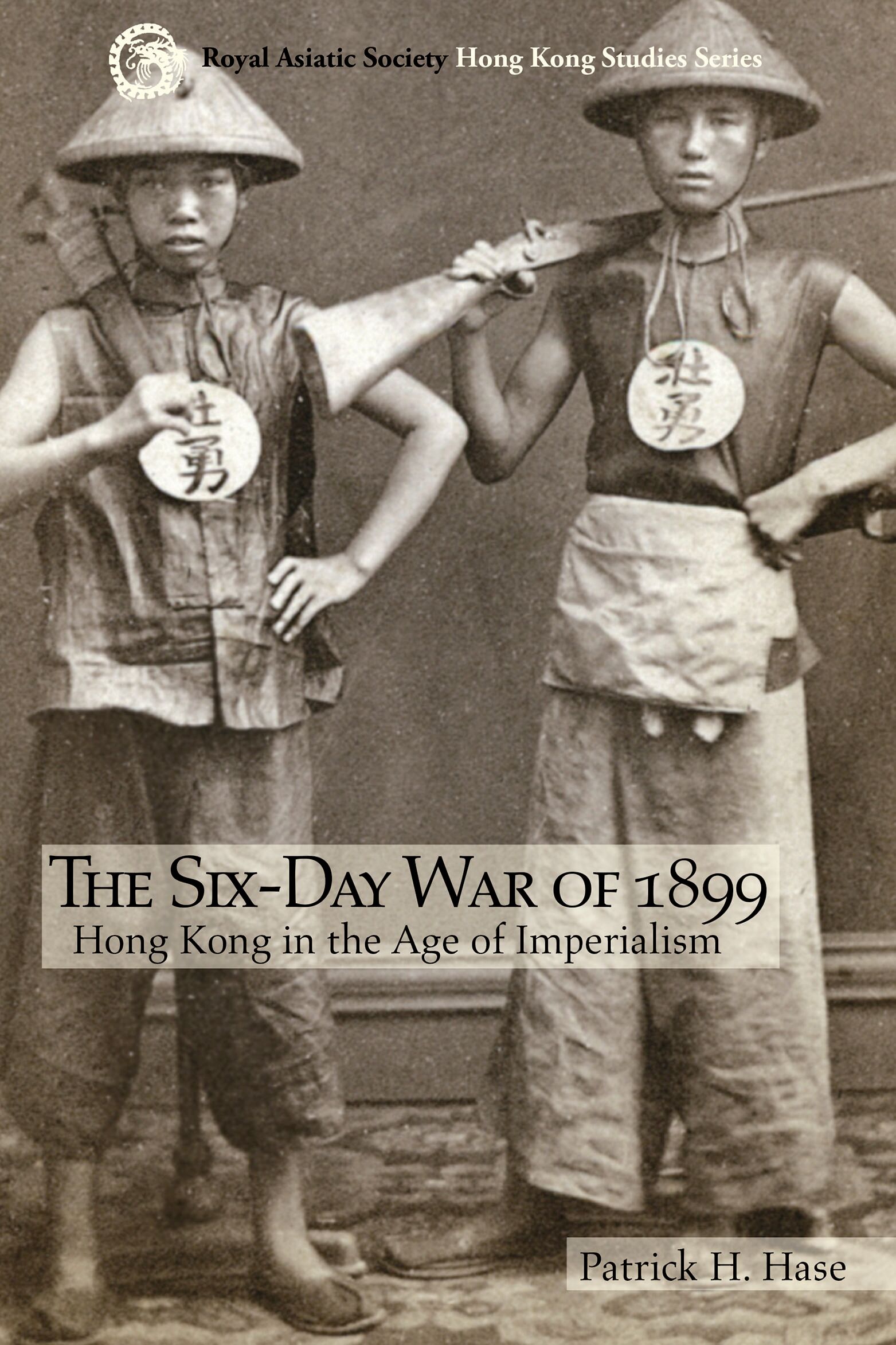
The Six-Day War of 1899
In 1899, a year after the Convention of Peking leased the New Territories to Britain, the British moved to establish control. This triggered resistance by some of the population of the New Territories. There ensued six days of fighting with heavy Chinese casualties. This truly forgotten war has been thoroughly researched for the first time and recounted in lively style by Patrick Hase, an expert on the people and history of the New Territories. After brief discussion of British Imperialism in the 1890s and British military theory of that period on small wars, the heart of the book is a day-by-day account of the fighting and of the differences of opinion between the Governor of Hong Kong (Blake) and the Colonial Secretary (Lockhart) as to how the war should be fought. Dr Hase uses his deep knowledge of the people and the area to give a full picture of the leaders and of the rank-and-file of the village fighters. New estimates of the casualties are provided, as are the implications of the way these casualties are down-played in most British accounts. As a small war of Imperial Expansion, fought at precisely the high point of Imperial thinking within the British Empire, The Six-Day War of 1899 is of interest, not only to historians of Hong Kong and China, but also to historians of the British Empire and the British Army, and to general readers interested in military, imperial and Hong Kong history.
eBook

Pacific Crossing
During the nineteenth century tens of thousands of Chinese men and women crossed the Pacific to work, trade, and settle in California. Drawn initially by the gold rush, they took with them skills and goods and a view of the world which, though still Chinese, was transformed by their long journeys back and forth. They in turn transformed Hong Kong, their main point of embarkation, from a struggling infant colony into a prosperous international port and the cultural center of a far-ranging Chinese diaspora. Making use of extensive research in archives around the world, Pacific Crossing charts the rise of Chinese Gold Mountain firms engaged in all kinds of transpacific trade, especially the lucrative export of prepared opium and other luxury goods. Challenging the traditional view that the migration was primarily a “coolie trade,” Elizabeth Sinn uncovers leadership and agency among the many Chinese who made the crossing. In presenting Hong Kong as an “in-between place” of repeated journeys and continuous movement, Sinn also offers a fresh view of the British colony and a new paradigm for migration studies.
eBook
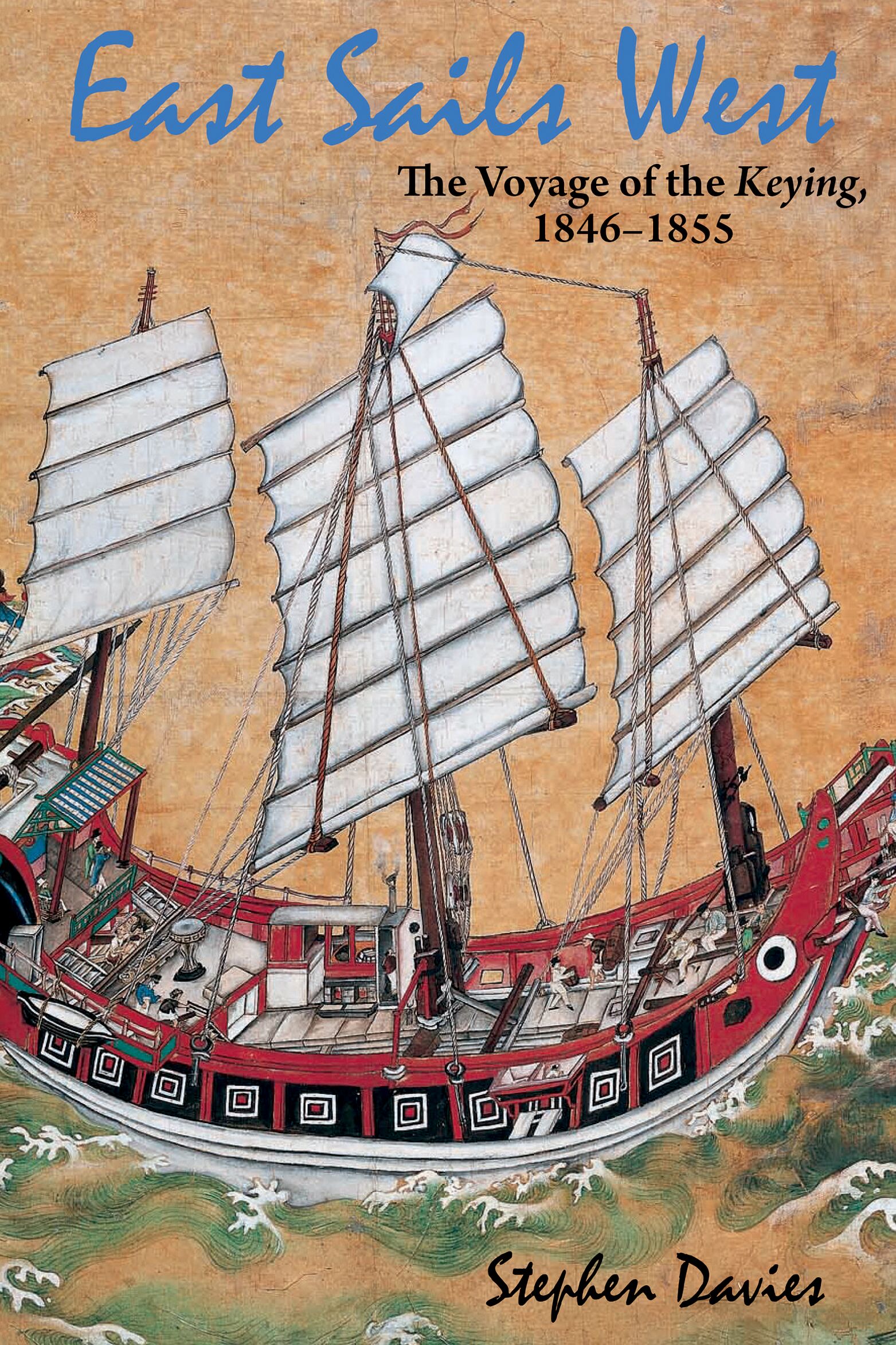
East Sails West
In December 1846, the Keying, a Chinese junk purchased by British investors, set sail from Hong Kong for London. Named after the Chinese Imperial Commissioner who had signed away Hong Kong to the British, manned by a Chinese and European crew, and carrying a travelling exhibition of Chinese items, the Keying had a troubled voyage. After quarrels on the way and a diversion to New York, culminating in a legal dispute over arrears of wages for Chinese members of the crew, it finally reached London in 1848, where it went on exhibition on the River Thames until 1853. It was then auctioned off, towed to Liverpool, and finally broken up. In this account of the ship, the crew and the voyage, Stephen Davies tells a story of missed opportunities, with an erratic course, overambitious aims, and achievements born of lucky breaks—a microcosm, in fact, of early Hong Kong and of the relations between China and the West.
eBook

Why China did not have a Renaissance - and why that matters
The series facilitates access to the fast-moving discussion about Global Intellectual History from the sixteenth to the twentieth centuries. It provides a forum for new methodological approaches and unconventional formats. Every volume engages in a critical reading of the state of research and explicitly reflects on its methodological toolkit.
eBook
Merchants of War and Peace
Merchants of War and Peace challenges conventional arguments that the major driving forces of the First Opium War were the infamous opium smuggling trade, the defence of British national honour, and cultural conflicts between ‘progressive’ Britain and ‘backward’ China. Instead, it argues that the war was started by a group of British merchants in the Chinese port of Canton in the 1830s, known as the ‘Warlike party’. Living in a period when British knowledge of China was growing rapidly, the Warlike party came to understand China’s weakness and its members returned to London to lobby for intervention until war broke out in 1839. However, the Warlike party did not get its way entirely. Another group of British merchants known in Canton as the ‘Pacific party’ opposed the war. In Britain, the anti-war movement gave the conflict its infamous name, the ‘Opium War’, which has stuck ever since. Using materials housed in the National Archives, UK, the First Historical Archives of China, the National Palace Museum, the British Library, SOAS Library, and Cambridge University Library, this meticulously researched and lucid volume is a new history of the cause of the First Opium War.
eBook
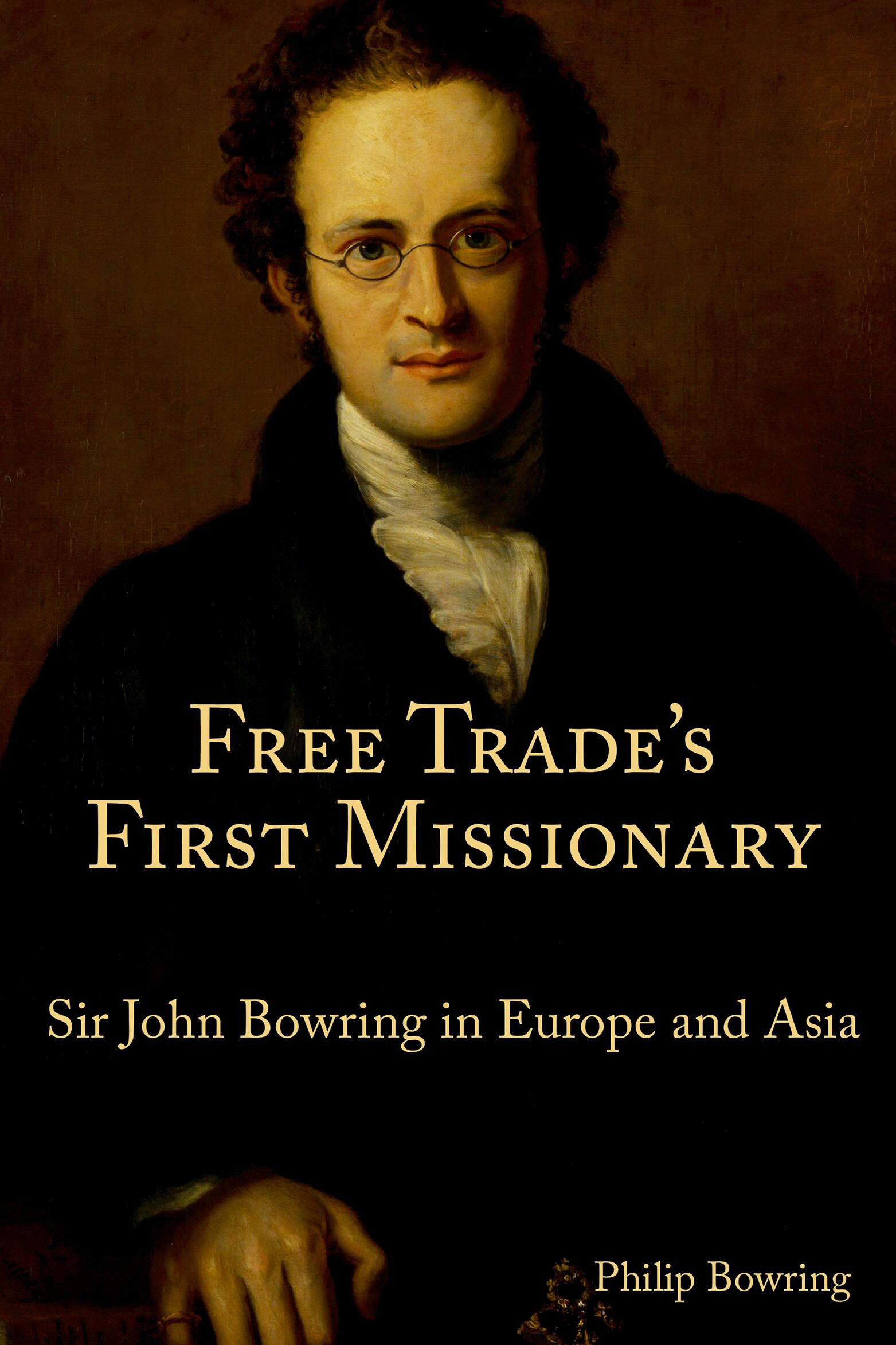
Free Trade’s First Missionary
Reformer, intellectual, colonial governor, Sir John Bowring (1792–1872) was the archetype of the ambitious men who made Britain the leading global power in the 19th century. Born to a modest trading family, he showed an aptitude for languages which led him to literature, then to radical politics in the struggles for liberty in France, Spain and Greece. Taken up by the philosopher Jeremy Bentham, he became a figure in the literary world. But his emphasis was on action rather than theories. He became a high-profile advocate of free trade and a liberal foe of Karl Marx. As member of parliament he supported full suffrage and other radical causes. He modernized Britain’s public accounts, invented the florin as a first step to decimalization, and became an industrial entrepreneur. Losing his money in the 1848 slump, he took a job as consul in Canton, which led to the governorship of Hong Kong. As Britain’s plenipotentiary in East Asia he negotiated a key treaty with King Mongkut of Siam but also started a war with China. His term as Governor of Hong Kong (1854–59) was plagued with problems. But there as elsewhere he left a legacy of liberal ideas. Bowring’s impact was spread over so many fields that his name has been eclipsed by those with a narrower focus. This book brings his life and disparate achievements together, with a particular emphasis on his role in promoting free trade and his much criticized career in Asia.
eBook