
Catalogue Search | MBRL


Are you sure you want to remove the book from the shelf?

{{itemTitle}}
39,273
result(s) for
"HISTORY / Native American."
Sort by:

Call for Change
For too many years, the academic discipline of history has ignored American Indians or lacked the kind of open-minded thinking necessary to truly understand them. Most historians remain oriented toward the American experience at the expense of the Native experience. As a result, both the status and the quality of Native American history have suffered and remain marginalized within the discipline. In this impassioned work, noted historian Donald L. Fixico challenges academic historians-and everyone else-to change this way of thinking. Fixico argues that the current discipline and practice of American Indian history are insensitive to and inconsistent with Native people's traditions, understandings, and ways of thinking about their own history. InCall for Change, Fixico suggests how the discipline of history can improve by reconsidering its approach to Native peoples.
He offers the \"Medicine Way\" as a paradigm to see both history and the current world through a Native lens. This new approach paves the way for historians to better understand Native peoples and their communities through the eyes and experiences of Indians, thus reflecting an insightful indigenous historical ethos and reality.
eBook

In the Smaller Scope of Conscience
In 1989, The National Museum of the American Indian Act (NMAIA) was successfully passed after a long and intense struggle. One year later, the Native American Graves Protection and Repatriation Act (NAGPRA) followed. These federal repatriation statutes-arguably some of the most important laws in the history of anthropology, museology, and American Indian rights-enabled Native Americans to reclaim human remains, funerary objects, sacred objects, and objects of cultural patrimony.Twenty years later, the controversy instigated by the creation of NMAIA and NAGPRA continues to simmer.In the Smaller Scope of Conscienceis a thoughtful and detailed study of the ins and outs of the four-year process behind these laws. It is a singular contribution to the history of these issues, with the potential to help mediate the ongoing debate by encouraging all sides to retrace the steps of the legislators responsible for the acts.Few works are as detailed as McKeown's account, which looks into bills that came prior to NMAIA and NAGPRA and combs the legislative history for relevant reports and correspondence. Testimonies, documents, and interviews from the primary players of this legislative process are cited to offer insights into the drafting and political processes that shaped NMAIA and NAGPRA.Above all else, this landmark work distinguishes itself from earlier legislative histories with the quality of its analysis. Invested and yet evenhanded in his narrative, McKeown ensures that this journey through history-through the strategies and struggles of different actors to effect change through federal legislation-is not only accurate but eminently intriguing.
eBook

From Homeland to New Land
This history of the Mahicans begins with the appearance of Europeans on the Hudson River in 1609 and ends with the removal of these Native people to Wisconsin in the 1830s. Marshaling the methods of history, ethnology, and archaeology, William A. Starna describes as comprehensively as the sources allow the Mahicans while in their Hudson and Housatonic Valley homeland; after their consolidation at the praying town of Stockbridge, Massachusetts; and following their move to Oneida country in central New York at the end of the Revolution and their migration west.
The emphasis throughout this book is on describing and placing into historical context Mahican relations with surrounding Native groups: the Munsees of the lower Hudson, eastern Iroquoians, and the St. Lawrence and New England Algonquians. Starna also examines the Mahicans' interactions with Dutch, English, and French interlopers. The first and most transformative of these encounters was with the Dutch and the trade in furs, which ushered in culture change and the loss of Mahican lands. The Dutch presence, along with the new economy, worked to unsettle political alliances in the region that, while leading to new alignments, often engendered rivalries and war. The result is an outstanding examination of the historical record that will become the definitive work on the Mahican people from the colonial period to the Removal Era.
eBook
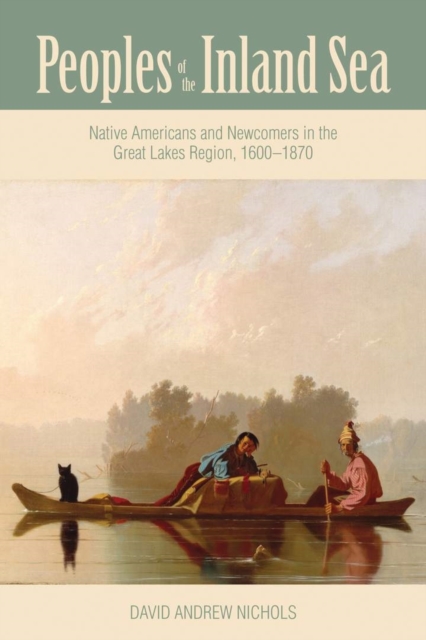
Peoples of the Inland Sea
Diverse in their languages and customs, the Native American
peoples of the Great Lakes region-the Miamis, Ho-Chunks,
Potawatomis, Ojibwas, and many others-shared a tumultuous history.
In the colonial era their rich homeland became a target of imperial
ambition and an invasion zone for European diseases, technologies,
beliefs, and colonists. Yet in the face of these challenges, their
nations' strong bonds of trade, intermarriage, and association grew
and extended throughout their watery domain, and strategic
relationships and choices allowed them to survive in an era of war,
epidemic, and invasion.
In Peoples of the Inland Sea, David Andrew Nichols
offers a fresh and boundary-crossing history of the Lakes peoples
over nearly three centuries of rapid change, from pre-Columbian
times through the era of Andrew Jackson's Removal program. As the
people themselves persisted, so did their customs, religions, and
control over their destinies, even in the Removal era. In Nichols's
hands, Native, French, American, and English sources combine to
tell this important story in a way as imaginative as it is bold.
Accessible and creative, Peoples of the Inland Sea is
destined to become a classroom staple and a classic in Native
American history.
eBook
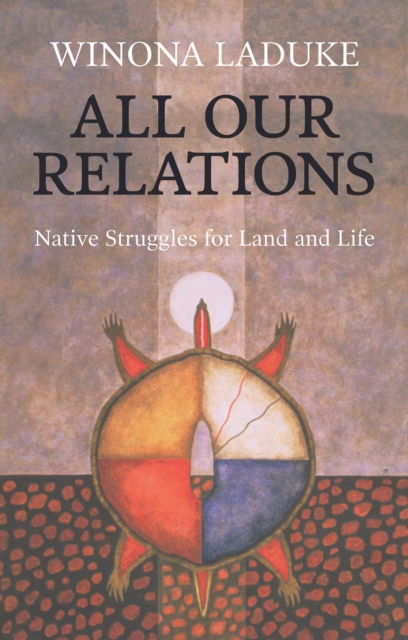
All Our Relations
This thoughtful, in-depth account of Native struggles against environmental and cultural degradation features chapters on the Seminoles, the Anishinaabeg, the Innu, the Northern Cheyenne and the Mohawks, among others. Filled with inspiring testimonies of struggles for survival, each page of this volume speaks forcefully for self-determination and community. Winona LaDuke's unique understanding of Native ideas and people is born from long years of experience, and her analysis is deepened with inspiring testimonies by local Native activists sharing their struggles.
eBook

Ancient Households of the Americas
In Ancient Households of the Americas archaeologists investigate the fundamental role of household production in ancient, colonial, and contemporary households. Several different cultures-Iroquois, Coosa, Anasazi, Hohokam, San Agustín, Wankarani, Formative Gulf Coast Mexico, and Formative, Classic, Colonial, and contemporary Maya-are analyzed through the lens of household archaeology in concrete, data-driven case studies. The text is divided into three sections: Section I examines the spatial and social organization and context of household production; Section II looks at the role and results of households as primary producers; and Section III investigates the role of, and interplay among, households in their greater political and socioeconomic communities. In the past few decades, household archaeology has made substantial contributions to our understanding and explanation of the past through the documentation of the household as a social unit-whether small or large, rural or urban, commoner or elite. These case studies from a broad swath of the Americas make Ancient Households of the Americas extremely valuable for continuing the comparative interdisciplinary study of households.
eBook

Uqalurait
Thousands of quotes from over three hundred Inuit elders about their culture and customs cover all aspects of traditional life, from raising children to hunting, the land, and architecture, to belief systems, cosmology, and the Inuit's remarkable ability to make do with what they had. Given the recent creation of Nunavut and current attention to the Arctic due to climate change, Uqalurait is a timely source of insight from a people whose values of sharing and respect for the environment have helped them to live for centuries at the northern limit of the inhabitable world.
eBook

Dreaming of sheep in Navajo country
Dreaming of Sheep in Navajo Country offers a fresh interpretation of the history of Navajo (Din ) pastoralism. The dramatic reduction of livestock on the Navajo Reservation in the 1930s -- when hundreds of thousands of sheep, goats, and horses were killed -- was an ambitious attempt by the federal government to eliminate overgrazing on an arid landscape and to better the lives of the people who lived there. Instead, the policy was a disaster, resulting in the loss of livelihood for Navajos -- especially women, the primary owners and tenders of the animals -- without significant improvement of the grazing lands.
Livestock on the reservation increased exponentially after the late 1860s as more and more people and animals, hemmed in on all sides by Anglo and Hispanic ranchers, tried to feed themselves on an increasingly barren landscape. At the beginning of the twentieth century, grazing lands were showing signs of distress. As soil conditions worsened, weeds unpalatable for livestock pushed out nutritious native grasses, until by the 1930s federal officials believed conditions had reached a critical point. Well-intentioned New Dealers made serious errors in anticipating the human and environmental consequences of removing or killing tens of thousands of animals.
Environmental historian Marsha Weisiger examines the factors that led to the poor condition of the range and explains how the Bureau of Indian Affairs, the Navajos, and climate change contributed to it. Using archival sources and oral accounts, she describes the importance of land and stock animals in Navajo culture. By positioning women at the center of the story, she demonstrates the place they hold as significant actors in Native American and environmental history.
Dreaming of Sheep in Navajo Country is a compelling and important story that looks at the people and conditions that contributed to a botched policy whose legacy is still felt by the Navajos and their lands today.
eBook

Bartering with the Bones of Their Dead
Bartering with the Bones of their Deadtells the unique story of a tribe whose members waged a painful and sometimes bitter twenty-year struggle among themselves about whether to give up their status as a sovereign nation. Over one hundred federally recognized Indian tribes and bands lost their sovereignty after the Eisenhower Administration enacted a policy known as termination, which was carefully designed to end the federal-Indian relationship and to dissolve Indian identity. Most tribes and bands fought this policy; the Colville Confederated Tribes of north-central Washington State offer a rare example of a tribe who pursued termination.
Some Colville tribal members who favored termination wanted a life free from federal supervision and a return to the era when each band of the confederation managed its own affairs. Other termination advocates simply sought the financial payout that termination promised. Opponents of termination wanted to protect tribal identities and lands, hoped to preserve the Colville heritage and homeland for future generations, and sought to compel the federal government to live up to its promises. Laurie Arnold tells the story of those years on the Colville reservation with the perspective both of a thorough and careful historian and of an insider who grew up listening to the voices and memories of her elders.
Watch the book trailer: http://www.youtube.com/watch?v=4N_jvwYb6z0
eBook

Lumbee Indians in the Jim Crow South
With more than 50,000 enrolled members, North Carolina's Lumbee Indians are the largest Native American tribe east of the Mississippi River. Malinda Maynor Lowery, a Lumbee herself, describes how, between Reconstruction and the 1950s, the Lumbee crafted and maintained a distinct identity in an era defined by racial segregation in the South and paternalistic policies for Indians throughout the nation. They did so against the backdrop of some of the central issues in American history, including race, class, politics, and citizenship.Lowery argues that \"Indian\" is a dynamic identity that, for outsiders, sometimes hinged on the presence of \"Indian blood\" (for federal New Deal policy makers) and sometimes on the absence of \"black blood\" (for southern white segregationists). Lumbee people themselves have constructed their identity in layers that tie together kin and place, race and class, tribe and nation; however, Indians have not always agreed on how to weave this fabric into a whole. Using photographs, letters, genealogy, federal and state records, and first-person family history, Lowery narrates this compelling conversation between insiders and outsiders, demonstrating how the Lumbee People challenged the boundaries of Indian, southern, and American identities.
eBook