
Catalogue Search | MBRL


Are you sure you want to remove the book from the shelf?

{{itemTitle}}
20,430
result(s) for
"HISTORY / Reference"
Sort by:

Too much to know
The flood of information brought to us by advancing technology is often accompanied by a distressing sense of \"information overload,\" yet this experience is not unique to modern times. In fact, says Ann M. Blair in this intriguing book, the invention of the printing press and the ensuing abundance of books provoked sixteenth- and seventeenth-century European scholars to register complaints very similar to our own. Blair examines methods of information management in ancient and medieval Europe as well as the Islamic world and China, then focuses particular attention on the organization, composition, and reception of Latin reference books in print in early modern Europe. She explores in detail the sophisticated and sometimes idiosyncratic techniques that scholars and readers developed in an era of new technology and exploding information.
eBook

In the Wake of the Compendia
In the Wake of the Compendia presents papers that examine the history of technical compendia as they moved between institutions and societies in ancient and medieval Mesopotamia. This volume offers new perspectives on the development and transmission of technical compilations, looking especially at the relationship between empirical knowledge and textual transmission in early scientific thinking. The eleven contributions to the volume derive from a panel held at the American Oriental Society in 2013 and cover more than three millennia of historical development, ranging from Babylonian medicine and astronomy to the persistence of Mesopotamian lore in Syriac and Arabic meditations on the properties of animals. The volume also includes major contributions on the history of Mesopotamian \"rationality,\" epistemic labels for tested and tried remedies, and the development of depersonalized case histories in Babylonian therapeutic compendia. Together, these studies offer an overview of several important moments in the development of non-Western scientific thinking and a significant contribution to our understanding of how traditions of technical knowledge were produced and transmitted in the ancient world.
eBook

Shipbuilding and Ship Repair Workers around the World
Maritime trade is the backbone of the world's economy. Around ninety percent of all goods are transported by ship, and since World War II, shipbuilding has undergone major changes in response to new commercial pressures and opportunities. Early British dominance, for example, was later undermined in the 1950s by competition from the Japanese, who have since been overtaken by South Korea and, most recently, China. The case studies in this volume trace these and other important developments in the shipbuilding and ship repair industries, as well as workers' responses to these historic transformations.
eBook

Waddenland Outstanding: History, Landscape and Cultural Heritage of the Wadden Sea Region
The Wadden Sea Region is comprised of the embanked coastal marshes and islands in the Wadden Sea near Denmark, Germany, and the Netherlands, and this area retains an exceptional common history in all its aspects: archaeologically, economically, socially, and culturally. Its settlement history of more than two thousand years is unrivalled and still mirrored in the landscape and even though it has never constituted a political unity, it still shares a landscape and cultural heritage. For example, the approaches to water management and associated societal organisation developed in the region during the last millennium have set significant world standards, values which were recognised by UNESCO in inscribing the Wadden Sea on its World Heritage List. This book encompasses the contributions presented at the scientific symposium of prominent scientists who gathered in 2016 in Husum, Germany, a landmark event in sharing knowledge on the common history, landscape, cultural heritage of the Wadden Sea Region.
eBook
Church History
In their acclaimed, much-used Church History, James Bradley and Richard Muller lay out guidelines, methods, and basic reference tools for research and writing in the fields of church history and historical theology. Over the years, this book has helped countless students define their topics, locate relevant source materials, and write quality papers. This revised, expanded, and updated second edition includes discussion of Internet-based research, digitized texts, and the electronic forms of research tools. The greatly enlarged bibliography of study aids now includes many significant new resources that have become available since the first edition's publication in 1995. Accessible and clear, this introduction will continue to benefit both students and experienced scholars in the field.
eBook

Shipbuilding and Ship Repair Workers around the World
Maritime trade is the backbone of the world’s economy. Around ninety percent of all goods are transported by ship, and since World War II, shipbuilding has undergone major changes in response to new commercial pressures and opportunities. Early British dominance, for example, was later undermined in the 1950s by competition from the Japanese, who have since been overtaken by South Korea and, most recently, China. The case studies in this volume trace these and other important developments in the shipbuilding and ship repair industries, as well as workers’ responses to these historic transformations.
eBook

David Gorlaeus (1591-1612)
When David Gorlaeus (1591-1612) passed away at 21 years of age, he left behind two highly innovative manuscripts. Once they were published, his work had a remarkable impact on the evolution of seventeenth-century thought. However, as his identity was unknown, divergent interpretations of their meaning quickly sprang up. Seventeenth-century readers understood him as an anti-Aristotelian thinker and as a precursor of Descartes. Twentieth-century historians depicted him as an atomist, natural scientist and even as a chemist. And yet, when Gorlaeus died, he was a beginning student in theology. His thought must in fact be placed at the intersection between philosophy, the nascent natural sciences, and theology. The aim of this book is to shed light on Gorlaeus’ family circumstances, his education at Franeker and Leiden, and on the virulent Arminian crisis which provided the context within which his work was written. It also attempts to define Gorlaeus’ place in the history of Dutch philosophy and to assess the influence that it exercised in the evolution of philosophy and science, and notably in early Cartesian circles. Christoph Lüthy is professor of the history of philosophy and science at Radboud University Nijmegen, the Netherlands.
Toen David Gorlaeus (1591-1612) op 21-jarige leeftijd overleed, liet hij twee baanbrekende manuscripten na. De postuum gepubliceerde werken hadden een grote invloed op het wetenschappelijk denken in de zeventiende eeuw. Doordat Gorlaeus’ identiteit onbekend was, ontstonden al snel zeer uiteenlopende interpretaties van de publicaties. Lezers uit de zeventiende eeuw dachten met een anti-aristotelische denker en een voorloper van Descartes van doen te hebben. Twintigste-eeuwse historici schilderden hem af als een atomist, natuurwetenschapper en zelfs als chemicus. Gorlaeus was echter 'slechts' beginnend theologiestudent en zijn werk bevindt zich op het kruispunt van filosofie, de ontluikende natuurwetenschappen en theologie. Christoph Lüthy beoogt met dit boek inzicht te geven in de familieomstandigheden van Gorlaeus, zijn opleiding aan de universiteit van Franeker en Leiden en de historische context waarin hij zijn werk schreef. Ten slotte probeert Lüthy te bepalen welke plaats Gorlaeus’ werken innemen in de geschiedenis van de Nederlandse filosofie en wat hun invloed was op de ontwikkelingen in filosofie en wetenschap.
eBook
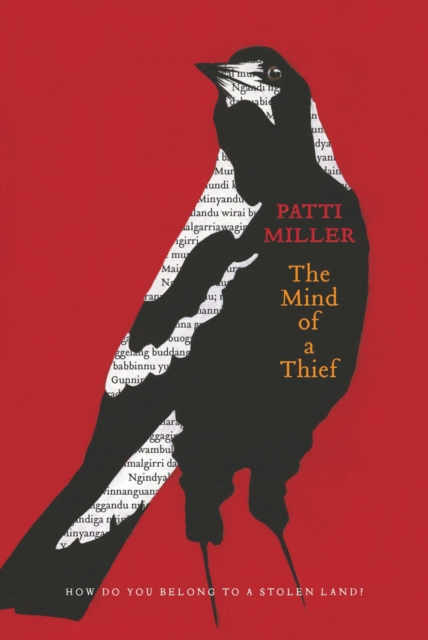
The Mind of a Thief
Exploring the history of the Wiradjuri people, the conflict of colonization, their mythologies, and their attachment to the land, author Patti Miller reveals both her own story and the position of Aboriginal people in today's society in this fascinating memoir. For 40,000 years, the Central New South Wales area of Wellington was Aboriginal Wiradjuri land. Following the arrival of white men, it became a penal settlement, a mission station, a gold-mining town, and a farming center with a history of white comfort and black marginalization. In the late 20th century, it was also the subject of the first post-Mabo native title claim, bringing new hope—and controversy—to the area and its people. Patti, a local of the area, explores Australian identity in relation to her beloved but stolen country. Black and white politics, the processes of colonization, family mythologies, generational conflict, and the power of place are evoked as she weaves a story that is very personal and, at the same time, a universal tale of belonging.
eBook

Technologies of history : visual media and the eccentricity of the past
Technologies of History is an engrossing and innovative consideration of how history is constructed today, exploring our most basic relationship to history and the diverse contributions of visual and computational media to conceptions of the past. Embracing the varieties of history offered by experimental film, television, video games, and digital media, Steve F. Anderson mines the creative and discursive potential of this profane and esoteric historiography. He offers a highly readable and consistently fascinating discussion of historiography in visual media, with an emphasis on alternate or fantastic histories, including Star Trek time travel episodes, fake documentaries, films created from home movies and found footage, and video games about cultural traumas such as the siege at Waco and the assassination of President John F. Kennedy. Examining artifacts from the most commercial Hollywood product to the modernist avant-garde, this bold and ambitious polemic seeks to address historians, media scholars, and general readers alike, encouraging all to recognize, engage with, and perhaps even learn from these heterodox histories and the powerful sway they hold over our historical consciousness.
eBook

Doing oral history
Doing Oral History is considered the premier guidebook to oral history, used by professional oral historians, public historians, archivists, and genealogists as a core text in college courses and throughout the public history community. The recent development of digital audio and video recording technology has continued to alter the practice of oral history, making it even easier to produce and disseminate quality recordings. At the same time, digital technology has complicated the preservation of the recordings, past and present. This basic manual offers detailed advice for setting up an oral history project, conducting interviews and using oral history for research, making video recordings, preserving oral history collections in archives and libraries, and teaching and presenting oral history.
eBook