
Catalogue Search | MBRL


Are you sure you want to remove the book from the shelf?

{{itemTitle}}
149,252
result(s) for
"HISTORY / World"
Sort by:

The Eastern Mediterranean and the making of global radicalism, 1860-1914
In this groundbreaking book, Ilham Khuri-Makdisi establishes the existence of a special radical trajectory spanning four continents and linking Beirut, Cairo, and Alexandria between 1860 and 1914. She shows that socialist and anarchist ideas were regularly discussed, disseminated, and reworked among intellectuals, workers, dramatists, Egyptians, Ottoman Syrians, ethnic Italians, Greeks, and many others in these cities. In situating the Middle East within the context of world history, Khuri-Makdisi challenges nationalist and elite narratives of Mediterranean and Middle Eastern history as well as Eurocentric ideas about global radical movements. The book demonstrates that these radical trajectories played a fundamental role in shaping societies throughout the world and offers a powerful rethinking of Ottoman intellectual and social history.
eBook

The Palgrave Handbook of Contemporary Heritage Research
01
02
This book explores heritage from a wide range of perspectives and disciplines and in doing so provides a distinctive and deeply relevant survey of the field as it is currently researched, understood and practiced around the world. Furthermore it establishes and develops through its various sections and chapters an accessible and clearly presented vision of heritage as a cultural process designed for use by students, advance scholars and practitioners alike. This book provides both critical insight and food for thought, directing the reader to key texts in the various aspects of the field and charting a course for future research.
13
02
Emma Waterton is a DECRA Fellow at the University of Western Sydney's Institute for Culture and Society, Australia. Her research explores the interface between heritage, identity, memory and affect. She is author of Politics, Policy and the Discourses of Heritage in Britain (2010, Palgrave Macmillan) and The Semiotics of Heritage Tourism (with Steve Watson; 2014).
Steve Watson is Principal Lecturer at York St John University, UK, where he teaches cultural and heritage tourism. His research is concerned primarily with the representation and experience of heritage and he has a particular interest in Spanish travel writing. His most recent book is The Semiotics of Heritage Tourism (with Emma Waterton; 2014).
04
02
Introduction: Heritage as a Focus of Research – Past, Present and New Directions; Emma Waterton and Steve Watson
PART I: HERITAGE MEANINGS
1. Heritage Methods and Methodologies; Emma Waterton and Steve Watson
2. Heritage and Discourse; Zongjie Wu and Song Hou
3. Heritage as Performance; Michael Haldrup and Jørgen Ole Bærenholdt
4. Heritage and Authenticity; Helaine Silverman
PART II: HERITAGE IN CONTEXT
5. From Heritage to Archaeology and Back Again; Shatha Abu Khafajah and Arwa Badren
6. Heritage and History; Jessica Moody
7. Thinking About Others through Museums and Heritage; Andrea Witcomb
8. Heritage and Tourism; Duncan Light
9. Heritage and Geography; Nuala C. Johnson
PART III: HERITAGE AND CULTURAL EXPERIENCE
10. Affect, Heritage, Feeling; David Crouch
11. Heritage and Memory; Joy Sather-Wagstaff
12. Heritage and the Visual Arts; Russell Staiff
13. Industrial Heritage and Tourism: A Review of the Literature; Alfonso Vargas Sanchez
14. Curating Sound for Future Communities; Noel Lobley
15. Heritage and Sport; Gregory Ramshaw and Sean Gammon
PART IV: CONTESTED HERITAGE AND EMERGING ISSUES
16. Heritage in Multicultural Times; Cristóbal Gnecco
17. Cultural Heritage and Armed Conflict: New Questions for an Old Relationship; Dacia Viejo Rose and Marie Louise Stig Sørensen
18. Heritage and Globalisation; Rodney Harrison
19. Critical Approaches to Post-Colonial (Post-Conflict) Heritage; John Giblin
PART V: HERITAGE, IDENTITY AND AFFILIATION
20. Heritage and Nationalism: An Unbreachable Couple?; Tim Winter
21. Heritage and Participation; Cath Neal
22. Heritage and Social Class; Bella Dicks
23. Of Routes and Roots: Paths for Understanding Diasporic Heritage; Ann Reed
24. Making Feminist Heritage Work: Gender and Heritage; Anna Reading
PART VI: HERITAGE AND SOCIAL PRACTICE
25. 'Thinkers and Feelers' a Psychological Perspective on Heritage and Society; John Schofield
26. Heritage and Policy; John Pendlebury
27. Heritage, Power and Ideology; Katharina Schramm
28. Heritage and Economic Development; Steve Watson and María del Rosario González-Rodríguez
29. Heritage in Consumer Marketing; Georgios C. Papageorgiou
30. Heritage and Sustainable Development: Transdisciplinary Imaginings of a Wicked Philosophy; Robyn Bushell
PART VII: CONCLUSIONS
31. Contemporary Heritage and the Future; Cornelius Holtorf and Anders Högberg
32. Themes, Thoughts, Reflections; Steve Watson and Emma Waterton
02
02
This book explores heritage from a wide range of perspectives and disciplines and in doing so provides a distinctive and deeply relevant survey of the field as it is currently researched, understood and practiced around the world.
eBook

The great interwar crisis and the collapse of globalization
Challenging the standard narrative of Interwar International History, this account establishes the causal relationship between the global political and economic crises of the period, and offers a radically new look at the role of ideology, racism and the leading liberal powers in the events between the First and Second World Wars.
eBook

The Eastern Origins of Western Civilisation
John Hobson challenges the ethnocentric bias of mainstream accounts of the Rise of the West. It is often assumed that since Ancient Greek times Europeans have pioneered their own development, and that the East has been a passive by-stander in the story of progressive world history. Hobson argues that there were two processes that enabled the Rise of the 'Oriental West'. First, each major developmental turning point in Europe was informed in large part by the assimilation of Eastern inventions (e.g. ideas, technologies and institutions) which diffused from the more advanced East across the Eastern-led global economy between 500–1800. Second, the construction of European identity after 1453 led to imperialism, through which Europeans appropriated many Eastern resources (land, labour and markets). Hobson's book thus propels the hitherto marginalised Eastern peoples to the forefront of the story of progress in world history.
eBook
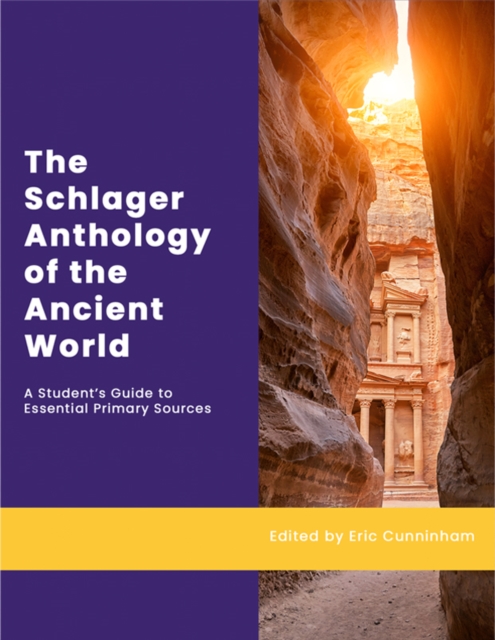
The Schlager Anthology of the Ancient World
This volume in the Schlager Anthologies series offers an essential starting point for historical research. It covers nearly 100 primary documents from the Ancient World, taking a global perspective that includes Egypt and Early Africa, the Hittite Empire in Anatolia, the Ancient Near East (Mesopotamia, Sumer, Assyria and Levant), Persia, India, East Asia (China and Japan), Archaic and Early Classical Greece, Late Classical and Hellenistic Greece, the Roman Republic, and the Roman Empire. The volume is organized into broad subject areas, each accompanied by a helpful introductory article and detailed list of Further Reading sources. The entries within each area include the primary document, an Overview section, and Questions for Further Study.
eBook

The Black campus movement : Black students and the racial reconstitution of higher education, 1965-1972
This book provides the first national study of this intense and challenging struggle which disrupted and refashioned institutions in almost every state. It also illuminates the context for one of the most transformative educational movements in American history through a history of black higher education and black student activism before 1965.
eBook

Machines as the Measure of Men
Over the past five centuries, advances in Western understanding of and control over the material world have strongly influenced European responses to non-Western peoples and cultures. InMachines as the Measure of Men, Michael Adas explores the ways in which European perceptions of their scientific and technological superiority shaped their interactions with people overseas. Adopting a broad, comparative perspective, he analyzes European responses to the cultures of sub-Saharan Africa, India, and China, cultures that they judged to represent lower levels of material mastery and social organization.
Beginning with the early decades of overseas expansion in the sixteenth century, Adas traces the impact of scientific and technological advances on European attitudes toward Asians and Africans and on their policies for dealing with colonized societies. He concentrates on British and French thinking in the nineteenth century, when, he maintains, scientific and technological measures of human worth played a critical role in shaping arguments for the notion of racial supremacy and the \"civilizing mission\" ideology which were used to justify Europe's domination of the globe. Finally, he examines the reasons why many Europeans grew dissatisfied with and even rejected this gauge of human worth after World War I, and explains why it has remained important to Americans.
Showing how the scientific and industrial revolutions contributed to the development of European imperialist ideologies,Machines as the Measure of Menhighlights the cultural factors that have nurtured disdain for non-Western accomplishments and value systems. It also indicates how these attitudes, in shaping policies that restricted the diffusion of scientific knowledge, have perpetuated themselves, and contributed significantly to chronic underdevelopment throughout the developing world. Adas's far-reaching and provocative book will be compelling reading for all who are concerned about the history of Western imperialism and its legacies.
First published to wide acclaim in 1989,Machines as the Measure of Menis now available in a new edition that features a preface by the author that discusses how subsequent developments in gender and race studies, as well as global technology and politics, enter into conversation with his original arguments.
eBook
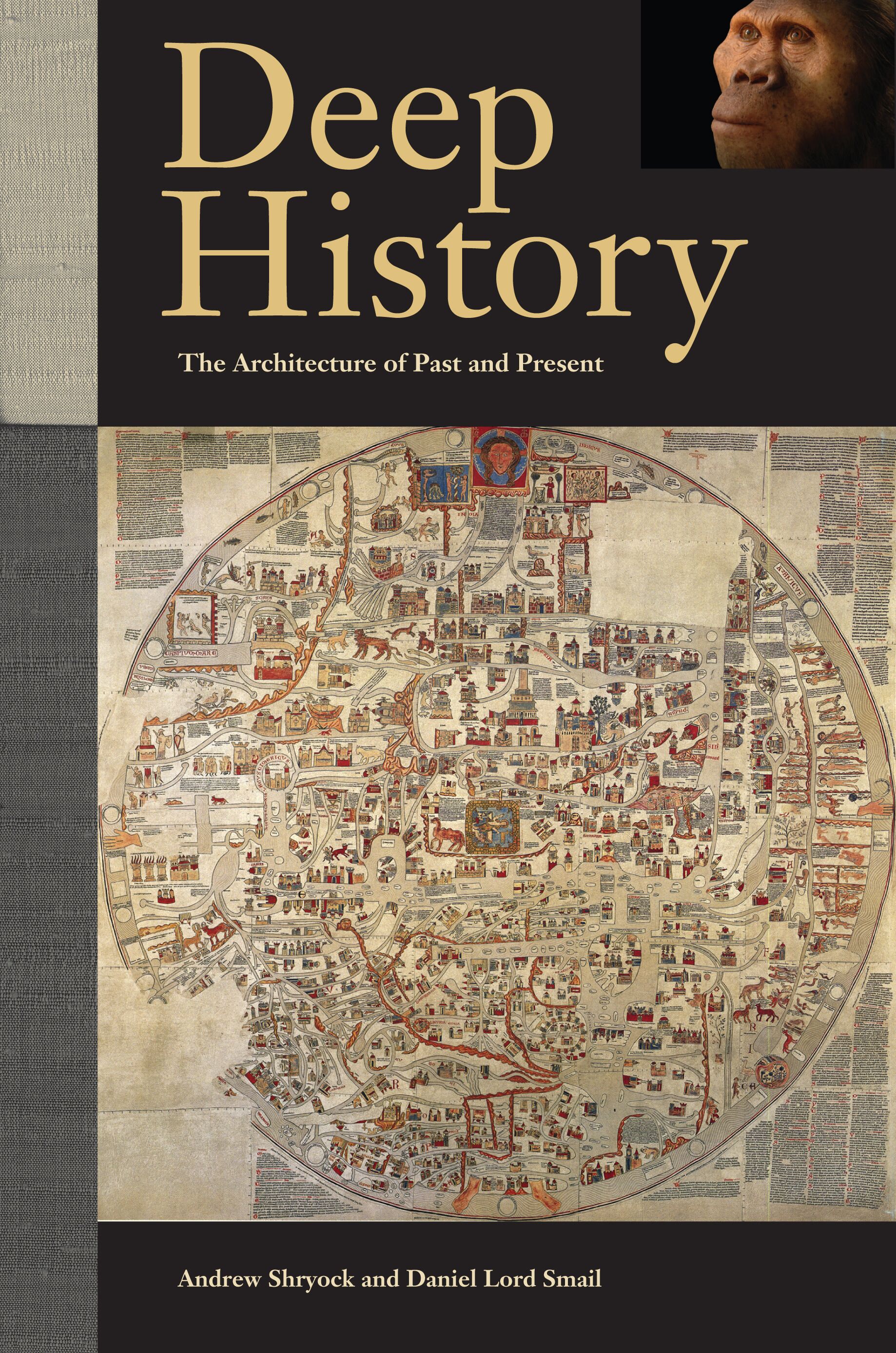
Deep history
Humans have always been interested in their origins, but historians have been reluctant to write about the long stretches of time before the invention of writing. In fact, the deep past was left out of most historical writing almost as soon as it was discovered. This breakthrough book, as important for readers interested in the present as in the past,brings science into history to offer a dazzling new vision of humanity across time. Team-written by leading experts in a variety of fields, it maps events, cultures, and eras across millions of years to present a new scale for understanding the human body, energy and ecosystems, language, food, kinship, migration, and more. Combining cutting-edge social and evolutionary theory with the latest discoveries about human genes, brains, and material culture, Deep History invites scholars and general readers alike to explore the dynamic of connectedness that spans all of human history. With Timothy Earle, Gillian Feeley-Harnik, Felipe Fernández-Armesto, Clive Gamble, April McMahon, John C. Mitani, Hendrik Poinar, Mary C. Stiner, and Thomas R. Trautmann
eBook

Against the Grain
An Economist Best History Book 2017
\"History as it should be written.\"-Barry Cunliffe,
Guardian \"Scott hits the nail squarely on
the head by exposing the staggering price our ancestors paid for
civilization and political order.\"-Walter Scheidel, Financial
Times Why did humans abandon hunting and gathering
for sedentary communities dependent on livestock and cereal grains,
and governed by precursors of today's states? Most people believe
that plant and animal domestication allowed humans, finally, to
settle down and form agricultural villages, towns, and states,
which made possible civilization, law, public order, and a
presumably secure way of living. But archaeological and historical
evidence challenges this narrative. The first agrarian states, says
James C. Scott, were born of accumulations of domestications: first
fire, then plants, livestock, subjects of the state, captives, and
finally women in the patriarchal family-all of which can be viewed
as a way of gaining control over reproduction. Scott explores why
we avoided sedentism and plow agriculture, the advantages of mobile
subsistence, the unforeseeable disease epidemics arising from
crowding plants, animals, and grain, and why all early states are
based on millets and cereal grains and unfree labor. He also
discusses the \"barbarians\" who long evaded state control, as a way
of understanding continuing tension between states and nonsubject
peoples.
eBook

Small states in world politics
Small states are survival artists. Understanding the story of small state survival requires a clear focus on the international states system. This book finds that different variations of the Westphalian states system had very different effects on small state survival. The most hostile environment for the small state was the late nineteenth-century concert system; the most supportive environment was the bipolar world of the later twentieth century. The book investigates the era of the classic balance of power which began after the end of the Thirty Years' War in 1648 and ended during the French Revolutionary Wars and the reign of Napoleon Bonaparte. Surprisingly, the crude balance-of-power system of the eighteenth century proved fairly accommodating of small state survival. Looking to the future, a modest rise in the number of small states can be predicted. The book views international relations since at least the mid seventeenth century to be driven by concerns over state power. Consequently, it deals with power, weakness, and power politics. To do so properly, a theoretical framework was needed that puts power and power balancing front and center. Power and power politics are important concepts in the academic discipline of International Relations theory, and particularly in Realist thinking.
eBook