
Catalogue Search | MBRL


Are you sure you want to remove the book from the shelf?

{{itemTitle}}
3,833
result(s) for
"HISTORY Middle East General."
Sort by:

A history of the Middle East
\"The definitive history of the Middle East, thoroughly revised and updated through 2012. One of the most crucial, volatile, and complex regions of the modern world, the Middle East has long confounded the dreams of conquerors and peacemakers alike. This now-classic book, fully updated to 2012 and still the essential work on the subject, follows the historic struggles of the Middle East from Napoleon's campaign in Egypt and Syria, through the slow decline and fall of the Ottoman Empire, to the Israeli-Palestinian conflict and the history of Islam and its recent resurgence. For this fourth edition, Economist correspondent Nicolas Pelham contributes an extensive new section examining recent developments throughout the Middle East, including the invasions of Iraq and Afghanistan, the situation in Iran, the region's relations with the United States under President Obama, the Arab Spring, and more\"-- Provided by publisher.
Book

The Legacy of Iraq
The Legacy of Iraq critically reflects on the abject failure of the 2003 intervention to turn Iraq into a liberal democracy, underpinned by free-market capitalism, its citizens free to live in peace and prosperity. It argues that mistakes made by the coalition and the Iraqi political elite set a sequence of events in motion that have had devastating consequences for Iraq, the Middle East and for the rest of the world. Today, as the nation faces perhaps its greatest challenge in the wake of the devastating advance of the Islamic State of Iraq and Syria (ISIS) and another US-led coalition undertakes renewed military action in Iraq, understanding the complex and difficult legacies of the 2003 war could not be more urgent. Ignoring the legacies of the Iraq war and denying their connection to contemporary events couldmeans that vital lessonsare ignored and the same mistakes made again.
eBook

A history of modern Morocco
\"This book offers a richly documented survey of modern Moroccan history. Concise and readable, it will enthrall all those searching for the background to present-day events in the region\"-- Provided by publisher.
Book

A History of Modern Morocco
Morocco is notable for its stable and durable monarchy, its close ties with the West, its vibrant cultural life and its centrality to regional politics. This book, by distinguished historian Susan Gilson Miller, offers a richly documented survey of modern Moroccan history. Arguing that pragmatism rather than ideology has shaped the monarchy's response to crisis, the book begins with the French invasion of Algeria in 1830 and Morocco's abortive efforts at reform, the duel with colonial powers and the loss of independence in 1912, the burdens and benefits of France's forty-four year dominion and the stunning success of the nationalist movement leading to independence in 1956. In the post-independence era, the book traces the monarchy's gradual monopolization of power and the resulting political paralysis, with a postscript bringing events up to 2012. This concise, readable book will inform and enthral students and all those searching for the background to present-day events in the region.
eBook

Expressions of cult in the Southern Levant in the Greco-Roman period : manifestations in text and material culture
The arrival of Alexander the Great in the southern Levant ushered in many changes, and the subsequent period saw many more upheavals, including the Roman conquest, the Jewish revolts, and the gradual Christianization of the Holy Land. Throughout this period, many local 'pagan,' Jewish, and Christian cults and cultic places dotted the local landscape of the southern Levant, which today covers the area of Israel, Jordan, and parts of Lebanon and southern Syria. These cults underwent processes of profound change, but also preserved much of their older identities while still interacting with each other. This volume seeks to present these processes both synchronically and diachronically, along three different axes - cultic places, personnel, and objects. The common denominator shared by these three axes is the people whose beliefs and practices shaped religious behaviour in the Greco-Roman southern Levant. The 18 articles in this volume investigate whether cultic practices formed a coherent cultural system. They consider the co-existence and competition of the different religious systems, analyzing them in terms of continuity, discontinuity, and change over an extended period of time, roughly from the arrival of Alexander the Great to the Imperial integration of Christianity (ca. late fourth century BCE - early fifth century CE). The approaches presented in the volume are varied and interdisciplinary, combining archaeological, philological, historical, and art-historical analyses of multiple bodies of evidence.
Book

Non-Muslims in the Early Islamic Empire
The Muslim conquest of the East in the seventh century entailed the subjugation of Christians, Jews, Zoroastrians and others. Although much has been written about the status of non-Muslims in the Islamic empire, no previous works have examined how the rules applying to minorities were formulated. Milka Levy-Rubin's remarkable book traces the emergence of these regulations from the first surrender agreements in the immediate aftermath of conquest to the formation of the canonic document called the Pact of 'Umar, which was formalized under the early 'Abbasids, in the first half of the ninth century. The study reveals that the conquered peoples themselves played a major role in the creation of these policies and that they were based on long-standing traditions, customs and institutions from earlier pre-Islamic cultures that originated in the worlds of both the conquerors and the conquered. In its connections to Roman, Byzantine and Sasanian traditions, the book will appeal to historians of Europe as well as Arabia and Persia.
eBook

Genetic crossroads : the Middle East and the science of human heredity
\"This book is the first history of the science of human genetics in the Middle East, from its roots in colonial anthropology and medicine to present-day genomic projects. Genetic Nationalism reveals the effects of international genetic discourses on Middle Eastern nationalisms and the significance of Middle Eastern genetics to the international scientific community. This book illuminates how genetic research simultaneously promotes national interests in the global community and enforces colonialism at home. Elise Burton reveals the political, social, and technological processes that have shaped genetic research in the twentieth century, tracing the global incorporation of nationalist historical narratives and identities into the broader understanding of human evolution\"-- Provided by publisher.
Book
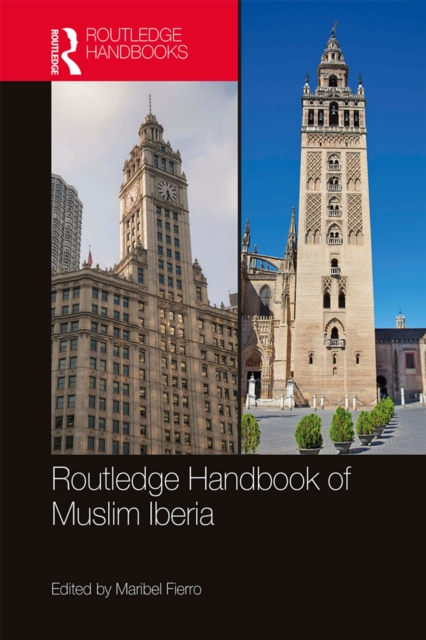
The Routledge Handbook of Muslim Iberia
This handbook offers an overview of the main issues regarding the political, economic, social, religious, intellectual and artistic history of the Iberian Peninsula during the period of Muslim rule (eighth–fifteenth centuries). A comprehensive list of primary and secondary sources attests the vitality of the academic study of al-Andalus (= Muslim Iberia) and its place in present-day discussions about the past and the present.
The contributors are all specialists with diverse backgrounds providing different perspectives and approaches. The volume includes chapters dealing with the destiny of the Muslim population after the Christian conquest and with the posterity of al-Andalus in art, literature and different historiographical traditions. The chapters are organized in the following sections:
Political history, concentrating on rulers and armies
Social, religious and economic groups
Intellectual and cultural developments
Legacy and memory of al-Andalus
Offering a synthetic and updated academic treatment of the history and society of Muslim Iberia, this comprehensive and up-to-date collection provides an authoritative and interdisciplinary guide. It is a valuable resource for both specialists and the general public interested in the history of the Iberian Peninsula, Islamic and Medieval studies.
eBook

The power of oratory in the medieval Muslim world
\"A remarkable book analyzing the importance of oratory for transmitting religious knowledge, legitimizing rulers, and inculcating moral values in the medieval Islamic world\"-- Provided by publisher.
Book

The Passion of Max von Oppenheim
Born into a prominent German Jewish banking family, Baron Max von Oppenheim (1860-1946) was a keen amateur archaeologist and ethnologist. His discovery and excavation of Tell Halaf in Syria marked an important contribution to knowledge of the ancient Middle East, while his massive study of the Bedouins is still consulted by scholars today. He was also an ardent German patriot, eager to support his country's pursuit of its \"place in the sun\". Excluded by his part-Jewish ancestry from the regular diplomatic service, Oppenheim earned a reputation as \"the Kaiser's spy\" because of his intriguing against the British in Cairo, as well as his plan, at the start of the First World War, to incite Muslims under British, French and Russian rule to a jihad against the colonial powers. After 1933, despite being half-Jewish according to the Nuremberg Laws, Oppenheim was not persecuted by the Nazis. In fact, he placed his knowledge of the Middle East and his connections with Muslim leaders at the service of the regime. Ranging widely over many fields—from war studies to archaeology and banking history—The Passion of Max von Oppenheim tells the gripping and at times unsettling story of one part-Jewish man's passion for his country in the face of persistent and, in his later years, genocidal anti-Semitism.
eBook