
Catalogue Search | MBRL


Are you sure you want to remove the book from the shelf?

{{itemTitle}}
2,139
result(s) for
"HIV Infections - history"
Sort by:

Death in the blood : the inside story of the NHS infected blood scandal
Caroline Wheeler has been reporting on the contaminated blood scandal - the worst treatment disaster in the history of the NHS - for over two decades. She has been integral to the campaign for justice for the victims and their families, and played a pivotal role in persuading Prime Minister Theresa May to agree to the infected blood inquiry in 2019.'Death in the Blood' is based on thousands of government documents, court and inquiry transcripts, plus interviews with prime ministers, cabinet ministers, Downing Street advisers, senior civil servants, doctors, and above all the victims and their families whose personal testimony forms the beating heart of this book.
Book

The Origins of AIDS
It is now thirty years since the discovery of AIDS but its origins continue to puzzle doctors and scientists. Inspired by his own experiences working as an infectious diseases physician in Africa, Jacques Pepin looks back to the early twentieth-century events in Africa that triggered the emergence of HIV/AIDS and traces its subsequent development into the most dramatic and destructive epidemic of modern times. He shows how the disease was first transmitted from chimpanzees to man and then how urbanization, prostitution, and large-scale colonial medical campaigns intended to eradicate tropical diseases combined to disastrous effect to fuel the spread of the virus from its origins in Léopoldville to the rest of Africa, the Caribbean and ultimately worldwide. This is an essential new perspective on HIV/AIDS and on the lessons that must be learnt if we are to avoid provoking another pandemic in the future.
eBook

The histories of HIVs : the emergence of the multiple viruses that caused the AIDS epidemics
This new collection of essays on HIV viruses spans disciplines to topple popular narratives about the origins of the AIDS pandemic and the impact of the disease on public health policy.
With a death toll in the tens of millions, the AIDS pandemic was one of the worst medical disasters of the past century. The disease was identified in 1981, at the height of miraculous postwar medical achievements, including effective antibiotics, breakthrough advances in heart surgery and transplantations, and cheap, safe vaccines—smallpox had been eradicated just a few years earlier. Arriving as they did during this era of confidence in modern medicine, the HIV epidemics shook the public’s faith in health science. Despite subsequent success in identifying, testing, and treating AIDS, the emergence of epidemics and outbreaks of Ebola, Zika, and the novel coronaviruses (SARS and COVID-19) are stark reminders that such confidence in modern medicine is not likely to be restored until the emergence of these viruses is better understood.
This collection combines the work of major social science and humanities scholars with that of virologists and epidemiologists to provide a broader understanding of the historical, social, and cultural circumstances that produced the pandemic. The authors argue that the emergence of the HIV viruses and their epidemic spread were not the result of a random mutation but rather broader new influences whose impact depended upon a combination of specific circumstances at different places and times. The viruses emerged and were transmitted according to population movement and urbanization, changes in sexual relations, new medical procedures, and war. In this way, the AIDS pandemic was not a chance natural occurrence, but a human-made disaster.
Essays by: Ernest M. Drucker, Tamara Giles-Vernick, Ch. Didier Gondola, Guillaume Lachenal, Amandine Lauro, Preston A. Marx, Stephanie Rupp, François Simon, Jorge Varanda
eBook

Lethal Decisions
This first-person account by one of the pioneers of HIV/AIDS research chronicles the interaction among the pediatric HIV/AIDS community, regulatory bodies, governments, and activists over more than three decades. After the discovery of AIDS in a handful of infants in 1981, the next fifteen years showed remarkable scientific progress in prevention and treatment, although blood banks, drug companies, and bureaucrats were often slow to act. 1996 was a watershed year when scientific and clinical HIV experts called for treating all HIV-infected individuals with potent triple combinations of antiretroviral drugs that had been proven effective. Aggressive implementation of prevention and treatment in the United States led to marked declines in the number of HIV-related deaths, fewer new infections and hospital visits, and fewer than one hundred infants born infected each year. Inexplicably, the World Health Organization recommended withholding treatment for the majority of HIV-infected individuals in poor countries, and clinical researchers embarked on studies to evaluate inferior treatment approaches even while the pandemic continued to claim the lives of millions of women and children. Why did it take an additional twenty years for international health organizations to recommend the treatment and prevention measures that had had such a profound impact on the pandemic in wealthy countries? The surprising answers are likely to be debated by medical historians and ethicists. At last, in 2015, came a universal call for treating all HIV-infected individuals with triple-combination antiretroviral drugs. But this can only be accomplished if the mistakes of the past are rectified. The book ends with recommendations on how the pediatric HIV/AIDS epidemic can finally be brought to an end.
eBook
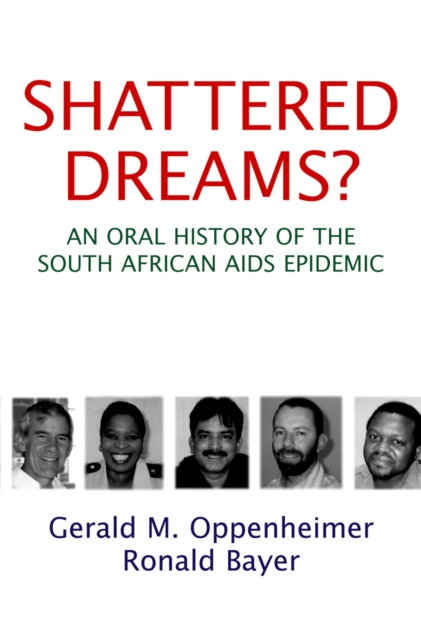
Shattered dreams? : an oral history of the South African AIDS epidemic
This book is an oral history of how committed doctors and nurses in South Africa struggled to ride the tiger of the world's most catastrophic AIDS epidemic. Based on more than 250 hours of interviews with almost 90 physicians and nurses—black, Indian, and white, gay and heterosexual—it seeks to capture the understandings of these health care providers as they confronted indifference, opposition, resistance, and material scarcity that was both a legacy of apartheid and a consequence of the global power of the international pharmaceutical industry. While there was in South Africa an epidemic among gay white men in the early and mid-1980s that mirrored AIDS in the United States and Europe, it was only at the decade's end, as the racially oppressive apartheid regime was in its death throes, that HIV began to spread among the black majority. At the very moment that the toll of HIV was mounting in South Africa, powerful life-extending medications had transformed the face of AIDS in Europe and America. But these pharmaceuticals were unaffordable to most in countries like South Africa. Only in the year 2000 did health care workers, in alliance with AIDS activists, begin to demand that those dependent upon the public sector have access to such drugs. By doing so, they confronted both global and local inequities and concurrently faced resistance from the very government that had opened the way to political freedom, forcing it to reverse itself in 2003. This book is a collective portrait of clinicians who refused to surrender to despair or nihilism.
eBook

Uptake of HIV Preexposure Prophylaxis Among Commercially Insured Persons—United States, 2010–2014
Background. Daily, oral use of tenofovir disoproxil fumarate and emtricitabine (TDF-FTC) for preexposure prophylaxis (PrEP) is an effective strategy to prevent acquisition of human immunodeficiency virus (HIV) infection. It is important to monitor PrEP uptake at the national level to increase our understanding of trends in its utilization, but national HIV surveillance data do not include PrEP uptake. Our objective was to develop feasible methods to estimate PrEP uptake and to estimate uptake each year among commercially insured persons during 2010–2014. Methods. We conducted a retrospective analysis of the 2010–2014 MarketScan database, a national sample of persons with commercial health insurance in the United States. We developed an algorithm to identify persons aged ≥ 16 years who were prescribed TDF-FTC for PrEP each year. We generated nationally representative estimates of prevalence of persons prescribed PrEP. Results. We found a significantly increasing trend in the proportion of persons prescribed TDF-FTC for PrEP during the study period, with 417 users in 2010 and 9375 in 2014 (P < .001); 97% of PrEP users were male and 98% lived in metropolitan areas in 2014. During the study period, the numbers of women prescribed PrEP were low. Conclusions. Our analytic method provides the only feasible means to monitor PrEP uptake in the United States. Although a marked increasing trend in uptake was observed for men, the number of women who used PrEP remained very low during the study period. Interventions are needed to increase PrEP use by women at substantial risk of acquiring HIV infection.
Journal Article
First Occurrence of Diabetes, Chronic Kidney Disease, and Hypertension Among North American HIV-Infected Adults, 2000–2013
Background. There remains concern regarding the occurrence of noncommunicable diseases (NCDs) among individuals aging with human immunodeficiency virus (HIV), but few studies have described whether disparities between demographic subgroups are present among individuals on antiretroviral therapy (ART) with access to care. Methods. We assessed the first documented occurrence of type 2 diabetes mellitus (DM), chronic kidney disease (CKD), and treated hypertension (HTN) by age, sex, and race within the North American AIDS Cohort Collaboration on Research and Design (NA-ACCORD). HIV-infected adults (≥18 years) who initiated ART were observed for first NCD occurrence between 1 January 2000 and 31 December 2013. Cumulative incidences as of age 70 were estimated accounting for the competing risk of death; Poisson regression was used to compare rates of NCD occurrence by demographic subgroup. Results. We included >50 000 persons with >250 000 person-years of follow-up. Median follow-up was 4.7 (interquartile range, 2.4–8.1) years. Rates of first occurrence (per 100 person-years) were 1.2 for DM, 0.6 for CKD, and 2.6 for HTN. Relative to non-black women, the cumulative incidences were increased in black women (68% vs 51% for HTN, 52% vs 41% for DM, and 38% vs 35% for CKD; all P < .001); this disparity was also found among men (73% vs 60% for HTN, 44% vs 34% for DM, and 30% vs 25% for CKD; all P < .001). Conclusions. Racial disparities in the occurrence of DM, CKD, and HTN emphasize the need for prevention and treatment options for these HIV populations receiving care in North America.
Journal Article

Ending the HIV–AIDS Pandemic — Follow the Science
Studies proving that the benefits of prompt initiation of antiretroviral therapy for HIV infection outweigh the risks and that preexposure prophylaxis can be implemented safely and effectively will serve as critical tools in the fight to end the HIV–AIDS pandemic.
In July 1996, researchers, policymakers, and activists involved in the fight against HIV–AIDS met in Vancouver, Canada, for the 11th International Conference on AIDS. During that historic meeting, practitioners and patients heard evidence regarding a powerful weapon to stop the relentless onslaught of the human immunodeficiency virus (HIV): combination antiretroviral therapy (ART), with a protease inhibitor as the centerpiece of the regimen. In the nearly 20 years since that watershed meeting, the early promise of durable effects from combination therapy has been realized for many patients: between 2000 and 2014, the rollout of ART saved an estimated 7.8 million lives . . .
Journal Article
Spatial Analysis of the Human Immunodeficiency Virus Epidemic among Men Who Have Sex with Men in China, 2006–2015
Background. Studies have shown a recent upsurge in human immunodeficiency virus (HIV) burden among men who have sex with men (MSM) in China, especially in urban areas. For intervention planning and resource allocation, spatial analyses of HIV/AIDS case-clusters were required to identify epidemic foci and trends among MSM in China. Methods. Information regarding MSM recorded as HIV/AIDS cases during 2006–2015 were extracted from the National Case Reporting System. Demographic trends were determined through Cochran-Armitage trend tests. Distribution of case-clusters was examined using spatial autocorrelation. Spatial-temporal scan was used to detect disease clustering. Spatial correlations between cases and socioenvironmental factors were determined by spatial regression. Results. Between 2006 and 2015, in China, 120 371 HIV/AIDS cases were identified among MSM. Newly identified HIV/AIDS cases among self-reported MSM increased from 487 cases in 2006 to >30 000 cases in 2015. Among those HIV/AIDS cases recorded during 2006–2015, 47.0% were 20–29 years old and 24.9% were aged 30–39 years. Based on clusters of HIV/AIDS cases identified through spatial analysis, the epidemic was concentrated among MSM in large cities. Spatial-temporal clusters contained municipalities, provincial capitals, and main cities such as Beijing, Shanghai, Chongqing, Chengdu, and Guangzhou. Spatial regression analysis showed that sociodemographic indicators such as population density, per capita gross domestic product, and number of county-level medical institutions had statistically significant positive correlations with HIV/AIDS among MSM. Conclusions. Assorted spatial analyses revealed an increasingly concentrated HIV epidemic among young MSM in Chinese cities, calling for targeted health education and intensive interventions at an early age.
Journal Article
Covid-19, Ebola, and HIV — Leveraging Lessons to Maximize Impact
Our response to the Covid-19 pandemic should build on lessons from the HIV and Ebola epidemics, including the importance of basing interventions on sound science and of involving affected communities in planning and implementation of research and care.
Journal Article