
Catalogue Search | MBRL


Are you sure you want to remove the book from the shelf?

{{itemTitle}}
2,187
result(s) for
"HIV positive"
Sort by:

Viral frictions : global health and the persistence of HIV stigma in Kenya
\"Viral Frictions takes the reader along a trail of intersecting narratives to uncover how and why it is that HIV-related stigma persists in the age of treatment. Pfeiffer convincingly argues that stigma is a socially constructed process co-produced at the nexus of local, national, and global relationships and storytelling about and practices associated with HIV. Based on a decade of fieldwork in one highway trading center in Kenya, Viral Frictions offers compelling stories of stigma and discrimination as a lens for understanding broader social processes, the complexities of globalization and health, and their profound impact on the everyday social lives and relationships of people living through the ongoing HIV epidemic in sub-Saharan Africa. This highly engaging book is ideal reading for those interested in teaching and learning about intersectionality, as Pfeiffer meticulously demonstrates how HIV stigma interacts with issues of treatment, race, ethnicity, class, gender, sexuality, social change, and international aid systems\"-- Provided by publisher.
BOOK

The Unseen Things
What do HIV-positive women in Nigeria face as they seek meaningful lives with a deeply discrediting disease? Kathryn A. Rhine uncovers the skillful ways women defuse concerns about their wellbeing and the ability to maintain their households. Rhine shows how this ethic of concealment involves masking their diagnosis, unfaithful husbands, and unsupportive families while displaying their beauty, generosity, and vitality. As Rhine observes, collusion with counselors and support group leaders to deflect stigma, secure respectability, and find love features prominently in the lives of ordinary women who hope for a brighter future as the HIV epidemic continues to expand.
eBook

HIV Exceptionalism
In 2002, Sierra Leone emerged from a decadelong civil war. Seeking international attention and development aid, its government faced a dilemma. Though devastated by conflict, Sierra Leone had a low prevalence of HIV. However, like most African countries, it stood to benefit from a large influx of foreign funds specifically targeted at HIV/AIDS prevention and care.
What Adia Benton chronicles in this ethnographically rich and often moving book is how one war-ravaged nation reoriented itself as a country suffering from HIV at the expense of other, more pressing health concerns. During her fieldwork in the capital, Freetown, a city of one million people, at least thirty NGOs administered internationally funded programs that included HIV/AIDS prevention and care. Benton probes why HIV exceptionalism-the idea that HIV is an exceptional disease requiring an exceptional response-continues to guide approaches to the epidemic worldwide and especially in Africa, even in low-prevalence settings.
In the fourth decade since the emergence of HIV/AIDS, many today are questioning whether the effort and money spent on this health crisis has in fact helped or exacerbated the problem.HIV Exceptionalismdoes this and more, asking, what are the unanticipated consequences that HIV/AIDS development programs engender?
eBook
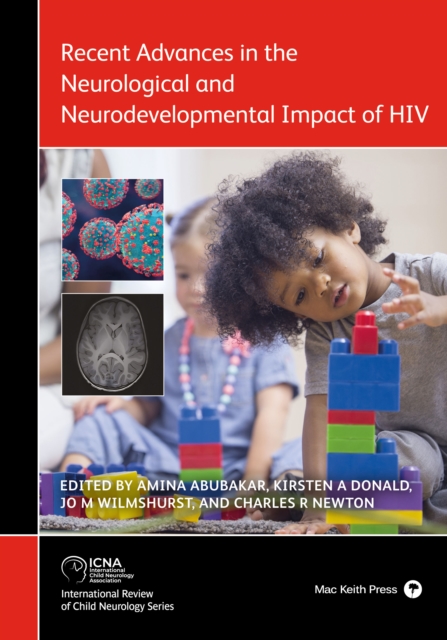
Recent Advances in the Neurological and Neurodevelopmental Impact of HIV
Recent Advances in the Neurological and Neurodevelopmental Impact of HIV brings together world-leading experts in the field of HIV, to provide new and critical insights into HIV treatment and management for children and adolescents. Those infected with HIV are living longer thanks to antiretroviral drugs, and HIV-related neurological and neurodevelopmental disorders therefore require urgent attention, particularly complications which arise from long-term medication use. The authors summarise key findings in these important areas, as well as gaps in research and implications for paediatric HIV work. Readers will discover ways of optimising the neurological health of children and adolescents living with HIV through better care provision and earlier intervention. Outlines the important clinical neurological issues facing children and young adults with HIV infection Presents up-to-date diagnostic and treatment approaches Provides practical clinical strategies to improve the care of children and adolescents with HIV An essential resource for all clinicians involved in the care of children and adolescents with HIV and their families, including doctors, paediatricians, psychologists, and other health practitioners and researchers.
eBook

In a rocket made of ice : the story of wat opot, a visionary community for children growing up with AIDS
\"The story of a woman who volunteers at an orphanage in Cambodia, set up by a Vietnam War vet for children with and/or orphaned by HIV/AIDS\"-- Provided by publisher.
Book
HIV Screening and Access to Care
With the widespread use of highly active anti-retroviral treatment (HAART), HIV has become a chronic, rather than a fatal, disease. But for their treatment to succeed, patients require uninterrupted care from a health care provider and uninterrupted access to anti-HIV medications. The IOM identifies federal, state, and private health insurance policies that inhibit HIV-positive individuals from initiating or continuing their care.
eBook


Surviving HIV/AIDS in the Inner City
Surviving HIV/AIDS in the Inner Cityexplores the survival strategies of poor, HIV-positive Puerto Rican women by asking four key questions: Given their limited resources, how did they manage an illness as serious as HIV/AIDS? Did they look for alternatives to conventional medical treatment? Did the challenges they faced deprive them of self-determination, or could they help themselves and each other? What can we learn from these resourceful women?Based on her work with minority women living in Newark, New Jersey, Sabrina Marie Chase illuminates the hidden traps and land mines burdening our current health care system as a whole. For the women she studied, alliances with doctors, nurses, and social workers could literally mean the difference between life and death. By applying the theories of sociologist Pierre Bourdieu to the day-to-day experiences of HIV-positive Latinas, Chase explains why some struggled and even died while others flourished and thrived under difficult conditions. These gripping, true-life stories advocate for those living with chronic illness who depend on the health care \"safety net.\" Through her exploration of life and death among Newark's resourceful women, Chase provides the groundwork for inciting positive change in the U.S. health care system.
eBook