
Catalogue Search | MBRL


Are you sure you want to remove the book from the shelf?

{{itemTitle}}
929
result(s) for
"HOME VILLAGES"
Sort by:

Mexican New York
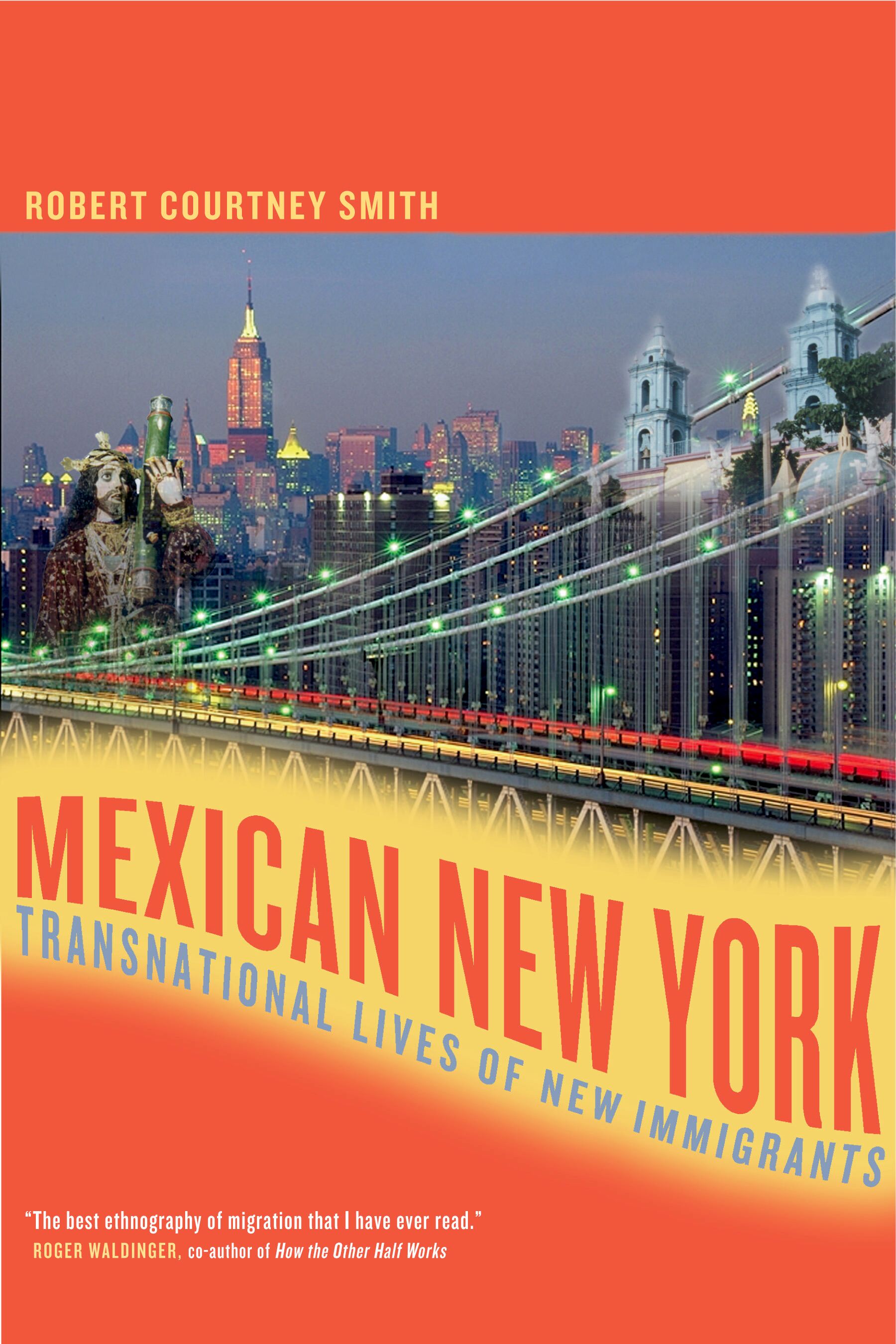
Drawing on more than fifteen years of research,Mexican New Yorkoffers an intimate view of globalization as it is lived by Mexican immigrants and their children in New York and in Mexico. Robert Courtney Smith's groundbreaking study sheds new light on transnationalism, vividly illustrating how immigrants move back and forth between New York and their home village in Puebla with considerable ease, borrowing from and contributing to both communities as they forge new gender roles; new strategies of social mobility, race, and even adolescence; and new brands of politics and egalitarianism. Smith's deeply informed narrative describes how first-generation men who have lived in New York for decades become important political leaders in their home villages in Mexico. Smith explains how relations between immigrant men and women and their U.S.-born children are renegotiated in the context of migration to New York and temporary return visits to Mexico. He illustrates how U.S.-born youth keep their attachments to Mexico, and how changes in migration and assimilation have combined to transnationalize both U.S.-born adolescents and Mexican gangs between New York and Puebla.Mexican New Yorkprofoundly deepens our knowledge of immigration as a social process, convincingly showing how some immigrants live and function in two worlds at the same time and how transnationalization and assimilation are not opposing, but related, phenomena.
eBook
Mexican New York
Drawing on more than fifteen years of research, Mexican New York offers an intimate view of globalization as it is lived by Mexican immigrants and their children in New York and in Mexico. Robert Courtney Smith's groundbreaking study sheds new light on transnationalism, vividly illustrating how immigrants move back and forth between New York and their home village in Puebla with considerable ease, borrowing from and contributing to both communities as they forge new gender roles; new strategies of social mobility, race, and even adolescence; and new brands of politics and egalitarianism. Smith's deeply informed narrative describes how first-generation men who have lived in New York for decades become important political leaders in their home villages in Mexico. Smith explains how relations between immigrant men and women and their U.S.-born children are renegotiated in the context of migration to New York and temporary return visits to Mexico. He illustrates how U.S.-born youth keep their attachments to Mexico, and how changes in migration and assimilation have combined to transnationalize both U.S.-born adolescents and Mexican gangs between New York and Puebla. Mexican New York profoundly deepens our knowledge of immigration as a social process, convincingly showing how some immigrants live and function in two worlds at the same time and how transnationalization and assimilation are not opposing, but related, phenomena.
eBook
Leveraging migration for Africa : remittances, skills, and investments
A joint effort led by the African Development Bank and the World Bank, 'Leveraging Migration for Africa' is the first comprehensive publication on harnessing migration, remittances, and other diaspora resources for the development of Africa. It comes at a time when countries in Africa and elsewhere are grappling with difficult choices on how to manage migration.Policy makers can help leverage the contributions of migrants to the development of Africa, reduceremittance costs, improve the efficiency of remittance markets in both origin and destination countries, and address the needs of the origin countries without restricting the emigration of high-skilled professionals. Innovative financing mechanisms such as issuance of diaspora bonds and securitization of future remittance flows can help finance big-ticket projects, such as railways, roads, power plants, and institutions of higher learning that will, step by step, help to transform Africa. This volume contributes to a greater understanding of migration and its potential role in Africa?s development.
eBook

Local Liberties
Unlike formal local government units established as legal entities by the state, for Tocqueville, local communities and institutions were not necessarily creations of the state, but rooted in nature and found among all peoples regardless of their customs and laws.2 The self-governing institutions found in medieval Europe before the emergence of the centralized monarchies provided the prototype for Tocqueville’s concept of local liberties stressing the freedom of local communities to manage their own affairs and solve common problems.
Book Chapter

The Penumbra We Have Crossed
In her introduction toThe Penumbra We Have Crossed,from which this piece is excerpted, Turinese writer Lalla Romano (1902–2001) notes that her book describes a journey or, better,isa journey. Yet it “is not a journey in time to retrieve the past; it is a short journey in space to the home village,” where “the past is eternally present.” In this intimate and somewhat ghostly domestic territory, immortalized by old daguerreotypes, a new literary space awaits us, a space where poetry and truth belong to each other and to the collective memory of literature.The Penumbra We
Book Chapter

Voters to act on land // New site eyed for police station
They will vote on a revised plan to purchase land for a highway garage and police station. It is one of 24 requests in a special town meeting that begins at 7 p.m. in the Shepard Municipal Building on High Street. However, the land purchase fizzled earlier this year when selectmen got bogged down in possible conflicts of interest. The conflicts involved Selectman Dolores A.M. Morin, whose brother-in-law submitted a land offer for the highway garage, and Joan B. Walker, the town's procurement officer, whose husband was attorney for another party who offered to sell land. The police station is now located in Town Hall, and selectmen have said that the pending renovation of Town Hall makes this the right time to find a new home for the Police Department.
Newspaper Article
Injunction sought against park owner
WARREN - State Attorney General Scott Harshbarger has sought a court injunction to force 3-M Homes Corporation of Braintree, owner of Heritage Village Mobile Home Park, to halt inferior septic and water conditions in the 89 unit park. A motion for a preliminary injunction was filed yesterday, according to state Sen. Stephen M. Brewer, D-Barre, and it will be heard Wednesday in Worcester Housing Court. For at least eight years, the 150 residents of the Bemis Road park, many of them elderly and on fixed incomes and medically handicapped, and town officials have repeatedly battled with 3-M Homes to correct a deficient septic system there.
Newspaper Article
Mobile home proposal approved // Warren meeting also OKs budget
WARREN - Voters here resoundingly approved a plan last night to loan as much as $1.4 million to a local mobile home park to tie the facility into town sewers. At the annual town meeting, held in Shepard Municipal Building, residents also gave a thumbs up to taking legal action against a Warren water commissioner and approved a $3.8 million fiscal 1999 town budget. The Bemis Road park has experienced septic problems since 1989. Within the past four or five months, the septic system in the park failed, according to an engineer of the state Department of Environmental Protection.
Newspaper Article
Woman awakens to fire // Warren mobile home destroyed
WARREN - A Warren woman, who was awakened by the sight of flames, managed to flee her mobile home before it was destroyed by fire, Fire Chief James W. Dolan said last night.
Newspaper Article