
Catalogue Search | MBRL


Are you sure you want to remove the book from the shelf?

{{itemTitle}}
46,377
result(s) for
"HOUSEHOLD CONSUMPTION"
Sort by:

Systematic review of metrics used to characterise dietary nutrient supply from household consumption and expenditure surveys
To review existing publications using Household Consumption and Expenditure Survey (HCES) data to estimate household dietary nutrient supply to (1) describe scope of available literature, (2) identify the metrics reported and parameters used to construct these metrics, (3) summarise comparisons between estimates derived from HCES and individual dietary assessment data and (4) explore the demographic and socio-economic sub-groups used to characterise risks of nutrient inadequacy.
This study is a systematic review of publications identified from online databases published between 2000 to 2019 that used HCES food consumption data to estimate household dietary nutrient supply. Further publications were identified by 'snowballing' the references of included database-identified publications.
Publications using data from low- and lower-middle income countries.
In total, fifty-eight publications were included. Three metrics were reported that characterised household dietary nutrient supply: apparent nutrient intake per adult-male equivalent per day (n 35), apparent nutrient intake per capita per day (n 24) and nutrient density (n 5). Nutrient intakes were generally overestimated using HCES food consumption data, with several studies finding sizeable discrepancies compared with intake estimates based on individual dietary assessment methods. Sub-group analyses predominantly focused on measuring variation in household dietary nutrient supply according to socio-economic position and geography.
HCES data are increasingly being used to assess diets across populations. More research is needed to inform the development of a framework to guide the use of and qualified interpretation of dietary assessments based on these data.
Journal Article

Causal relationship between household consumption transition and CO2 emission in China: a dynamic panel model
The mitigation of carbon dioxide (CO
2
) generated from household consumption, accounting for 52% of China’s total greenhouse gas emissions, plays a pivotal role in China’s pursuit of reaching a carbon peak by 2030. The study used three waves of nationally representative longitudinal data, energy statistics data, and input–output table to estimate household CO
2
emissions (HCEs) in China at the micro-scale. The dynamic relationship between household consumption pattern transition and HCEs per capita was explored by applying maximum likelihood and structural equation modeling (ML-SEM) with panel data. The results indicate that per capita HCE level in a given year appears to be positively associated with HCE level for the same household in the previous year. A U-shaped relationship between consumption pattern transition and HCEs per capita was confirmed, as well as the reinforcement effect of income on the impacts of consumption pattern transition. The increase in consumption propensity, household income, share of wage-income, household asset values, and house space results in higher HCEs per capita. The family size and dependency ratio have a negative relationship with HCEs, whereas households that are female-oriented and more Internet-dependent tend to produce more CO
2
. Exploring the consumption transition of households is crucial for reducing CO
2
emissions at the household level in China.
Journal Article
Assessing food security using household consumption expenditure surveys (HCES): a scoping literature review
To meet some of the UN's seventeen Sustainable Development Goals by 2030, there is a need for more effective policy to reduce food insecurity in low-income and lower-middle-income countries (LMIC). Measuring progress towards these goals requires reliable indicators of food security in these countries. Routinely conducted household consumption and expenditure surveys (HCES) provide potentially valuable and nationally representative data sets for this purpose. The present study aimed to assess methods used to determine national food security status using proxy measures from HCES data in LMIC globally.
A scoping literature review was conducted using electronic databases. Of the 929 abstracts identified, a total of twenty articles were reviewed against strict inclusion and exclusion criteria and included for further analysis.
Fourteen LMIC globally were represented in the twenty articles. The simplest metric used to indicate food insecurity compared household food expenditure against a level of expenditure considered to be below the poverty line. Data on acquisition of food was commonly converted to available energy for the household using local food composition tables and expressed as a proportion of household total energy requirements. Dietary diversity was also assessed in some studies as well as experience of food insecurity.
The review demonstrated that routinely collected HCES data sets provide a useful resource for the measurement of household food security in often resource-limited LMIC. Standardisation of methods used to assess food security is needed to allow for more useful comparisons between countries, as well as to assess temporal trends.
Journal Article

Measuring inequality of opportunities in Latin America and the Caribbean
Equality of opportunity is about leveling the playing field so that circumstances such as gender, ethnicity, place of birth, or family background do not influence a person's life chances. Success in life should depend on people's choices, effort and talents, not to their circumstances at birth. 'Measuring Inequality of Opportunities in Latin America and the Caribbean' introduces new methods for measuring inequality of opportunities and makes an assessment of its evolution in Latin America over a decade. An innovative Human Opportunity Index and other parametric and non-parametric techniques are presented for quantifying inequality based on circumstances exogenous to individual efforts. These methods are applied to gauge inequality of opportunities in access to basic services for children, learning achievement for youth, and income and consumption for adults.
eBook
Empirical research on household consumption carbon emissions and key impact factors in urban and rural China
The analysis of household consumption carbon emissions (HCCEs), a significant source of CO
2
emissions, is essential to achieving China’s carbon peak before 2030 and carbon neutrality before 2060. Based on the calculation of urban and rural HCCEs during 2005–2019, the differences between urban and rural areas, spatial–temporal pattern and agglomeration characteristics of HCCEs were analyzed, and the panel quantile STIRPAT model was constructed to empirically test the influence of socioeconomic factors on urban and rural HCCEs at different quantile levels. The results indicate that, first, China’s HCCEs are generally growing, indirect HCCEs are more than direct HCCEs, urban HCCEs are far more than rural, and the gap has a growing trend. Second, the urban and rural HCCEs have significant disequilibrium and agglomeration characteristics in space, and high-high and low-low agglomerations dominated the local region. Third, household size and the number of patent application authorizations increase the urban and rural HCCEs, while the consumption capacity and consumption structure inhibit the urban and rural HCCEs. In addition, the level of education also has an inhibitory effect on the rural HCCEs, while the aging degree of the population has a significant positive impact on the rural HCCEs when it is only at the 90th percentile. Finally, it is suggested to formulate differentiated emission reduction policies.
Journal Article

Electricity Consumption Forecast Model Using Household Income: Case Study in Tanzania
When considering the electrification of a particular region in developing country, the electricity consumption in that region must be estimated. In sub-Saharan Africa, which is one of the areas with the lowest electrification rates in the world, the villages of minority groups are scattered over a vast area of land, so electrification using distributed generators is being actively studied. Specifically, constructing a microgrid or introducing a solar system to each household is being considered. In this case, the electricity consumption of each area needs to be estimated, then a system with enough capacity could be introduced. In this study, we propose a household income electricity consumption model to estimate the electricity consumption of a specific area. We first estimate the electricity consumption of each household based on income and the electricity consumption of a specific area can be derived by adding up them in that area. Through a case study in Tanzania, electricity consumption derived using this model was compared with electricity consumption published by TANESCO, and the validity of the model was verified. We forecasted the electricity consumption in each region using the household income electricity consumption model, and the average forecast accuracy was 74%. The accuracy was 87% when the electricity consumption in Tanzania mainland was forecasted by adding the predicted values.
Journal Article

Comparison of Methods for Estimating Dietary Food and Nutrient Intakes and Intake Densities from Household Consumption and Expenditure Data in Mongolia
Household consumption and expenditure surveys are frequently conducted around the world and they usually include data on household food consumption, but their applicability to nutrition research is limited by their collection at the household level. Using data from Mongolia, this study evaluated four approaches for estimating diet from household surveys: direct inference from per-capita household consumption; disaggregation of household consumption using a statistical method and the “adult male equivalent” method, and direct prediction of dietary intake. Per-capita household consumption overestimated dietary energy in single- and multi-person households by factors of 2.63 and 1.89, respectively. Performance of disaggregation methods was variable across two household surveys analyzed, while the statistical method exhibited less bias in estimating intake densities (per 100 kcal) of most dietary components in both of the surveys. Increasingly complex prediction models explained 54% to 72% of in-sample variation in dietary energy, with consistent benefits incurred by inclusion of basic dietary measurements. In conclusion, in Mongolia and elsewhere, differences in how household and dietary measurements are recorded make their comparison challenging. Validity of disaggregation methods depends on household survey characteristics and the dietary components that are considered. Relatively precise prediction models of dietary intake can be achieved by integrating basic dietary assessment into household surveys.
Journal Article
Getting the food list ‘right’: an approach for the development of nutrition-relevant food lists for household consumption and expenditure surveys
The present paper aimed to demonstrate how 24 h dietary recall data can be used to generate a nutrition-relevant food list for household consumption and expenditure surveys (HCES) using contribution analysis and stepwise regression.
The analysis used data from the 2011/12 Bangladesh Integrated Household Survey (BIHS), which is nationally representative of rural Bangladesh. A total of 325 primary sampling units (PSU=village) were surveyed through a two-stage stratified sampling approach. The household food consumption module used for the analysis consisted of a 24 h open dietary recall in which the female member in charge of preparing and serving food was asked about foods and quantities consumed by the whole household.
Rural Bangladesh.ParticipantsA total of 6500 households.
The original 24 h open dietary recall data in the BIHS were comprised of 288 individual foods that were grouped into ninety-four similar food groups. Contribution analysis and stepwise regression were based on nutrients of public health interest in Bangladesh (energy, protein, fat, Fe, Zn, vitamin A). These steps revealed that a list of fifty-nine food items captures approximately 90 % of the total intake and up to 90 % of the between-person variation for the key nutrients based on the diets of the population.
The study illustrates how 24 h open dietary recall data can be used to generate a country-specific nutrition-relevant food list that could be integrated into an HCES consumption module to enable more accurate and comprehensive household-level food and nutrient analyses.
Journal Article
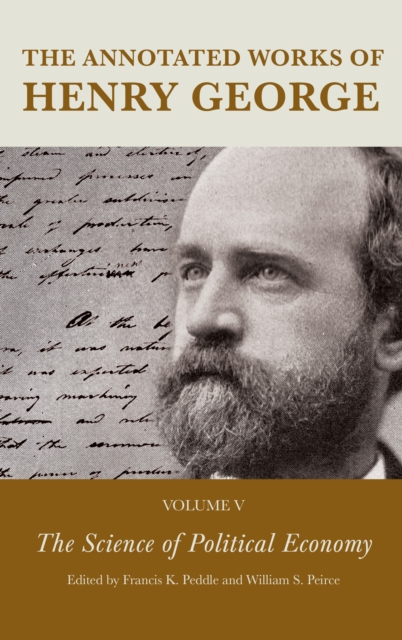
The Annotated Works of Henry George. Volume 5 The Science of Political Economy
Henry George (1839-1897) rose to fame as a social reformer and economist amid the industrial and intellectual turbulence of the late nineteenth century. His best-selling Progress and Poverty (1879) captures the ravages of privileged monopolies and the woes of industrialization in a language of eloquent indignation. His reform agenda resonates as powerfully today as it did in the Gilded Age, and his impassioned prose and compelling thought inspired such diverse figures as Leo Tolstoy, John Dewey, Sun Yat-Sen, Winston Churchill, and Albert Einstein. This six-volume edition of The Annotated Works of Henry George assembles all his major works for the first time with new introductions, critical annotations, extensive bibliographical material, and comprehensive indexing to provide a wealth of resources for scholars and reformers. Volume V of this series presents the unabridged and posthumously published text of The Science Political Economy (1898). George's original text is comprehensively supplemented by annotations which explain his many references to other political economists and writers both well known and obscure. A new index augments accessibility to the text, the critical annotations, and their key terms. The introductory essay by Professor Francis K. Peddle, \"Political Economy and the Satisfactions of Wealth,\" provides the historical, economic, and primarily philosophical context for George's debates with the prominent political economists and thinkers of his time. Henry George, in history books and documentaries, is generally portrayed as a prominent reformer in the Gilded Age, one who ushered in with others the social and economic advances of the Progressive Era in the period from the 1890s to the 1920s. The Science of Political Economy reveals George to be one of the most original and systematic architects of political economy, and its developing self-image as a science, in the nineteenth century, along with David Ricardo, John Stuart Mill, and Alfred Marshall.Henry George wrote The Science of Political Economy in order to correct the many confusions and myths about the nature and definition of wealth, value, and money, as well as the essential assumptions behind efficient production and the moral basis of the distribution of wealth. He defined political economy as the science that treats of the nature of wealth, and of the laws of production and distribution. It is not, for him, a science of human psychology or the twists and turns of political life. George's constructive critiques of previous political economists led to fresh insights about the meaning and the limitations of political economy, about the intriguing relation between wealth and value, and about how the proper distribution of wealth in society ought to be understood as a function of the cooperative character of civilization. Volume V of The Annotated Works of Henry George presents the culmination of his life's work and thought.
eBook

Consumption Commitments and Risk Preferences
Many households devote a large fraction of their budgets to \"consumption commitments\"-goods that involve transaction costs and are infrequently adjusted. This paper characterizes risk preferences in an expected utility model with commitments. We show that commitments affect risk preferences in two ways: (1) they amplify risk aversion with respect to moderate-stake shocks, and (2) they create a motive to take large-payoff gambles. The model thus helps resolve two basic puzzles in expected utility theory: the discrepancy between moderate-stake and large-stake risk aversion and lottery playing by insurance buyers. We discuss applications of the model such as the optimal design of social insurance and tax policies, added worker effects in labor supply, and portfolio choice. Using event studies of unemployment shocks, we document evidence consistent with the consumption adjustment patterns implied by the model.
Journal Article