
Catalogue Search | MBRL


Are you sure you want to remove the book from the shelf?

{{itemTitle}}
2,371
result(s) for
"HUMOR / General."
Sort by:

The Heart of Things
\"I've never believed that living in one place means being one thing all the time, condemned like Minnie Pearl to wear the same hat for every performance.Life is more complicated than that.\" In this remarkable book of days, John Hildebrand charts the overlapping rings--home, town, countryside--of life in the Midwest.Like E.B.
eBook
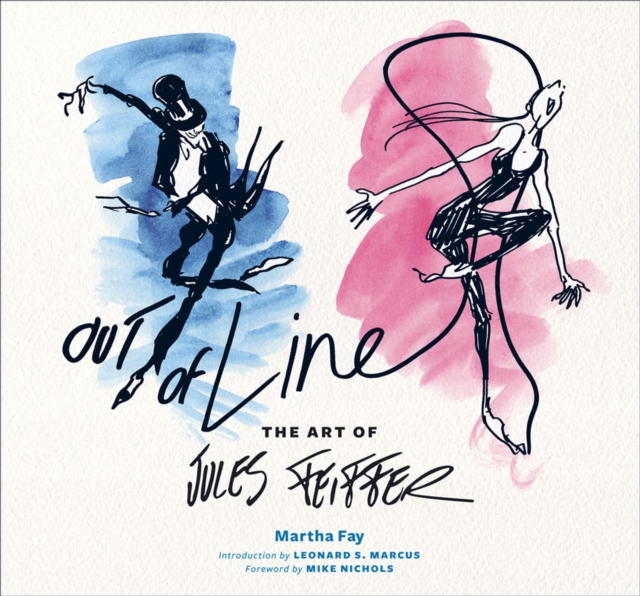
Out of Line
The essential retrospective of the Pulitzer Prize-winning cartoonist and writer whose signature brand of satire inspired generations.Everyone knows a Jules Feiffer illustration when they see one.His characters leap across the page, each line resonating with humor and psychological insight.
eBook

Wit's End
InWit's End,Sean Zwagerman offers an original perspective on women's use of humor as a performative strategy as seen in works of twentieth-century American literature. He argues that women whose direct, explicit performative speech has been traditionally denied, or not taken seriously, have often turned to humor as a means of communicating with men.The book examines both the potential and limits of women's humor as a rhetorical strategy in the writings of James Thurber, Zora Neale Hurston, Dorothy Parker, Edward Albee, Louise Erdrich, and others. For Zwagerman, these texts \"talk back\" to important arguments in humor studies and speech-act theory. He deconstructs the use of humor in select passages by employing the theories of J. L. Austin, John Searle, Jacques Derrida, Shoshana Felman, J. Hillis Miller, and Eve Kosofsky Sedgwick. Zwagerman offers arguments both for and against these approaches while advancing new thinking on humor as the \"end\"-both the goal and limit-of performative strategy, and as a means of expressing a full range of serious purposes.Zwagerman contends that women's humor is not solely a subversive act, but instead it should be viewed in the total speech situation through context, motives, and intended audience. Not strictly a transgressive influence, women's humor is seen as both a social corrective and a reinforcement of established ideologies. Humor has become an epistemology, an \"attitude\" or slant on one's relation to society.Zwagerman seeks to broaden the scope of performativity theory beyond the logical pragmatism of deconstruction and looks to the use of humor in literature as a deliberate stylization of experiences found in real-world social structures, and as a tool for change.
eBook

The Senses of Humor
Why do modern Americans believe in something called a sense of humor and how did they come to that belief? Daniel Wickberg traces the cultural history of the concept from its British origins as a way to explore new conceptions of the self and social order in modern America. More than simply the history of an idea, Wickberg's study provides new insights into a peculiarly modern cultural sensibility.
The expression \"sense of humor\" was first coined in the 1840s and the idea that such a sense was a personality trait to be valued developed only in the 1870s. What is the relationship between Medieval humoral medicine and this distinctively modern idea of the sense of humor? What has it meant in the past 125 years to declare that someone lacks a sense of humor? How is the joke, as a twentieth-century quasi-literary form, different from the traditional folktale? Wickberg addresses these questions, among others, using the history of ideas to throw new light on the way contemporary Americans think and speak.
The context of Wickberg's analysis is Anglo-American; the specifically British meanings of humor and laughter from the sixteenth century forward provide the framework for understanding American cultural values in the nineteenth and twentieth centuries. The genealogy of the sense of humor is, like the study of keywords, an avenue into a significant aspect of the cultural history of modernity. Drawing on a wide range of sources and disciplinary perspectives, Wickberg's analysis challenges many of the prevailing views of modern American culture and suggests a new model for cultural historians.
eBook

The System of Comics
This edition of Thierry Groensteen'sThe System of Comicsmakes available in English a groundbreaking work on comics by one of the medium's foremost scholars. In this book, originally published in France in 1999, Groensteen explains clearly the subtle, complex workings of the medium and its unique way of combining visual, verbal, spatial, and chronological expressions. The author explores the nineteenth-century pioneer Rodolphe Töpffer, contemporary Japanese creators, George Herriman's Krazy Kat, and modern American autobiographical comics.
The System of Comics uses examples from a wide variety of countries including the United States, England, Japan, France, and Argentina. It describes and analyzes the properties and functions of speech and thought balloons, panels, strips, and pages to examine methodically and insightfully the medium's fundamental processes.
From this, Groensteen develops his own coherent, overarching theory of comics, a \"system\" that both builds on existing studies of the \"word and image\" paradigm and adds innovative approaches of his own. Examining both meaning and appreciation, the book provides a wealth of ideas that will challenge the way scholars approach the study of comics. By emphasizing not simply \"storytelling techniques\" but also the qualities of the printed page and the reader's engagement, the book's approach is broadly applicable to all forms of interpreting this evolving art.
Thierry Groensteen is a comics scholar and translator in Brussels, Belgium. He is the author ofLa bande dessinée: Une littérature graphiqueandLa construction de la cage, among other books. Bart Beaty is associate professor of communication and culture at the University of Calgary. Nick Nguyen is an archivist at Library and Archives Canada, in Ottawa, Ontario.
eBook

At Zero Point
At Zero Pointpresents an entirely new way of looking at Restoration culture, discourse, and satire. The book locates a rupture in English culture and epistemology not at the end of the eighteenth century (when it occurred in France) but at the end of the seventeenth century. Rose Zimbardo's hypothesis is based on Hans Blumenberg's concept of \"zero point\" -- the moment when an epistemology collapses under the weight of questions it has itself raised and simultaneously a new epistemology begins to construct itself. Zimbardo demonstrates that the Restoration marked both the collapse of the Renaissance order and the birth of modernism (with its new conceptions of self, nation, gender, language, logic, subjectivity, and reality). Using satire as the site for her investigation, Zimbardo examines works by Rochester, Oldham, Wycherley, and the early Swift for examples of Restoration deconstructive satire that, she argues, measure the collapse of Renaissance epistemology. Constructive satire, as exemplified in works by Dryden, has at its discursive center the \"I\" from which all order arises to be projected to the external world. No other book treats Restoration culture or satire in this way.
eBook

Do the gods wear capes? : spirituality, fantasy, and superheroes
Brash, bold, and sometimes brutal, superheroes might seem to epitomize modern pop-culture at its most melodramatic and mindless.But according to Ben Saunders, the appeal of the superhero is fundamentally metaphysical - even spiritual - in nature.
eBook

Working with Disney
In this volume Don Peri expands his extraordinary work conducting in-depth interviews with Disney employees and animators. These recent interviews include conversations with actors and performers rather than solely animators.
This book offers Peri's extensive interviews with Marc Davis, Frank Thomas, and Ollie Johnston, three of Walt Disney's famed \"Nine Old Men of Animation.\" Peri interviewed two Disney Mouseketeers-Bobby Burgess and Sharon Baird-from the original Mickey Mouse Club Show, providing valuable perspectives on how the Walt Disney Company worked with television. Lou Debney, a Disney television producer, discusses the company's engagement with television and live-action film. Walter Lantz talks about his work in the animation business, especially with Oswald the Lucky Rabbit. And Dave Hand discusses his legendary work on Snow White and the Seven Dwarfs.
Taken together, the interviews inWorking with Disneycreate an enlightening perspective on the Walt Disney Company as it grew from its animation roots into a media powerhouse.
eBook


Atomic comics : cartoonists confront the nuclear world
The advent of the Atomic Age challenged purveyors of popular culture to explain to the general public the complex scientific and social issues of atomic power. Atomic Comics examines how comic books, comic strips, and other cartoon media represented the Atomic Age from the early 1920s to the present. Through the exploits of superhero figures such as Atomic Man and Spiderman, as well as an array of nuclear adversaries and atomic-themed adventures, the public acquired a new scientific vocabulary and discovered the major controversies surrounding nuclear science. Ferenc Morton Szasz's thoughtful analysis of the themes, content, and imagery of scores of comics that appeared largely in the United States and Japan offers a fascinating perspective on the way popular culture shaped American comprehension of the fissioned atom for more than three generations.
eBook