
Catalogue Search | MBRL


Are you sure you want to remove the book from the shelf?

{{itemTitle}}
5,163
result(s) for
"HUMOR - Language."
Sort by:


American Learners' Comprehension of Russian Textual Humor
Over the past decade, second language (L2) humor has attracted scholarly attention as both a means and a goal of L2 development. Much of this research, however, has focused on oral communication, whereas virtually no studies address humor as an aspect of reading comprehension. This exploratory study combines these two areas of inquiry, examining how L2 learners of Russian negotiate textual humor. In particular, the study addresses the role of textual properties (genre and humorousness), and the effects of proficiency on learners' ability to apprehend and appreciate textual humor. The findings suggest that learner comprehension is dynamic and often partial, depending on familiarity with genre conventions and linguistic devices signaling humorous intent. The study also found that different stages of humor comprehension required discrete sets of knowledge: Detection, for example, relies on L2 linguistic knowledge, whereas understanding hinges largely on native cultural beliefs. Comparison of both groups suggested that the differences between learners and native speakers were both quantitative and qualitative. The role of proficiency was more complex than expected and primarily evidenced in the accuracy (rather than frequency) of humor recognition independent of text properties. The article concludes with pedagogical suggestions and outlines future research areas. (Verlag).
Journal Article

Best in class : essential wisdom from real student writing
\"From the very first week of Tim Clancy's 25-year career as a high school English teacher, he began to notice and collect funny and strange moments he discovered in his students' writing, moments like: \"The word \"witch\" has become a household word, like spatula,\" and \"Wherever excitement is, there will always be romance. Trust me.\" He would occasionally share them with his classes, who enjoyed them as much as he did, and so this book was born. I Like Literature . . . collects nearly 200 of the most entertaining of these moments from real student writing and complements them with dozens of playful illustrations to create a sympathetically hilarious book for anyone who has muddled their way through the wilderness of a school writing assignment\"-- Provided by publisher.
Book

Recreation and style : translating humorous literature in Italian and English
This volume explores the translation of literary and humorous style, including comedy, irony, satire, parody and the grotesque, from Italian to English and vice versa. The innovative and interdisciplinary theoretical approach places the focus on creativity and playful rewriting as central to the translation of humour. Analysing translations of works by Rosa Cappiello, Dario Fo, Will Self and Anthony Burgess, the author explores literary translation as a form of exchange between translated and receiving cultures. In a final case study she recounts her own strategies in translating the work of Milena Agus, exploring humour, creation and recreation from the perspective of the translator and demonstrating the benefits of critical engagement with both the theory and the practice of translation. This unique contribution to the study of humour and literary style in translation will be of interest to scholars of translation, humour, comparative literature, and literary and cultural studies.
eBook

Et tu, Brute? : the best Latin lines ever
There are so many Latin phrases in everyday use that often we use them without understanding the background and context within which they were actually used. Many of these phrases are humorous, but they are also a rich source of wisdom: the wisdom of the ancients. Each chapter of this book starts with a quotation and is lightly sprinkled with many more, with accompanying English translations. The background to each quotation is explained so that the context is fully understood.
Book

On the Poor Robustness of Transformer Models in Cross-Language Humor Recognition
Humor is a pervasive communicative device; nevertheless, its portability from one language to another remains challenging for computer machines and even humans. In this work, we investigate the problem of humor recognition from a crosslanguage and cross-domain perspective, focusing on English and Spanish languages. To this aim, we rely on two strategies: the first is based on multilingual transformer models for exploiting the cross-language knowledge distilled by them, and the second introduces machine translation to learn and make predictions in a single language. Experiments showed that models struggle in front of the humor complexity when it is translated, effectively tracking a degradation in the humor perception when messages flow from one language to another. However, when multilingual models face a cross-language scenario, exclusive between the fine-tuning and evaluation data languages, humor translation helps to align the knowledge learned in fine-tuning phase. According to this, a mean increase of 11% in F1 score was observed when classifying English-written texts with models fine-tuned with a Spanish dataset. These results are encouraging and constitute the first step towards a computationally crosslanguage analysis of humor.
Journal Article

It's Been Said Before
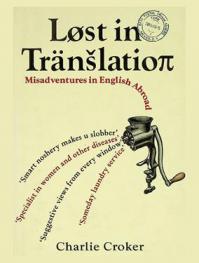
Careful writers and speakers agree that cliches are generally to be avoided. However, nearly all of us continue to use them. Why do they persist in our language? In It's Been Said Before, lexicographer Orin Hargraves examines the peculiar idea and power of the cliche. He helps readers understand why certain phrases became cliches and why they should be avoided -- or why they still have life left in them. Indeed, cliches can be useful -- even powerful. And few people even agree on which expressions are cliches and which are not. Many regard any frequent idiom as a cliche, and a phrase regarded as a cliche in one context may be seen simply as an effective expression in another. Examples drawn from data about actual usage support Hargraves' identification of true cliches. They also illuminate his commentary on usage problems and helpful suggestions for eliminating cliches where they serve no useful purpose. Concise and lively, It's Been Said Before serves as a guide to the most overused phrases in the English language -- and to phrases that are used exactly as often as they should be.
eBook

Craic baby : dispatches from a rising language
\"What do we talk about when we talk about Irish? When we talk about saving or supporting a language do we mean the musical combination of syllables, or something more profound? How do new words enter a language, and what is the relationship between that strange dialect called Hiberno-English and its parent language? [Thsi book] ... explorss the very new and very old parts of the Irish language from a personal perspective.\"--Book jacket.
Book
Voyages humoristiques
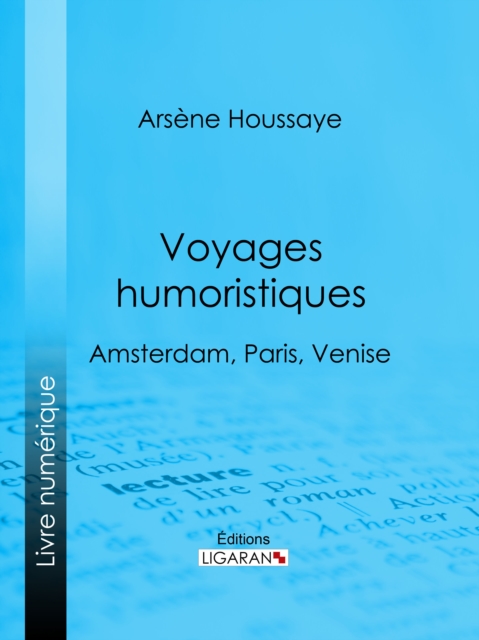
Extrait: \"Ce n'est pas pour moi que je voyage, je voyage pour vous, madame. Je porte votre pensée. Je ne suis que la locomotive. Tout ce que je vois ne me semblerait pas curieux si je ne devais vous le raconter. On l'a dit il y a longtemps: le poète est un miroir qu'on promène le long du chemin. Si je promène le miroir, vous savez bien que c'est pour vous...\" À PROPOS DES ÉDITIONS LIGARANLes éditions LIGARAN proposent des versions numériques de qualité de grands livres de la littérature classique mais également des livres rares en partenariat avec la BNF. Beaucoup de soins sont apportés à ces versions ebook pour éviter les fautes que l'on trouve trop souvent dans des versions numériques de ces textes. LIGARAN propose des grands classiques dans les domaines suivants: • Livres rares • Livres libertins • Livres d'Histoire • Poésies • Première guerre mondiale • Jeunesse • Policier
eBook