
Catalogue Search | MBRL


Are you sure you want to remove the book from the shelf?

{{itemTitle}}
100
result(s) for
"Hadith Texts."
Sort by:

Computational and natural language processing based studies of hadith literature: a survey
Hadith is one of the most celebrated resources of Classical Arabic text. The hadiths, or Prophetic traditions (tradition for short), are narrations originating from the sayings and conduct of Prophet Muhammad. For Muslims, hadiths are the second most important source of Islamic jurisprudence after the Holy Qur’an. Each hadith consists of two parts, isnad and matn. Matn represents the actual text of the hadith, while isnad unwinds the chain of the authorities which precede and introduce the matn, the succession of people through whose channel the hadith reaches the last transmitter. The hadith corpus is huge and runs into hundreds of volumes. It has an even larger supporting work, e.g., commentaries, biographic material etc. Recently, there has been a renewed interest of this important subject by non-specialists. There are many research studies which have been published regarding hadith, specifically applying computational and natural language processing (NLP) techniques to help address some of the outstanding issues, or derive new insight into this classic resource. This paper surveys all major works that have addressed the subject of hadith through various computational and NLP methods, grouping them under three categories: hadith content-based studies, narration-based studies, and overall studies. We also take an in-depth look into pioneering works with many details appearing for the first time. Finally, we outline future research directions in Arabic hadith literature, including novel application of emerging natural language concept based sentiment and emotion mining techniques.
Journal Article

Improved sine cosine algorithm with simulated annealing and singer chaotic map for Hadith classification
Feature selection (FS) represents an important task in classification. Hadith represents an example in which we can apply FS on it. Hadiths are the second major source of Islam after the Quran. Thousands of Hadiths are available in Islam, and these Hadiths are grouped into a number of classes. In the literature, there are many studies conducted for Hadiths classification. Sine Cosine Algorithm (SCA) is a new metaheuristic optimization algorithm. SCA algorithm is mainly based on exploring the search space using sine and cosine mathematical formulas to find the optimal solution. However, SCA, like other Optimization Algorithm (OA), suffers from the problem of local optima and solution diversity. In this paper, to overcome SCA problems and use it for the FS problem, two major improvements were introduced to the standard SCA algorithm. The first improvement includes the use of singer chaotic map within SCA to improve solutions diversity. The second improvement includes the use of the Simulated Annealing (SA) algorithm as a local search operator within SCA to improve its exploitation. In addition, the Gini Index (GI) is used to filter the resulted selected features to reduce the number of features to be explored by SCA. Furthermore, three new Hadith datasets were created. To evaluate the proposed Improved SCA (ISCA), the new three Hadiths datasets were used in our experiments. Furthermore, to confirm the generality of ISCA, we also applied it on 14 benchmark datasets from the UCI repository. The ISCA results were compared with the original SCA and the state-of-the-art algorithms such as Particle Swarm Optimization (PSO), Genetic Algorithm (GA), Grasshopper Optimization Algorithm (GOA), and the most recent optimization algorithm, Harris Hawks Optimizer (HHO). The obtained results confirm the clear outperformance of ISCA in comparison with other optimization algorithms and Hadith classification baseline works. From the obtained results, it is inferred that ISCA can simultaneously improve the classification accuracy while it selects the most informative features.
Journal Article

Enhancing the Takhrij Al-Hadith based on Contextual Similarity using BERT Embeddings
Muslims are required to conduct Takhrij to validate the truth of Hadith text, especially when it is obtained from online media. Typically, the traditional Takhrij processes are conducted by experts and apply to Arabic Hadith text. This study introduces a contextual similarity model based on BERT Embedding to handle Takhrij on Indonesian Hadith Text. This study examines the effectiveness of BERT Fine-Tuning on the six pre-trained models to produce embedding models. The result shows that BERT Fine-Tuning improves the embedding model average accuracy by 47.67%, with a mean of 0.956845. The most high-grade accuracy was the BERT embedding built based on the indobenchmark/indobert-large-p2 pre-trained model on 1.00. In addition, the manual evaluation achieved 91.67% accuracy.
Journal Article


Sacrality and Collection
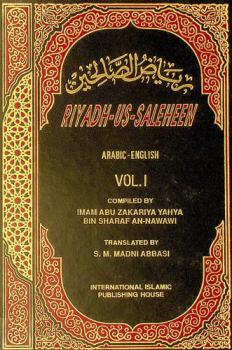
This chapter utilizes hadith texts as a window into the thoughts of its creators, Muslim believers who lived many decades after the prophet's death and whose religious ideas were reflected in the way they chose to describe the divine nature of the Quran. The Quran itself was the major source which shaped the Islamic tradition. Early Muslims stressed the Quran's divine origin and nature and praised its mode of revelation in comparison to that of previous scriptures, but they made a distinction between the heavenly Quran and the actual, “earthly” text possessed by the believers. The distinction between the two versions of the Quran, one in heaven and the other the Uthmanic codex, is made quite clearly in a group of traditions dealing with the history of the Quranic text, which describe the way Quranic revelations were compiled into a complete version of the Quran in the prophet's lifetime.
Book Chapter