
Catalogue Search | MBRL


Are you sure you want to remove the book from the shelf?

{{itemTitle}}
49,394
result(s) for
"Handicraft"
Sort by:


From craftsmen to capitalists
Politically adrift, alienated from Weimar society, and fearful of competition from industrial elites and the working class alike, the independent artisans of interwar Germany were a particularly receptive audience for National Socialist ideology. As Hitler consolidated power, they emerged as an important Nazi constituency, drawn by the party's rejection of both capitalism and Bolshevism. Yet, in the years after 1945, the artisan class became one of the pillars of postwar stability, thoroughly integrated into German society.From Craftsmen to Capitalists gives the first account of this astonishing transformation, exploring how skilled tradesmen recast their historical traditions and forged alliances with former antagonists to help realize German democratization and recovery.
eBook

World crafts
The culture of exotic locals such as Gambia, India, Ireland, and Japan are encapsulated in twelve inspirational crafts. Fun fact boxes impart new and interesting information about each culture while step-by-step instructions give readers all they need to become global artisans.
Book
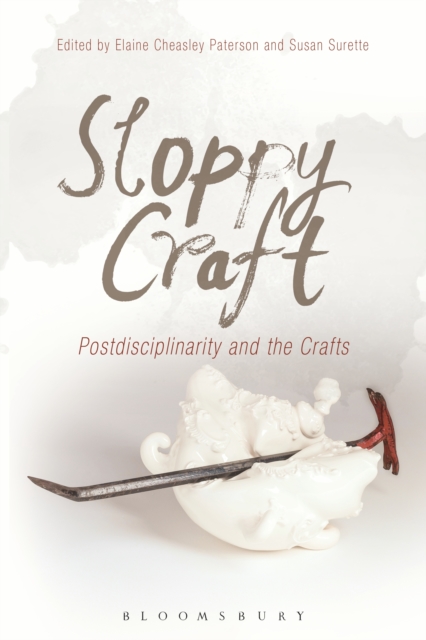
Sloppy Craft
Sloppy Craft: Postdisciplinarity and the Craftsbrings together leading international artists and critics to explore the possibilities and limitations of the idea of ‘sloppy craft’ – craft that is messy or unfinished looking in its execution or appearance, or both. The contributors address ‘sloppiness’ in contemporary art and craft practices including painting, weaving, sewing and ceramics, consider the importance of traditional concepts of skill, and the implications of sloppiness for a new 21st century emphasis on inter- and postdisciplinarity, as well as for activist, performance, queer and Aboriginal practices. In addition to critical essays, the book includes a ‘conversation’ section in which contemporary artists and practitioners discuss challenges and opportunities of ‘sloppy craft’ in their practice and teaching, and an afterword by Glenn Adamson.
eBook

Arts and crafts for myths and tales
Projects for making crafts of items in legends, myths and other stories.
Book

PRO-POOR IMPACTS OF TOURISM HANDICRAFTS IN ETHIOPIA: A VALUE CHAIN APPROACH
Using the lenses of Porter’s value chain theory and pro-poor tourism strategies, the current study investigates the pro-poor value chain impacts of the handicraft sector in four tourist destinations in Ethiopia. The study employed a qualitative research approach with an exploratory design. We recruited research participants from relevant stakeholders using purposeful and convenient techniques. Data were collected using in-depth interviews, focus group discussions, and personal observations. Research findings reveal that although the handicraft-based tourism activity in the study areas seems promising, the handicraft sector in the region is less pro-poor due to a lack of solid and sustainable value chain formation. Drawing upon its findings, the study develops a comprehensive handicraft value-chain framework that can serve as a blueprint for various rural area handicraft actors and destination planners. Policy-relevant implications, study limitations, and future research directions are also discussed.
Journal Article

Pro-Poor Impacts of Tourism Handicrafts in Ethiopia: A Value Chain Approach
Using the lenses of Porter's value chain theory and pro-poor tourism strategies, the current study investigates the pro-poor value chain impacts of the handicraft sector in four tourist destinations in Ethiopia. The study employed a qualitative research approach with an exploratory
design. We recruited research participants from relevant stakeholders using purposeful and convenient techniques. Data were collected using in-depth interviews, focus group discussions, and personal observations. Research findings reveal that although the handicraft-based tourism activity
in the study areas seems promising, the handicraft sector in the region is less pro-poor due to a lack of solid and sustainable value chain formation. Drawing upon its findings, the study develops a comprehensive handicraft value chain framework that can serve as a blueprint for various rural
area handicraft actors and destination planners. Policy-relevant implications, study limitations, and future research directions are also discussed.
Journal Article

Back-to-school crafts
This book allows young readers to get ready to return to school by making some fun crafts. Useful school creations include pen pots, folders, and bookmarks.
Book

A Blockchain of Things System for Managing Handcrafted Products in a Cultural Industry
The handicraft sector is often seen as a symbol of a country’s cultural identity, as it relies on specialized traditional techniques, skills, and knowledge that are often passed down through generations. As a result, ensuring the authenticity and integrity of this creative value has become a significant challenge, especially with the growth of counterfeiting techniques in this industry. Thus, integrating digital technologies into such sectors offers numerous operational benefits such as transparency, decentralization, data security, and authenticity needs. This paper presents an innovative approach for the handicraft sector, which exploits blockchain technology and the Internet of Things to guarantee the authenticity of cultural heritage. Through experimental evaluations comparing the decentralized blockchain-based system with traditional centralized methods using key metrics such as response time and transactions per second, this study reveals significant results. The statistical analysis reveals that the decentralized approach improves performance in terms of response times for verification and addition processes compared to the centralized system. Specifically, verification is approximately 4.66 times faster and addition is approximately 4.30 times faster in a decentralized system. However, transaction latency in the decentralized approach is approximately 38.21% higher than in the centralized system.
Journal Article