
Catalogue Search | MBRL


Are you sure you want to remove the book from the shelf?

{{itemTitle}}
335
result(s) for
"Hapsburg Empire"
Sort by:

Rationed life
Far from the battlefront, hundreds of thousands of workers toiled in Bohemian factories over the course of World War I, and their lives were inescapably shaped by the conflict. In particular, they faced new and dramatic forms of material hardship that strained social ties and placed in sharp relief the most mundane aspects of daily life, such as when, what, and with whom to eat. This study reconstructs the experience of the Bohemian working class during the Great War through explorations of four basic spheres—food, labor, gender, and protest—that comprise a fascinating case study in early twentieth-century social history.
eBook
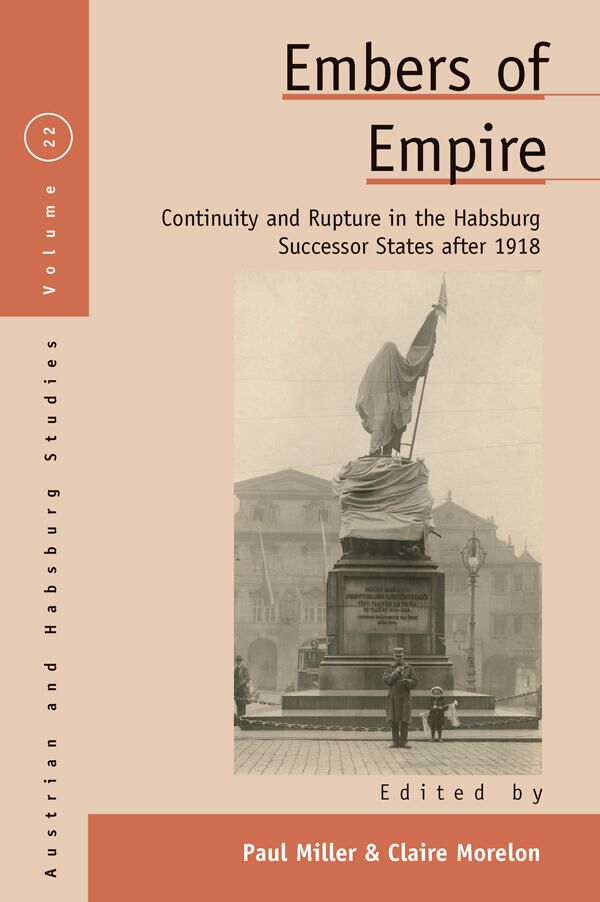
Embers of empire : continuity and rupture in the Habsburg successor states after 1918
The collapse of the Habsburg Monarchy at the end of World War I ushered in a period of radical change for East-Central European political structures and national identities. Yet this transformed landscape inevitably still bore the traces of its imperial past. Breaking with traditional histories that take 1918 as a strict line of demarcation, this collection focuses on the complexities that attended the transition from the Habsburg Empire to its successor states. In so doing, it produces new and more nuanced insights into the persistence and effectiveness of imperial institutions, as well as the sources of instability in the newly formed nation-states.
eBook
Embers of Empire
The collapse of the Habsburg Monarchy at the end of World War I ushered in a period of radical change for East-Central European political structures and national identities. Yet this transformed landscape inevitably still bore the traces of its imperial past. Breaking with traditional histories that take 1918 as a strict line of demarcation, this collection focuses on the complexities that attended the transition from the Habsburg Empire to its successor states. In so doing, it produces new and more nuanced insights into the persistence and effectiveness of imperial institutions, as well as the sources of instability in the newly formed nation-states.
eBook

Associations as Protest and Riots Brokers of the Badeni Unrest of 1897
This article examines the role of associations as protest and riot brokers during the Badeni crisis of 1897 in Habsburg Austria. Drawing on concepts from political science, it demonstrates how these collective actors acted as crucial intermediaries between political leaders and local communities. Through meetings and rallies, associations facilitated the translation of parliamentary conflicts into street politics, while at the same time enabling demonstrations to escalate into violent riots. The article shows how civil society organizations deployed narratives to legitimize street politics and provided emotional framing and organizational capacity that individual activists often lacked. In doing so, associations expanded political participation in Habsburg Austria by bringing broader strata of society into the political arena, while simultaneously destabilizing it by fostering exclusionary violence. By conceptualizing associations as both protest and riot brokers, the article reinterprets the Badeni crisis not simply as evidence of national hatred but as a manifestation of mass political mobilization in a rapidly modernizing society.
Journal Article

Il metodo normale tra Prussia e Austria nel XVIII secolo
The article traces the origins of the normal method from Halle and Berlin to Sagan and then to Vienna, highlighting its Protestant matrix while also emphasizing the consistency with which Johann Ignaz Felbiger applied it, adapting it to a Catholic population, for both elementary and catechetical teaching. Felbiger's cultural endeavor was part of the Catholic Enlightenment and the Theresian policy of religious and educational reform, which must be examined together. The adoption of a new didactic approach not only introduced innovative and effective tools for classroom control--many of which are still in use today--but also accelerated learning and facilitated the transmission of moral and religious content more effectively. The control of education, as mandated by the Theresian law of 1774, was instrumental to the jurisdictionalist project of rationalization, centralization, and strengthening of state structures, which relied on the support of religious personnel, though subordinated to state control. The emergence of modern schooling took place within both a pedagogical and religious framework, shaping both educational and political thought. Keywords: Normal method--School policy--Habsburg Empire under Maria Theresa
Journal Article

The Role of Communities in the Transmission of Political Values: Evidence from Forced Population Transfers
This article evaluates the role of community bonds in the long-term transmission of political values. At the end of World War II, Poland's borders shifted westward, and the population from the historical region of Galicia (now partly in Ukraine) was displaced to the territory that Poland acquired from Germany. In a quasi-random process, some migrants settled in their new villages as a majority group, preserving communal ties, while others ended up in the minority. The study leverages this natural experiment of history by surveying the descendants of these Galician migrants. The research design provides an important empirical test of the theorized effect of communities on long-term value transmission, which separates the influence of family and community as two competing and complementary mechanisms. The study finds that respondents in Galicia-majority settlements are now more likely to embrace values associated with Austrian imperial rule and are more similar to respondents whose families avoided displacement.
Journal Article

A Cacophony of Classifications: Education and Identification in a Prenational Empire
The article seeks to fill a gap in existing scholarship on explicit and implicit linguistic, ethnic, and national classifications in Habsburg schools and their effects. It attempts to reconstruct the classifications that appeared in textbooks and other teaching materials as well as in daily practice, pupils’ exposure to them, and their engagement with these categories. Temporally, the study begins with the establishment of compulsory education (1774) and ends in the revolutionary period of 1848–49 and focuses on the Slavophone population of the Habsburg crownlands Carniola, Carinthia, Styria, and the Austrian Littoral. Our research suggests that systematic and uniform classification schemes were not yet in place in the school environment in the period under review. As a result, the influence of classificatory systems on identifications was limited. If anything, the schools inadvertently reproduced existing local and provincial identifications while the students’ limited internalization of emerging transregional identifications only happened through their personal relationships with a few teachers and peers. The transition from familiarization with emerging transregional ethnolinguistic identifications through personal networks to the systemic (and often completely unintentional) reproduction of nationalist ideology happened only after 1848.
Journal Article

Toward Early Modern Archivality: The Perils of History in the Age of Neo-Eurocentrism
This essay addresses the revival of culturalist assumptions in historical archival studies and suggests an alternative framework. Rather than provenance, it privileges textual circulation; rather than civilizational divides between supposedly distinct “European” and “Islamic” archivalities, it highlights mutability and commensurability as defining elements of a broadly shared, if inherently dynamic, internally complex, and transactionally defined early modern archivality. We first show how the historiography on early modern archives has inadvertently perpetuated a myopic Eurocentric view of the centralized archive as a key aspect of European archivality. We analyze how the construct “Islamic archivality,” when proffered as a comparative counterpoint to such European archivality, not only promotes an outdated understanding of “Islam” (and, indeed “Europe”) as a discrete, transhistorical phenomenon, but rests on a limited set of mostly pre-Ottoman, medieval examples. By positing “Islam” as fundamentally premodern, this historiography sidesteps significant shared late antique genealogies of textual practices and mobilities across a vast early modern region that traverses modern continental/civilizational configurations. In lieu of the prevalent comparative mode, which juxtaposes civilizational blocs and then selectively contrasts specific archival institutions and practices, we suggest concentrating on intersections and circulations of documents and practices across ethnolinguistic, territorial, and juridical boundaries. Drawing on examples from our research in Ottoman diplomatic archives, we challenge scholars of early modern archivality to move beyond fixed notions of “European,” and “non-European,” “centralized” and “decentralized” archives, and “original” and “copy,” as primary indices of comparison, and attend to the social life of documents and their mutability through circulation.
Journal Article
Was There a Habsburg Jewish Experience?
There are any number of arguments against the idea that it is possible to write the history of Habsburg Jews, or even to locate a common, coherent, Jewish experience in the Habsburg lands. These include the inherent disunity of the empire itself, the geographic dispersion of its Jewish population, and the multiplicity of legal jurisdictions under which Jews lived. This essay nevertheless makes the case for a Habsburg Jewish experience that surpassed differences in geography, legal jurisdiction, local culture. The Habsburg monarchy itself, in its quest for imperial expansion, administrative and legal reform, and social control, had much to do with this process. So, too, did the consolidation of an Ashkenazi rabbinic leadership that was both authoritative and distinctive to Central Europe, and the laying down of an intricate network of cross-regional family and communal ties, which themselves were partly a response to repressive state legislation. Jews in the Habsburg Empire moved about, reassembled and regrouped in ever new ways, while maintaining an overarching structure of human connection.
Journal Article
Was the Habsburg Empire an Empire?
The Habsburg monarchy seems doubly confounding. Its historians call it an empire, but it actually never called itself that. For a fraction of its existence (1804–67), the monarchy counted as a Kaisertum, a word meant to burnish the fading glory of a lost imperial title (of the Holy Roman Empire). But its rulers never evinced the self-confident imperial aggressiveness or the desire to exploit distant territories that characterized British or Russian counterparts, and students of global empires often do not think the Habsburgs fit the category. But after calling the double monarchy an empire, Central European specialists lose the critical edge historians apply to other empires, and celebrate the Habsburgs for holding back nationalism, the force that made the twentieth century so deadly. The monarchy was not only an empire but a virtuous empire. This Kann Memorial Lecture examines a range of theoretical and practical reasons for calling the Habsburg state an empire—as its subjects often did. But if we do, we should recognize that like other empires it abhorred democracy. Perhaps more than a dam holding back the twentieth century and all its evils, the Habsburg Empire was more a conduit.
Journal Article