
Catalogue Search | MBRL


Are you sure you want to remove the book from the shelf?

{{itemTitle}}
4,094
result(s) for
"Hare, David (1947- )"
Sort by:

Modern British Playwriting: The 1970s
Essential for students of Theatre Studies, this series of six decadal volumes provides a critical survey and reassessment of the theatre produced in each decade from the 1950s to the present. Each volume equips readers with an understanding of the context from which work emerged, a detailed overview of the range of theatrical activity and a close study of the work of four of the major playwrights by a team of leading scholars. Chris Megson's comprehensive survey of the theatre of the 1970s examines the work of four playwrights who came to promience in the decade and whose work remains undiminished today: Caryl Churchill (by Paola Botham), David Hare (Chris Megson), Howard Brenton (Richard Boon) and David Edgar (Janelle Reinelt). It analyses their work then, its legacy today and provides a fresh assessment of their contribution to British theatre. Interviews with the playwrights, with directors and with actors provides an invaluable collection of documents offering new perspectives on the work. Revisiting the decade from the perspective of the twenty-first century, Chris Megson provides an authoritative and stimulating reassessment of British playwriting in the 1970s.
eBook

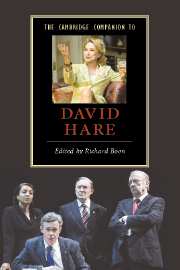
The Cambridge Companion to David Hare
David Hare is one of the most important playwrights to have emerged in the UK in the last forty years. This volume examines his stage plays, television plays and cinematic films, and is the first book of its kind to offer such comprehensive and up-to-date critical treatment. Contributions from leading academics in the study of modern British theatre sit alongside those from practitioners who have worked closely with Hare throughout his career, including former Director of the National Theatre Sir Richard Eyre. Uniquely, the volume also includes a chapter on Hare's work as journalist and public speaker; a personal memoir by Tony Bicât, co-founder with Hare of the enormously influential Portable Theatre; and an interview with Hare himself in which he offers a personal retrospective of his career as a film maker which is his fullest and clearest account of that work to date.
eBook


Miss Saigon
The forbidden love of East and West continues with timely political correctness and a certain level of ethnic awareness in David Mitchell's The Thousand Autumns of Jacob de Zoet (2010). Over half a century later, David Rabe's Girl by the Road at Night (2010) translates the violence of the battlefield onto the violence in the brothel with the front, ironically, of a roadside car wash, two-in-one cleaning service for military vehicle and military personnel. All alike as Orientalized stock images of symbolically castrated males and fetishized, hypersexualized females, the spread or centerfold of China Dolls, Japanese geishas, or Vietnamese bar girls constitutes but variations in the white masculinist discourse. [...]the intersection of love and war in Vietnam heightens the dramatic tension in Saigon and Miss Saigon.
Journal Article
