
Catalogue Search | MBRL


Are you sure you want to remove the book from the shelf?

{{itemTitle}}
7,957
result(s) for
"Harmonicas"
Sort by:


Composing the Crisis: From Mesmer's Harmonica to Charcot's Tam-tam
Hypnosis used sound and musico-dramatic methods to effect previously unanticipated kinds of changes in body and psyche, showing a ‘sonic turn’ in this new kind of medicine. For Franz Anton Mesmer, musical techniques and instruments were essential elements of his theory and practice, not merely adjuncts, as previous research has tended to assume. The musical structures of the Classical style provided Mesmer with patterns for artificially inducing and regulating his patients’ crises, whose periodicity medicine previously considered fixed and unchangeable. Mesmer executed these therapeutic strategies using the recently invented glass harmonica. From the Marquis de Puységur to Jean-Martin Charcot, Mesmer's successors turned their attention to somnambulism and catalepsy, sleep-like states often induced by the sound of a tam-tam, an Asian gong new to Western music. The contrast between harmonica and tam-tam reflects the passage in musical techniques from modulating dramatic crises to obliterating consciousness itself. Even considered as suggestion, hypnosis followed processes of intensification and dramatization characteristic of Classical and Romantic music.
Journal Article


Research of nonlinear electric chains with two and more nonlinear elements in systems power supply
Work it is devoted to research of autoparametrical fluctuations at a frequency of the third subharmonica in nonlinear electric chains by two nonlinear elements. Conditions and a zone of steady excitement of a subharmonica of the third order, and also critical parameters the subharmonicas of the third providing steady excitement an order are defined.
Journal Article

Tone-painting the Mysterious: The “Et expecto” from J. S. Bach's Mass in B Minor
The Credo of Bach's Mass in B Minor, probably uniquely among masses of his time, includes a double-setting of the verse “Et expecto resurrectionem mortuorum”—first as an Adagio containing Bach's most tonally disorienting enharmonicism, then as an exuberant Vivace e allegro. This essay explores the many ways that the preceding “Confiteor” prepares for the Adagio into which it segues and explores what these relationships might mean both musically and as an interpretation of the liturgical text. It also situates the Adagio's tonal disorientation within seventeenth- and eighteenth-century theories of chords and harmony as well as tonal relationships.
Journal Article

Playing the harmonica with chronic obstructive pulmonary disease. A qualitative study
Objectives: To investigate the experience of playing the harmonica for individuals with COPD.
Methods: A qualitative, phenomenological study using semi-structured interviews and reflexive thematic analysis.
Results: Eight people living with COPD (six females, two males) were recruited, who had attended at least six weeks of harmonica group sessions, either face-to-face prior to the COVID-19 pandemic or remotely. Five themes were generated. Themes included ‘hard in the beginning’, ‘holding the condition’, ‘breathing control’, ‘gives you a high’ and ‘needing the Zoom class’.
Discussion: Playing the harmonica with COPD is difficult at first, particularly drawing a breath through the harmonica. With practice, experience in a fun activity and quality teaching, individuals were able to become more attuned and embodied with their breathing, and playing the harmonica offered a breathing control strategy. Songs, rather than breathing, became the focus, and participants were able to escape living with respiratory disease when playing. Participants reported the harmonica helped mucous expectoration. The group was a priority in the weekly lives of participants, even though the ‘buzz’ of being part of a group was lost when participating online. Further mechanistic studies and randomised controlled trials are needed to investigate the biopsychosocial benefits of playing the harmonica with COPD.
Journal Article
Design of a pole changing winding for asynchronous machines drived on conveyors using the ANSYS Maxwell
The article considers the issues of increasing energy efficiency by using multi-speed motors, and also considers the problems of creating pole-changing windings. The procedure for constructing a new two-layer three-phase pole-changing winding with a pole ratio of 4/6, made in 36 stator slots on the basis of the basic switching scheme YYY/YYY, is presented. Based on the results of the analysis of the electromagnetic properties, the optimal winding pitch was selected. An experimental motor with a new pole-changing winding was created on the basis of a magnetic circuit of a serial asynchronous machine of the 4?132?4 type. The analysis of the properties of the electric motor was carried out using the ANSYS/Maxwell program. The results of experimental tests of a new two-speed motor in static and dynamic modes are also presented.
Journal Article

Vincenzo Galilei and Musical Experiments
There is no consensus among historians when it comes to the importance of Vincenzo Galilei’s role in the history of music and science, especially when it comes to his contribution to the birth of modern experimentalism. Galilei’s written works, even those left in manuscript form, most of which have now been transcribed and published, do not provide a clear picture of his contribution. Moreover, there is a lack of private documents, such as letters, which informally describe his approach, working hypotheses, and doubts. Nevertheless, his writings enable us to conclude two things with certainty: he believed that reason-mediated experimentation was the only reliable source of knowledge, and he engaged in an intense and interesting experimental activity.
Journal Article
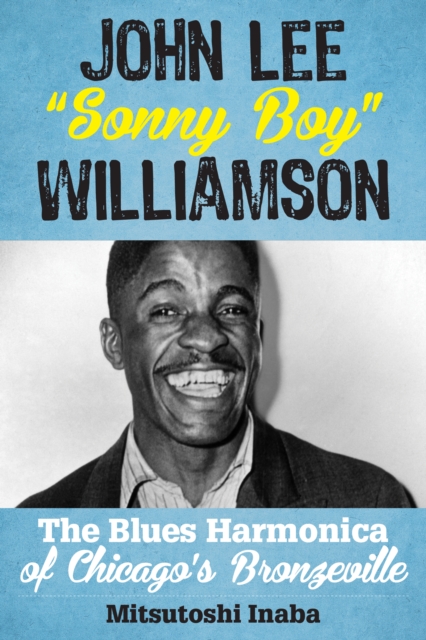
John Lee “Sonny Boy” Williamson ; the blues harmonica of Chicago’s Bronzeville
John Lee \"Sonny Boy\" Williamson was one of the most popular blues harmonica players and singers from the late 1930s through the 1940s.Recording for the Bluebird Records and RCA Victor labels, Sonny Boy shaped Chicago's music scene with an innovative style that gave structure and speed to blues harmonica performance.
eBook