
Catalogue Search | MBRL


Are you sure you want to remove the book from the shelf?

{{itemTitle}}
34,289
result(s) for
"Harms"
Sort by:
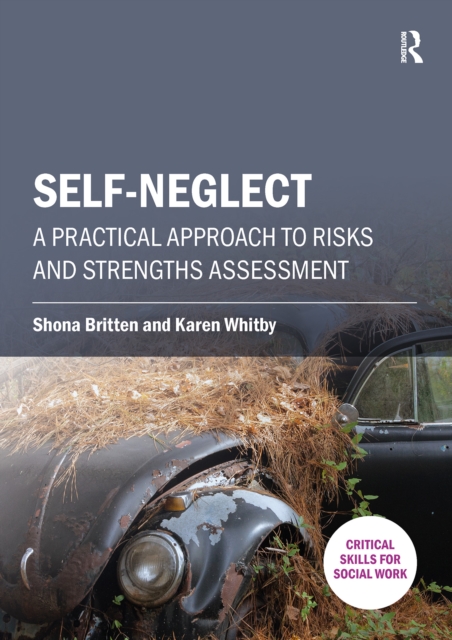
Self-neglect
Self-neglect covers a wide range of behaviours, from neglecting to care for one's personal hygiene and health to one's surroundings; this can include behaviours such as hoarding of objects and/or animals. As presentation of self-neglect cases vary greatly, assessment and support planning should be made on an individualised case by case basis. Self-neglect describes a Risks and Strengths assessment model which has been developed by practitioners as an aid to frontline workers across all sectors, as well as agencies holding responsibilities in Safeguarding Adults. It aims to support and structure the effective, timely and consistent assessment of risk in relation to key social and healthcare factors of self-neglect both on an individual case level and at a strategic level in contributing to community/locality needs analysis and reporting mechanisms; including annual Safeguarding Adults Board Reports.
eBook

Prevalence, severity, and nature of preventable patient harm across medical care settings: systematic review and meta-analysis
AbstractObjectiveTo systematically quantify the prevalence, severity, and nature of preventable patient harm across a range of medical settings globally.DesignSystematic review and meta-analysis.Data sourcesMedline, PubMed, PsycINFO, Cinahl and Embase, WHOLIS, Google Scholar, and SIGLE from January 2000 to January 2019. The reference lists of eligible studies and other relevant systematic reviews were also searched.Review methodsObservational studies reporting preventable patient harm in medical care. The core outcomes were the prevalence, severity, and types of preventable patient harm reported as percentages and their 95% confidence intervals. Data extraction and critical appraisal were undertaken by two reviewers working independently. Random effects meta-analysis was employed followed by univariable and multivariable meta regression. Heterogeneity was quantified by using the I2 statistic, and publication bias was evaluated.ResultsOf the 7313 records identified, 70 studies involving 337 025 patients were included in the meta-analysis. The pooled prevalence for preventable patient harm was 6% (95% confidence interval 5% to 7%). A pooled proportion of 12% (9% to 15%) of preventable patient harm was severe or led to death. Incidents related to drugs (25%, 95% confidence interval 16% to 34%) and other treatments (24%, 21% to 30%) accounted for the largest proportion of preventable patient harm. Compared with general hospitals (where most evidence originated), preventable patient harm was more prevalent in advanced specialties (intensive care or surgery; regression coefficient b=0.07, 95% confidence interval 0.04 to 0.10).ConclusionsAround one in 20 patients are exposed to preventable harm in medical care. Although a focus on preventable patient harm has been encouraged by the international patient safety policy agenda, there are limited quality improvement practices specifically targeting incidents of preventable patient harm rather than overall patient harm (preventable and non-preventable). Developing and implementing evidence-based mitigation strategies specifically targeting preventable patient harm could lead to major service quality improvements in medical care which could also be more cost effective.
Journal Article

Is there a health inequality in gambling related harms? A systematic review
Background
Here we present a systematic review of the existing research into gambling harms, in order to determine whether there are differences in the presentation of these across demographic groups such as age, gender, culture, and socioeconomic status, or gambling behaviour categories such as risk severity and participation frequency.
Primary and secondary outcome measures
Inclusion criteria were: 1) focus on gambling harms; 2) focus on harms to the gambler rather than affected others; 3) discussion of specific listed harms and not just harms in general terms. Exclusion criteria were: 1) research of non-human subjects; 2) not written in English; 3) not an empirical study; 4) not available as a full article.
Methods
We conducted a systematic search using the Web of Science and Scopus databases in August 2020. Assessment of quality took place using Standard Quality Assessment Criteria.
Results
A total of 59 studies published between 1994 and 2020 met the inclusion criteria. These were categorised into thematic groups for comparison and discussion. There were replicated differences found in groups defined by age, socioeconomic status, education level, ethnicity and culture, risk severity, and gambling behaviours.
Conclusion
Harms appear to be dependent on specific social, demographic and environmental conditions that suggests there is a health inequality in gambling related harms. Further investigation is required to develop standardised measurement tools and to understand confounding variables and co-morbidities. With a robust understanding of harms distribution in the population, Primary Care Workers will be better equipped to identify those who are at risk, or who are showing signs of Gambling Disorder, and to target prevention and intervention programmes appropriately.
Journal Article

Co-Developing Content Updates for the Card Sort Task for Self-Harm–Digital (CaTS-D) With People With Lived Self-Harm Experiences: Pilot Study and Thematic Analysis
Self-harm is a significant global concern with multiple negative outcomes. Self-harm research tools typically focus on single risk factors, meaning the temporal interplay between factors and their impact on self-harm is unknown. The Card Sort Task for Self-Harm (CaTS) addressed these deficits by using 117 cards to examine multiple self-harm factors. In-person research is time-consuming, costly, and limits participation opportunities. Developing an electronic version of CaTS (Card Sort Task for Self-harm-digital; CaTS-D) is necessary to address these issues, capture large datasets, and provide a stronger evidence base. Since CaTS' inception, understanding of self-harm has evolved, including increasing awareness that lesbian, gay, bisexual, transgender, queer, intersex, asexual, and other minoritized gender and sexual identities (LGBTQIA+) people are at high risk. Updating CaTS is essential to ensure its relevance to both LGBTQIA+ and cisgender-heterosexual self-harm.
We aimed to present results from two studies. Study 1 is a pilot study assessing the feasibility of CaTS-D. Study 2 used qualitative interviews to identify additions or amendments to CaTS to increase its relevance as understanding of self-harm evolves.
Study 1 recruited UK residents (N=13, aged 18-30 y) with lived self-harm experience. Feasibility and acceptability of CaTS-D were assessed using the Systems Usability Scale (SUS) and visual analog scale (VAS). Study 2 recruited UK residents (N=13; LGBTQIA+ n=9 and cisgender-heterosexual n=4; aged 21-29 y) with lived self-harm experience to one-on-one interviews.
Study 1 found CaTS-D to be a feasible web application for use in self-harm research. VAS data showed no significant difference between pre- and poststudy mood (t9=1.59; P=.15). In Study 2, thematic analysis resulted in 13 additional cards (eg, \"Before 6 mo;\" \"I don't feel comfortable in my body;\" \"I was bullied on social media;\" and \"Self-harm gave me a feeling of control\"). Cards were worded clearly, but minor amendments to wording on cards to increase LGBTQIA+inclusivity were identified (ie, changing \"boyfriend/girlfriend\" to \"partner\"). While participants felt selective additions were necessary, too many may overwhelm participants. Therefore, future additions should be carefully considered.
Pilot-testing shows CaTS-D is a usable, feasible web application to examine self-harm and capture large datasets. Importantly, completing CaTS-D does not negatively impact participants' mood. Updates and key additions were made to CaTS from consultation with people with lived self-harm experiences. These increase the relevance of CaTS and ensure LGBTQIA+ inclusivity.
Journal Article

A systematic review of brand transgression, service failure recovery and product-harm crisis: integration and guiding insights
Research studies on brand transgression (BT), service failure and recovery (SFR), and product-harm crisis (PHC) appear to have a common focus, yet the three streams developed surprisingly independently and with limited reference to one another. This situation is unfortunate because all three fields study a similar phenomenon by using complementary conceptualizations, theories, and methods; we argue that this development in silos represents an unnecessary obstacle to the development of a common discipline. In response, this review synthesizes the growing BT, SFR, and PHC literatures by systematically reviewing 236 articles across 21 years using an integrative conceptual framework. In doing so, we showcase how the mature field of SFR in concert with the younger but prolific BT and PHC fields can enrich one another while jointly advancing a broad and unified discipline of negative events in marketing. Through this process, we provide and explicate seven overarching insights across three major themes (theory, dynamic aspects, and method) to encourage researchers to contribute to the interface between these three important fields. The review concludes with academic contributions and practical implications.
Journal Article

Adverse event recording failed to reflect potential harms: a review of trial protocols of behavioral, lifestyle and psychological therapy interventions
To explore how potential harms are assessed in trials of behavioral, lifestyle and psychological therapy interventions.
This study was a review of protocols from the National Institute of Health Research Health Technology Assessment and Public Health Research programmes. Protocols were included if the study was a randomized controlled trial and the intervention intended to change lifestyle or behavior to improve health or improve psychological outcomes.
95 of 151 protocols planned to record adverse events (AEs). Definitions of AEs were often not given and varied widely. Serious AEs were mostly defined using standards originally devised for pharmacological trials. Twenty-two protocols listed expected AEs. Few protocols described assessment of causation between AEs and intervention. Examples of useful AE recording practice were identified.
Monitoring and recording AEs in behavioral intervention trials was variable and frequently based on reporting guidelines for pharmacological trials. This may mean potential harms are being missed. Future trials should consider: 1) Potential harms posed by the intervention 2) How to define serious AEs 3) What are expected AEs. Further research to achieve consensus on AE recording is required, including identification of core adverse outcomes in clinical areas or caused by interventions.
•Harms or unintended consequences are known to be possible from trials of behavioral, lifestyle and psychological therapy interventions, yet are not always appropriately or consistently evaluated in trials.•Reliance on definitions for harms (typically termed adverse events) originally devised for pharmacological trials, may result in omission of important harms.•The level of risk or likelihood of harm from an intervention should always be assessed in trials of these interventions.•Better details on adverse event recording in protocols is needed to increase transparency and consistency and improve practice, but consensus is needed on the appropriate approach.•Examples of useful AE recording practices identified from trials included in this review are discussed, for example: alternative definitions of what constitutes a serious adverse event or methods of deriving lists of expected adverse events.
Journal Article
Involving lived experience in regional efforts to address gambling-related harms: going beyond ‘window dressing’ and ‘tick box exercises’
Background
Lived Experience (LE) involvement has been shown to improve interventions across diverse sectors. Yet LE contributions to public health approaches to address gambling-related harms remain underexplored, despite notable detrimental health and social outcomes linked to gambling. This paper analyses the potential of LE involvement in public health strategy to address gambling-related harms. It focuses on the example of a UK city-region gambling harms reduction intervention that presented multiple opportunities for LE input.
Methods
Three focus groups and 33 semi-structured interviews were conducted to hear from people with and without LE who were involved in the gambling harms reduction intervention, or who had previous experience of LE-informed efforts for addressing gambling-related harms. People without LE provided reflections on the value and contributions of others’ LE to their work. Data analysis combined the Framework Method with themes developed inductively (from people’s accounts) and deductively (from the literature, including grey literature).
Results
Four themes were identified: (1) personal journeys to LE involvement; (2) the value added by LE to interventions for addressing gambling-related harms; (3) emotional impacts on people with LE; and (4) collective LE and diverse lived experiences. Two figures outlining LE involvement specific to gambling harms reduction in the UK, where public health efforts aimed at addressing gambling-related harms coexist with industry-funded programmes, are proposed.
Conclusions
Integrating a range of LE perspectives in a public health approach to gambling harms reduction requires local access to involvement for people with LE via diverse routes that are free from stigma and present people with LE with options in how they can engage and be heard in decision-making, and how they operate in relation to industry influence. Involving LE in gambling harms reduction requires enabling people to develop the affective and critical skills necessary to navigate complex emotional journeys and a challenging commercial and policy environment.
Journal Article

The Safety of Inpatient Health Care
Adverse events during hospitalization are a major cause of patient harm, as documented in the 1991 Harvard Medical Practice Study. Patient safety has changed substantially in the decades since that study was conducted, and a more current assessment of harm during hospitalization is warranted.
We conducted a retrospective cohort study to assess the frequency, preventability, and severity of patient harm in a random sample of admissions from 11 Massachusetts hospitals during the 2018 calendar year. The occurrence of adverse events was assessed with the use of a trigger method (identification of information in a medical record that was previously shown to be associated with adverse events) and from review of medical records. Trained nurses reviewed records and identified admissions with possible adverse events that were then adjudicated by physicians, who confirmed the presence and characteristics of the adverse events.
In a random sample of 2809 admissions, we identified at least one adverse event in 23.6%. Among 978 adverse events, 222 (22.7%) were judged to be preventable and 316 (32.3%) had a severity level of serious (i.e., caused harm that resulted in substantial intervention or prolonged recovery) or higher. A preventable adverse event occurred in 191 (6.8%) of all admissions, and a preventable adverse event with a severity level of serious or higher occurred in 29 (1.0%). There were seven deaths, one of which was deemed to be preventable. Adverse drug events were the most common adverse events (accounting for 39.0% of all events), followed by surgical or other procedural events (30.4%), patient-care events (which were defined as events associated with nursing care, including falls and pressure ulcers) (15.0%), and health care-associated infections (11.9%).
Adverse events were identified in nearly one in four admissions, and approximately one fourth of the events were preventable. These findings underscore the importance of patient safety and the need for continuing improvement. (Funded by the Controlled Risk Insurance Company and the Risk Management Foundation of the Harvard Medical Institutions.).
Journal Article
Mapping the overdose crisis in Ontario: geographic disparities in opioid-related harms and services
Background
Opioid-related harms and deaths remain a persistent public health crisis across Ontario, Canada, with non-urban regions facing a disproportionate burden. However, discussions of opioid-related harms across Ontario’s geographic regions have provided an oversimplified assessment, contrasting rural and urban regions which mask the unique challenges and true disparities faced by sparsely populated communities, which are commonly located in the Northern regions. Our study aims to provide a more in depth understanding of the opioid crisis in Ontario across different geographic classifications in accordance to population size, such as rural, urban, and sparsely populated regions, presenting data in both absolute numbers and crude rates with contextual grounding of regional characteristics. A number of different opioid-related indicators such as hospitalizations, overdose rates, opioid service provision and harm reduction supply distribution were analyzed across all 34 of Ontario’s public health units (PHUs) to understand the differences in these indicators based on region across the province. The findings can inform the development of targeted interventions and improve service accessibility for those most affected by the overdose crisis in Ontario.
Methods
Publicly-available secondary data for each PHU was collected from several provincial and national data sources and analyzed between November 2024 and January 2025. Annual data from 2022 to 2023 on opioid-related harms, opioid agonist treatment (OAT) prescribers and engagement, and the distribution of harm reduction supplies, as well as annual data from 2024 on opioid-inclusive service provision, were collected. Using Statistics Canada’s 2023 Health Region Peer Group Classification, the PHUS were grouped into four geographic classifications: sparsely populated, rural, urban/rural mix, and urban. Crude average rates were calculated for all indicators. Statistical analysis was performed to assess significance of indicators between regions.
Results
Sparsely populated PHUs were primarily located in Northern Ontario, while rural, urban/rural mix, and urban PHUs were mainly concentrated in Southern Ontario. Urban PHUs have the highest number and lowest rate of opioid-related harms (e.g. 947 opioid-related deaths, representing a rate of 12.5 per 100,000 population), while sparsely populated PHUs reflect the opposite trend (e.g. 158 opioid-related deaths, representing a rate of 44.2 per 100,000 population). A similar pattern emerges for harm reduction services and naloxone distribution. The number of treatment services is highest in rural PHUs (
n
= 237) and lowest in sparsely populated PHUs (
n
= 83), despite having the highest rate. OAT prescribers, OAT engagement, and needle distribution follow a similar trend. Statistical significance was found between geographic regions for most indicators, except opioid-inclusive support services, harm reduction services, and naloxone distribution.
Conclusion
Sparsely populated and rural PHUs experience the highest burden of opioid-related harms, coupled with limitations in service accessibility, demonstrating a clear need for additional harm reduction services. Decision-makers may be misled into underestimating the crisis in non-urban areas as a result of oversimplified reporting, resulting in inadequate support for these regions. Addressing these disparities is key to reducing opioid-related mortality and ensuring equitable access to life-saving services across Ontario.
Journal Article

Hungry for more: Examining how cultures of increasing demand drive the decline of the European Eel
European eels have attracted considerable interest in recent years, amidst growing illegal markets and plummeting wild populations. While the shifting dynamics between legal and illegal trade are of clear interest to criminologists, little attention has been paid to the confluence of the legal - yet still harmful - activities that threaten the species. To address this gap, we build on a green criminological position and draw together research from across France, the Netherlands, Portugal, Spain and the United kingdom to shine a light on the drivers of demand that shape harms towards the species. We examine both direct drivers of demand, for example, fisheries and globalised food networks; and indirect drivers of demand for \"natural resources\" such as energy, water and land. By framing demand as a source and driver of harms, we reveal how cultures of demand, particularly in the Global North, are both blind to and disconnected from the harms they produce.
Journal Article