
Catalogue Search | MBRL


Are you sure you want to remove the book from the shelf?

{{itemTitle}}
357,822
result(s) for
"Harper"
Sort by:

Harper Lee's To kill a mockingbird : new essays
Contains essays about Harper Lee's classic novel, To Kill A Mockingbird.
Book

Life, Liberty and the Pursuit of Happiness
This article explores the subversion of the American dream in contemporary Black horror cinema, whereby the American dream is rendered inaccessible due to the historical, cultural, political, and geospatial legacies of the plantation and chattel slavery. Analyzing Get Out (Jordan Peele, 2017), Antebellum (Christopher Renz and Gerard Bush, 2020), and Bad Hair (Justin Simien, 2022), it uses a surrealism-hyperrealism-realism framework to consider the films’ portrayals of the Black, lived experience and the historical contingencies of Black anxiety, ultimately transforming the American dream into the American nightmare.
Journal Article

Alabama spitfire : the story of Harper Lee and To kill a mockingbird
The inspiring true story of Nelle Harper Lee, the scrappy tomboy who grew up to write the Pulitzer Prize-winning, bestselling novel \"To Kill a Mockingbird\" and become one of the most beloved writers of the 20th century.
BOOK
The Defiance of Wilderness
This article examines the multifaceted material and ideological significance of the United States’s Great Dismal Swamp in the colonial and Antebellum South (1728–1860), particularly in the lives and imaginations of Southern whites, enslaved individuals, and Maroons. I argue that the swamp functioned simultaneously as a site of exploitation, sanctuary, and resistance, roles deeply tied to the labor performed within its boundaries and to the Maroon communities it sheltered. By analyzing the swamp’s symbolic construction as a “wilderness,” this study reveals its opposition to the capitalist, hierarchical logic of the plantation system and underscores its role as a space of both refuge and defiance.
Journal Article

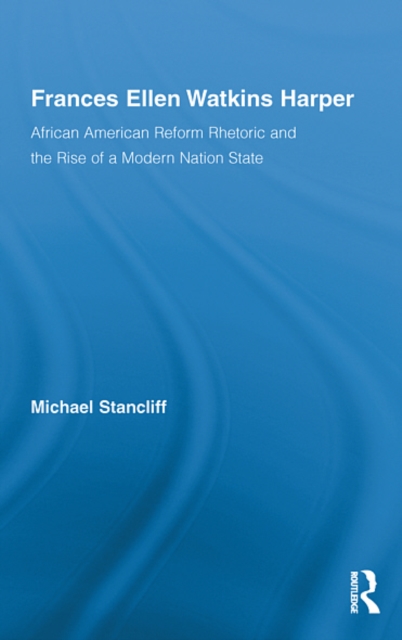
Frances Ellen Watkins Harper
A prominent early feminist, abolitionist, and civil rights advocate, Frances Ellen Watkins Harper wrote and spoke across genres and reform platforms during the turbulent second half of the nineteenth century. Her invention of a new commonplace language of moral character drew on the persuasive and didactic motifs of the previous decades of African-American reform politics, but far exceeded her predecessors in crafting lessons of rhetoric for women. Focusing on the way in which Harper brought her readers a critical training for the rhetorical action of a life commitment to social reform, this book reconsiders her practice as explicitly and primarily a project of teaching. This study also places Harper's work firmly in black-nationalist lineages from which she is routinely excluded, establishes Harper as an architect of a collective African-American identity that constitutes a political and theoretical bridge between early abolitionism and 20th-century civil rights activism, and contributes to the contemporary portrayal of Harper as an important theorist of African-American feminism whose radical egalitarian ethic has lasting relevance for civil rights and human rights workers.
Introduction Chapter 1. Composing Character: Cultural Sources of African American Rhetorical Pedagogy Chapter 2. Reconstruction and Black Republican Pedagogy Chapter 3. Temperance Pedagogy: Lessons of Character in a Drunken Economy Chapter 4. Black Ireland: The Political Economics of African American Rhetorical Pedagogy after Reconstruction Chapter 5. Not as a Mere Dependent: The Historic Mission of African American Women’s Rhetoric at the End of the Century Afterword
Michael Stancliff is Assistant Professor of Rhetoric and Composition at Arizona State University. He teaches and researches the history of slavery and antislavery, African American rhetoric and literature, critical race theory, and writing pedagogy. He is author with Sharon Crowley of Critical Situations: A Rhetoric for Writing in Communities.
eBook

This Land is Your Land, This Land is My Land
This article takes aim at the discursive separation of immigrant and Indigenous justice by assessing the viability of strategic essentialism, a strategy used historically by Asian American groups to orchestrate coalitional moments with First Nations in the continental and offshore United States. Presented in two sections, the article begins by examining the valency of equivalence rhetoric adopted by Asian American activist newspaper Gidra (1969–1974) in bolstering support for 1970s Indigenous occupations of Alcatraz and Wounded Knee on traditional Ohlone (California) and Oglala Lakota land (South Dakota). The article then extends discussion of strategic essentialism to offshore solidarity between Asian Americans and Native Hawai’ians realized under the auspices of an essentialized “localist” identity amid the mid-1970s Palaka Power movement.
Journal Article

Mockingbird songs : my friendship with Harper Lee
\"A memoir of Wayne Flynt's friendship with Harper Lee, centered on a collection of letters between Harper Lee, her sisters, ... Wayne Flynt, and his wife\"-- Provided by publisher.
BOOK
The United States Military, Canned Foods, and Guam
This essay uses the canned food “Spam” as an entry point to examine the social, political, and legal position of Guam as a colony of the USA, with particular focus on the Indigenous CHamoru people. It places food within structures of dependence and control, along with the militarization of this contemporary American colony.
Journal Article