
Catalogue Search | MBRL


Are you sure you want to remove the book from the shelf?

{{itemTitle}}
40,063
result(s) for
"Harry Potter."
Sort by:

The science of Harry Potter : the spellbinding science behind the magic, gadgets, potions, and more!
\"Harry Potter has brought the idea of magic and sorcery into mainstream fruition more than any other book series in history. Often perceived as a supernatural force, magic captivates and delights its audience because of its seeming ability to defy physics and logic. But did you ever wonder if science has any explanation for these fantastic feats? The Science of Harry Potter examines the scientific principles behind some of your favorite characters, spells, items, and scenes from the Harry Potter universe, providing in-depth analysis and scientific facts to support its theories. The scientific questions examined within this book include: Will we ever see an invisibility cloak? How hazardous is a flying broomstick? How has medicine made powerful potions from peculiar plants? Can scientists ever demonstrate Wingardium Leviosa? Is it possible to stupefy someone? And many more! Witches and wizards alike will be fascinated by the merging of this improbable realm and real science.\"--Publisher description.
BOOK

Transforming Harry : the adaptation of Harry Potter in the transmedia age
Transforming Harry: The Adaptation of Harry Potter in the Transmedia Ageis an edited volume of eight essays that look at how the cinematic versions of the seven Harry Potter novels represent an unprecedented cultural event in the history of cinematic adaptation. The movie version of the first Harry Potter book, Harry Potter and the Sorcerer's Stone, premiered in 2001, in between publication of the fourth and fifth books of this global literary phenomenon. As a result, the production and reception of both novel and movie series became intertwined with one another, creating a fanbase who accessed the series first through the books, first through the movies, and in various other combinations. John Alberti and P. Andrew Miller have gathered scholars to explore and examine the cultural, political, aesthetic, and pedagogical dimensions of this pop culture phenomenon and how it has changed the reception of both the films and books. Divided into two sections, the volume addresses both the fidelity of adaptation and the transmedia adaptations that have evolved around the creation of the books and movies. In her essay, Vera Cuntz-Leng draws on feminist film theory to explore the gaze politics and male objectification operating in the Harry Potter movies. Cassandra Bausman contends that screenwriter Steve Klove's revision of the end of the film version of Deathly Hallows, Part II offers a more politically and ethically satisfying conclusion to the Harry Potter saga than the ending of the Rowling novel. Michelle Markey Butler's \"Harry Potter and the Surprising Venue of Literary Critiques\" argues that the fan-generated memes work as a kind of popular literary analysis in three particular areas: the roles of female characters, the comparative analysis of books and films, and the comparative analysis of the Harry Potter series with other works of fantasy. While the primary focus of the collection is an academic audience, it will appeal to a broad range of readers. Within the academic community, Transforming Harry will be of interest to scholars and teachers in a number of disciplines, including film and media studies and English. Beyond the classroom, the Harry Potter series clearly enjoys a large and devoted global fan community, and this collection will be of interest to serious fans.
eBook

Harry Potter : the artifact vault
Throughout the making of the eight Harry Potter movies, designers and craftspeople were tasked with creating fabulous chocolate-fantasy feasts, flying brooms, enchanted maps, and much more, in addition to numerous magical items necessary in a wizard everyday life--for example, newspapers with moving photos, vicious textbooks, and Howlers. Harry Potter: The Artifact Vault chronicles the work of the graphics department in creating vibrant and imaginative labels for potions bottles, brooms, and candy; the creation of Quidditch Quaffles, Bludgers, and Golden Snitches, lovingly crafted by the prop making team; and the stunning inventiveness used by the entire crew to create a rich, bewitched filmic universe.
BOOK

Designing with Objects
Here is a book that takes the sting out of learning object-oriented design patterns! Using vignettes from the fictional world of Harry Potter, author Avinash C. Kak provides a refreshing alternative to the typically abstract and dry object-oriented design literature. Designing with Objects is unique. It explains design patterns using the short-story medium instead of sterile examples. It is the third volume in a trilogy by Avinash C. Kak, following Programming with Objects (Wiley, 2003) and Scripting with Objects (Wiley, 2008). Designing with Objects confronts how difficult it is for students to learn complex patterns based on conventional scenarios that they may not be able to relate to. In contrast, it shows that stories from the fictional world of Harry Potter provide highly relatable and engaging models. After explaining core notions in a pattern and its typical use in real-world applications, each chapter shows how a pattern can be mapped to a Harry Potter story. The next step is an explanation of the pattern through its Java implementation. The following patterns appear in three sections: Abstract Factory, Builder, Factory Method, Prototype, and Singleton; Adapter, Bridge, Composite, Decorator, Facade, Flyweight, and Proxy; and the Chain of Responsibility, Command, Interpreter, Iterator, Mediator, Memento, Observer, State, Strategy, Template Method, and Visitor. For readers’ use, Java code for each pattern is included in the book’s companion website. ● All code examples in the book are available for download on a companion website with resources for readers and instructors. ● A refreshing alternative to the abstract and dry explanations of the object-oriented design patterns in much of the existing literature on the subject. ● In 24 chapters, Designing with Objects explains well-known design patterns by relating them to stories from the fictional Harry Potter series
eBook

Forest, lake, and sky creatures
\"From centaurs to merpeople and horn-tailed dragons, magical creatures and terrifying beasts are key characters in the Harry Potter films. Harry Potter: Film Vault: Volume 1: Forest, Lake, and Sky Creatures features illustrations and behind-the-scenes photography that give fans an in-depth look at the development and creation of the magnificent creatures seen throughout the movies. The Film Vault compiles the filmmaking secrets and visionary artistry behind the Harry Potter films into a series of twelve deluxe collectible volumes. Intricately designed and packed with gorgeous concept art and unit photography from the Warner Bros. archive, each volume in the series gives fans striking insights about bringing the Wizarding World to the big screen.\"--Publisher's website.
BOOK
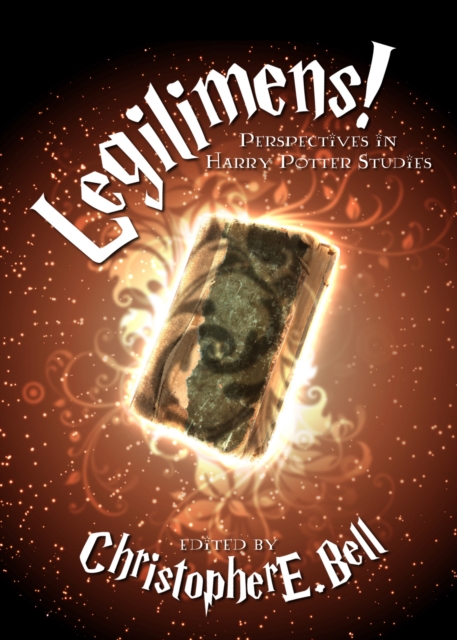
Legilimens!
The current state of scholarship surrounding Harry Potter is both vibrant and varied. One of the reasons scholars continue to be attracted to the series as an artifact is the colossal range of disciplinary foci that can find treasures to unearth in its pages and films. In the Harry Potter series, \"legilimens\" is the spell that allows a wizard to see into another persons mind, reading the subjects thoughts. As such, it is an appropriate moniker for the attempt of scholars to see into the Har.
eBook

Harry Potter. Spells & charms : a movie scrapbook
\"Packed with inserts, concept illustrations, and behind-the-scenes photography, Harry Potter: Spells and Charms: A Movie Scrapbook is a guide to the spells and incantations of the Harry Potter films. This magical movie scrapbook takes readers on a behind-the-scenes tour of iconic spells and charms--from Expelliarmus to the Patronus Charm, and even the three Unforgivable Curses. Detailed profiles include concept illustrations, set photography, and fascinating reflections from the actors and filmmakers about bringing different spells and charms to the big screen. Fans can also relive key scenes in the films when these spells are utilized, including Professor Flitwick's first Charms class, the first task of the Triwizard Tournament when Harry summons his broom with the Accio spell, and the attack at the Great Lake where Harry uses Expecto Patronum against a swarm of Dementors. Filled with a wealth of bonus inserts, Harry Potter: Spells and Charms: A Movie Scrapbook is a must-have collectible for all Harry Potter fans.\"--Provided by publisher.
BOOK


Harry Potter
Even as a new generation embraces the Harry Potter novels for the first time, J.K. Rowling's world is expanding with Fantastic Beasts, Cursed Child and Pottermore. There are new mobile games, new toys and, of course, the theme parks. Meanwhile, Quidditch and the Harry Potter Alliance stretch from college to college, inspiring each generation. Fans have adapted the series into roleplaying games, parodies, musicals, films, dances, art and published fiction like Tommy Taylor or Carry On. They are also scrambling Potter with new franchises: Game of Thrones, Hunger Games, Percy Jackson, Hamilton. What else is this new generation discovering about loving Potter? Which are the best conventions, the best fanfiction and wizard rock? And, how has Potter aged and what does it still have to teach us? Fan Phenomena: Harry Potter offers Potter fans a taste of the best the fandom has to offer.
Book

Harry Potter And the Trouble with Tort Theory
Economists argue that tort law promotes an efficient allocation of resources to safety, while philosophers contend that it dispenses corrective justice. Despite the divide, the leading tort theories share something in common: they are grounded in an unduly narrow view of tort. Both economists and philosophers confuse the institution of tort law with the rules that are distinctive of it. They offer theories of tort's substantive rules, but for the most part ignore the procedures by which those rules are implemented. As a consequence, both miss and misconstrue much about tort law. The problem is particularly acute for economists. They analyze the impact of tort's substantive rules on accident and accident avoidance costs. Yet, the institution of tort law generates many other costs and benefits for society, and those costs and benefits affect the optimal arrangement of tort's rules. The fact that economists have not factored these additional costs and benefits into their analyses calls into question their descriptive and normative claims about tort. Corrective justice theory is not in as much trouble as the economic approach, but it is troubled still. Philosophers ' neglect of the procedural dimension of tort has caused them to overlook ways that tort does justice between wrongdoers and victims. And it has led them to make misleading claims about the nature of both corrective justice and tort law. This Article draws out the trouble with tort theory through a thought experiment, starring Harry Potter. Potter's magic helps to highlight the features of tort that the leading theories overlook. Once they are in view, the Article considers the ways in which the omissions cast doubt on the claims those theories make, investigates ways they might improved, and offers several observations about the choice between them.
Journal Article