
Catalogue Search | MBRL


Are you sure you want to remove the book from the shelf?

{{itemTitle}}
795
result(s) for
"Hawaii Ethnic relations."
Sort by:

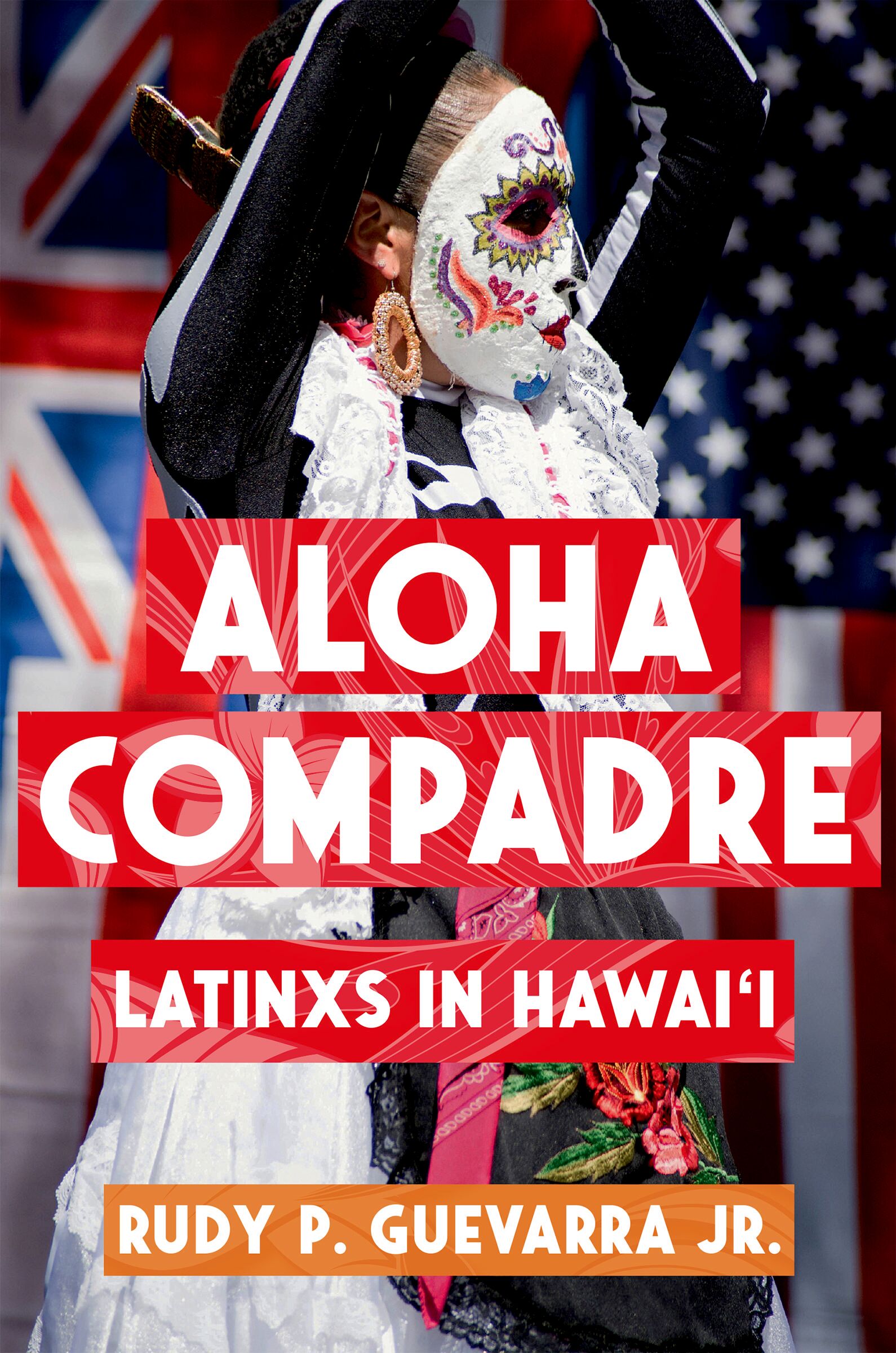
Aloha Compadre
Awarded honorable mention for the 2024 International Latino Book Awards in The Dolores Huerta Best Cultural & Community Themed Book - English category.Aloha Compadre: Latinxs in Hawaiʻi is the first book to examine the collective history and contemporary experiences of the Latinx population of Hawaiʻi.
eBook

Building Filipino Hawai°i
\"Drawing on ten years of interviews and ethnographic and archival research, Building Filipino Hawai'i delves into the ways Filipinos in Hawai'i have balanced their pursuit of upward mobility and mainstream acceptance with a desire to keep their Filipino identity.\"--Back cover.
Book
How to demolish racism
Even before statehood, Hawai‛i’s example of school integration gave birth to the movement resulting in Brown v Board of Education. Afterward, the Aloha State was the first to adopt many reforms: unrestricted abortion, universal health care insurance, an Equal Rights Amendment, a State Ombudsman, neighborhood boards, classifying Whites as a “minority” in affirmative action, banning strip searches of females, and dozens of other innovative reforms that have been adopted elsewhere. Hawai‛i remains the only state that is officially bilingual, has required mediation before foreclosures, celebrates an Islam Day, prohibits discrimination based on credit history and breastfeeding, bans smoking until the age of 21, disallows plastic bags, has declared an end to the use of fossil fuels by 2045, and has adopted many other measures that lead the world. This book explains how developments in the Aloha State, which have provided leadership to the United States, may be copied elsewhere, primarily based on the technique of reverse cultural engineering, which is the unrecognized basis for legal systems around the world.
eBook


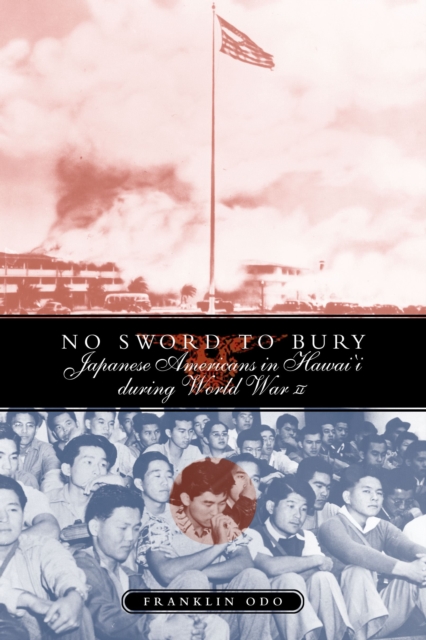
No Sword To Bury
When bombs rained down on Pearl Harbor in 1941, Japanese American college students were among the many young men enrolled in ROTC and immediately called upon to defend the Hawaiian islands against invasion. In a few weeks, however, the military government questioned their loyalty and disarmed them. InNo Sword to Bury, Franklin Odo places the largely untold story of the wartime experience of these young men in the context of the community created by their immigrant families and its relationship to the larger, white-dominated society. At the heart of the book are vivid oral histories that recall their service on the home front in the Varsity Victory Volunteers, a non-military group dedicated to public works, as well as in the segregated 442nd Regimental Combat Team. Illuminating a critical moment in ethnic identity formation among this first generation of Americans of Japanese descent (thenisei), Odo shows how the war-time service and the post-war success of these men contributed to the simplistic view of Japanese Americans as a model minority in Hawai`i.
eBook

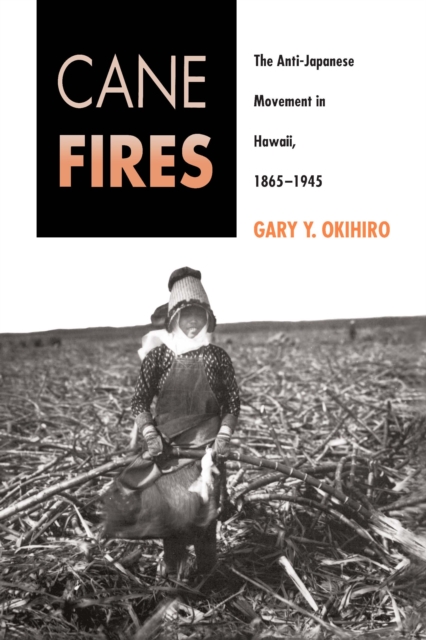
Cane Fires
Outstanding Book in History and Social Science Award, Association for Asian American Studies, 1992 \"Okihiro's account is an important corrective to our understanding of the Japanese American Experience in World War II.\" --The Hawaiian Journal of History Challenging the prevailing view of Hawaii as a mythical \"racial paradise,\" Gary Okihiro presents this history of a systematic anti-Japanese movement in the islands from the time migrant workers were brought to the sugar cane fields until the end of World War II. He demonstrates that the racial discrimination against Japanese Americans that occurred on the West Coast during the second World War closely paralleled the less familiar oppression of Hawaii's Japanese, which evolved from the production needs of the sugar planters to the military's concern over the \"menace of alien domination.\" Okihiro convincingly argues that those concerns motivated the consolidation of the plantation owners, the Territorial government, and the U.S. military-Hawaii's elite-into a single force that propelled the anti-Japanese movement, while the military devised secret plans for martial law and the removal and detention of Japanese Americans in Hawaii two decades before World War II. Excerpt Read an excerpt from Chapter 1 (pdf). Reviews \"Scholars of American race relations will want to read this book. So will anyone interested in Hawaii's history or in the experiences of Japanese or Asian Americans. It will go far in putting to rest any residual notion that the WWII experiences of the Japanese Americans represented 'aberration' or 'hysterical' reaction to wartime exigencies.\" --Franklin S. Odo, University of Hawaii at Manoa \"A well-researched and well-written treatment of the subject.\" --Library Journal Contents Illustrations Preface Part I: Years of Migrant Labor, 1986-1909 1. So Much Charity, So Little Democracy 2. Hole Hole Bushi 3. With the Force of Wildfire Part II: Years of Dependency, 1910-1940 4. Cane Fires 5. In the National Defense 6. Race War 7. Extinguishing the Dawn 8. Dark Designs Part III: World War II, 1941-1945 9. Into the Cold Night Rain 10. Bivouac Song 11. In Morning Sunlight Notes Index About the Author(s) Gary Y. Okihiro is Associate Professor of History at Cornell University.
eBook