
Catalogue Search | MBRL


Are you sure you want to remove the book from the shelf?

{{itemTitle}}
26,043
result(s) for
"Hawks"
Sort by:


Fall migration of radio-tagged Broad-winged Hawks en California
Little is known about migration patterns of Broad-winged Hawks (Buteo platypterus) in the western United States apart from small numbers that have been recorded at migration monitoring sites. To better understand their movements in coastal California, we radio-tracked 5 juveniles (1 in 1994, and 4 from 2012 to 2015) during fall migration from the Marin Headlands (near San Francisco) to the US–Mexico border. One hawk died near the Headlands within 2-3 d of release and the other 4 crossed into Baja California in 4-6 flight days with no stopovers beyond the Headlands. Daily straight-line flight distances ranged from about 110 to 265 km (mean = 189 [+ or -] 47 km SD). Migration began 2.5-3 h after sunrise and ended a similar amount of time before sunset. Flight paths along mountain ranges, and radio signal patterns, indicated slope-soaring was a primary strategy. The detailed flight paths we identified will be helpful to better evaluate proposed renewable energy facilities, given their current rapid development and potential for killing birds. More study is needed to determine complete migration routes and breeding and wintering grounds of Broad-winged Hawks on the Pacific coast. Received 26 June 2019. Accepted 18 February 2020.
Journal Article

The truth about hawks
In picture-book format, introduces the characteristics and behaviors of hawks.
Book


Hawks
\"The hawk is a unique raptor whose extraordinary eyesight makes it one of the best hunters in the bird world. Its the hawk! This book covers everything about this bird of prey, including its appearance, behavior, and survival techniques. Readers also learn how to use their life science knowledge to identify hawks in the wild.\"--Provided by publisher.
Book

Urban areas promotes shifts in the proportion of prey consumed by four raptor species (Accipitridae) in Mexico
Urbanization is a process of environmental change which reduces and fragments the original habitat and creates new pressures, conditions, and resources for the species. The urban areas act as an ecological filter, which may exclude species, while others can colonize and thrive in cities, generating a process of biotic homogenization. As top predators, the changes in prey community composition could affect the diet of raptors. However, this effect has been understudied.
In this study we compiled information about the frequency of prey consumed by Cooper's Hawk, Common Black Hawk, Roadside Hawk and Gray Hawk using two sources of information: (1) data extracted from photographs available on citizen science platforms and (2) a search of scientific literature. Using these data, we compared the diet composition, the proportion of prey consumed and the trophic niche breadth by four species of raptor in urban and non-urban areas. Additionally, we evaluated whether the variability in frequency of predation records by raptors was associated to the type of prey or their breeding season.
Our results indicate that the raptors studied consumed at least 91 prey species in Mexico. Most records of predation by Common Black Hawk, Roadside Hawk, and Gray Hawk occurred in non-urban areas. On the contrary, most records of predation by Cooper's hawks occurred within urban areas. There was no statistical difference in the richness of prey consumed by Cooper's Hawk and Gray Hawk between urban and non-urban areas. In contrast, fewer prey types were consumed by Common Black Hawk and Roadside Hawk in urban areas than in non-urban areas. The proportion of prey types consumed in urban and non-urban areas was significantly different for Cooper's Hawk, Roadside Hawk and Gray Hawk. Conversely, the proportion of prey types consumed by Common Black Hawk's was similar in urban and non-urban areas. The four raptors studied increased the proportion of birds consumed in urban areas by between 2% and 36%, regardless of their preference for a specific type of prey. The trophic niche breadth of raptors was broader in urban areas than in non-urban areas, except for Cooper's Hawk, which had a narrow trophic niche breadth in urban areas than in non-urban areas. The temporal variation in the frequency of predation records was influenced by differential factors such as the breeding season, the type of prey consumed, and the utilization patterns of citizen science platforms. Our results demonstrate that the four raptors studied increased the proportion of bird consumption in urban areas. This shift in raptors' diets could be linked to the increased prevalence of diseases transmitted by feeding on infected birds in urban areas. This emphasizes the importance of conducting research to assess the prevalence and transmission rates of diseases that could threaten the conservation of birds and raptors in urban areas.
Journal Article
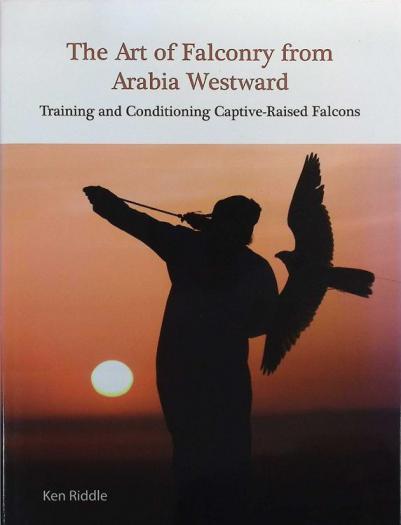
The art of falconry from Arabia westward : training and conditioning captive-raised falcons
\"The Art of Falconry from Arabia Westward\" is a comprehensive technical manual and comparative study of raptor training, written by Dr. Ken Riddle, a world-renowned veterinarian and falconry expert who spent decades at the Abu Dhabi Falcon Hospital. The work focuses on the specialized methodologies required for training and conditioning captive-raised falcons, bridging the gap between traditional Arabian \"Bedouin\" falconry and modern Western veterinary and sporting practices. It serves as a vital bridge between heritage and science, addressing the unique physiological and psychological needs of domestically bred raptors (such as Peregrines, Gyrfalcons, and Sakers).
BOOK

Correction: Sonongbua et al. Insights into Mitochondrial Rearrangements and Selection in Accipitrid Mitogenomes, with New Data on Haliastur indus and Accipiter badius poliopsis. Genes 2024, 15, 1439
The authors would like to correct a mitochondrial genome assembly error identified in Haliastur indus in their original paper [...].The authors would like to correct a mitochondrial genome assembly error identified in Haliastur indus in their original paper [...].
Journal Article

Howard Hawks : new perspectives
\"In a career spanning half a century, Howard Hawks (1896-1977) made many of Hollywood's most critically acclaimed and enduringly popular films. Working in almost every genre, his output includes firmly established classics such as Scarface (1932), His Girl Friday (1940), The Big Sleep (1946), Gentlemen Prefer Blondes (1953) and Rio Bravo (1959). But although one of the greatest American film-makers, he remains something of a marginalised figure and often goes unrecognised as the director of his own films. In this wide-ranging collection of new essays, leading international scholars provide reassessments of Hawks's work and working methods in relation to genre, gender, music, visual style, space and narrative. Spanning Hawks's silent period to the late Westerns, and focusing on his critical successes as well as his neglected and disparaged films, the volume recognises and re-evaluates his diverse contribution to film-making.\"--Page [4] of cover.
Book