
Catalogue Search | MBRL


Are you sure you want to remove the book from the shelf?

{{itemTitle}}
159
result(s) for
"Headscarves"
Sort by:

A Quiet Revolution
In Cairo in the 1940s, Leila Ahmed was raised by a generation of women who never dressed in the veils and headscarves their mothers and grandmothers had worn. To them, these coverings seemed irrelevant to both modern life and Islamic piety. Today, however, the majority of Muslim women throughout the Islamic world again wear the veil. Why, Ahmed asks, did this change take root so swiftly, and what does this shift mean for women, Islam, and the West?
When she began her study, Ahmed assumed that the veil's return indicated a backward step for Muslim women worldwide. What she discovered, however, in the stories of British colonial officials, young Muslim feminists, Arab nationalists, pious Islamic daughters, American Muslim immigrants, violent jihadists, and peaceful Islamic activists, confounded her expectations. Ahmed observed that Islamism, with its commitments to activism in the service of the poor and in pursuit of social justice, is the strain of Islam most easily and naturally merging with western democracies' own tradition of activism in the cause of justice and social change. It is often Islamists, even more than secular Muslims, who are at the forefront of such contemporary activist struggles as civil rights and women's rights. Ahmed's surprising conclusions represent a near reversal of her thinking on this topic.
Richly insightful, intricately drawn, and passionately argued, this absorbing story of the veil's resurgence, from Egypt through Saudi Arabia and into the West, suggests a dramatically new portrait of contemporary Islam.
eBook

MULTIPLE DISCRIMINATION AGAINST FEMALE IMMIGRANTS WEARING HEADSCARVES
Western countries have experienced a large influx of Muslim immigrants, and concomitantly the Muslim headscarf has become the subject of major controversy. Drawing on theories of stigma, social identity, and multiple discrimination/intersectionality, this study examines the effect of wearing this headscarf in the German labor market. The author applies the method of correspondence testing that allows measuring discrimination in a controlled field setting. Findings show that when applying for a job in Germany, women with a Turkish migration background are less likely to be invited for an interview, and the level of discrimination increases substantially if the applicant wears a headscarf. The results suggest that immigrant women who wear a headscarf suffer discrimination based on multiple stigmas related to ethnicity and religion.
Journal Article

The Politics of the Headscarf in the United States
The Politics of the Headscarf in the United States investigates the social and political effects of the practice of Muslim-American women wearing the headscarf (hijab) in a non-Muslim state. The authors find the act of head covering is not politically motivated in the U.S. setting, but rather it accentuates and engages Muslim identity in uniquely American ways.
Transcending contemporary political debates on the issue of Islamic head covering, The Politics of the Headscarf in the United States addresses concerns beyond the simple, particular phenomenon of wearing the headscarf itself, with the authors confronting broader issues of lasting import. These issues include the questions of safeguarding individual and collective identity in a diverse democracy, exploring the ways in which identities inform and shape political practices, and sourcing the meaning of citizenship and belonging in the United States through the voices of Muslim-American women themselves.
The Politics of the Headscarf in the United States superbly melds quantitative data with qualitative assessment, and the authors smoothly integrate the results of nearly two thousand survey responses from Muslim-American women across forty-nine states. Seventy-two in-depth interviews with Muslim women living in the United States bolster the arguments put forward by the authors to provide an incredibly well-rounded approach to this fascinating topic.
Ultimately, the authors argue, women's experiences with identity and boundary construction through their head-covering practices carry important political consequences that may well shed light on the future of the United States as a model of democratic pluralism.
eBook
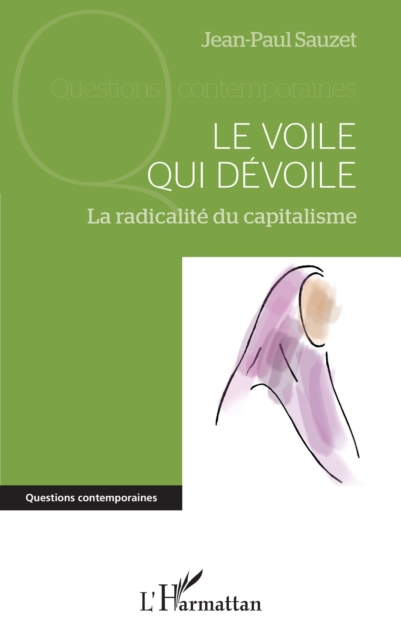
Le voile qui dévoile
Lorsque les femmes voilées qui déambulent dans les rues se multiplient, nous sommes gênés. Comme si nous n'étions plus chez nous en France. Cet ouvrage propose de penser le renouveau de cette pratique vestimentaire. Les cheveux cachés sous le voile sont l'extrême opposé des corps érotisés et instrumentalisés des panneaux publicitaires et des écrans qui façonnent l'imaginaire des consommateurs que nous sommes devenus. L'on pressent qu'il y a là une contestation frontale du corps fait marchandise. Le port du voile prend ainsi sens au sein d'une culture qui le rend possible. Il s'inscrit dans l'histoire du capitalisme qui s'impose comme l'ère de la prédation.
eBook

The Intersectional Effects of Race, Gender, and Religion on the Economic Integration of High-skilled Immigrants: a Literature Review
This scoping review paper explores the enduring economic challenges faced by high-skilled immigrant populations in Canada, emphasizing the vital role of intersectionality in understanding their labor market outcomes. By employing occupational segregation theory and an intersectionality perspective, the paper underscores that the contemporary labor markets demand a comprehensive understanding of high-skilled immigrant economic integration that goes beyond singular considerations of gender or race. In today’s context, the role of religion and its intersection with other dimensions of identity in studying immigrants’ labor market penalties is imperative. After September 11, skilled Muslim minorities, particularly women wearing headscarves, in Western labor markets have drawn considerable academic attention due to anti-Islam discrimination targeting their intersectional identities. The analysis includes 105 scholarly articles published in English from 2000 to 2023, focusing on two primary themes: (1) challenges to the economic integration of highly skilled immigrants in Canada: (a) Immigrants’ human capitals and (b) structural discrimination toward highly skilled immigrants; (2) challenges to the economic integration of highly skilled minority immigrants: (a) the consequences of gender; (b) the role of religious affiliation (Islam); and (c) intersectional effects of gender, rare/ethnicity, and religion on economic integration of professional Muslim women. This scoping review paper concludes by identifying research gaps and suggesting future directions to inform evidence-based policies and practices aimed at fostering an inclusive and equitable labor market.
Journal Article

What is Veiling?
In an environment of increasing conservatism, in a world where a woman's right to wear the headscarf has become a touchstone for issues of all sorts, and at a time when racial and religious profiling has become commonplace, it is our political and social responsibility to gain a deeper understanding of veiling.
eBook

Writing Brave Women : An Exercise in Academic Publishing as Feminist Solidarity
What does it mean to be a brave woman? In 2020, we saw Belarusian women take to the streets dressed in white to oppose the violent dictatorship that had been in power for twenty-six years. In 2021, our television screens showed the Fall of Kabul, and the takeover by Taliban fighters, who overnight began to reverse decades of women’s empowerment. In response, and despite the risks, women demonstrators took to the streets in Kabul to demand their rights to work, education, and political participation. And in late 2022, we saw Iranian women fight for freedom, cutting their hair and burning their headscarves as they called for women’s rights in the context of brutal repression. These are but a handful of the myriad examples of women transgressing what is societally expected of them. They go out into the streets, they post on social media, they protest governments and make demands for change. Around the world, we see women being brave. They do so at great personal risk, and often when the potential benefits of being brave are infinitesimally small.
Journal Article
On the Psychodynamics of Wearing a Headscarf Among Young Muslim Women Living in Germany—New Heterogeneous Poles of Subjectivity
The wearing of a headscarf and the veiling especially of the female face or the whole body is a universal phenomenon that occurs in different eras and in different regions and cultures. Today, wearing a headscarf has become a symbol of Islam, especially in Western countries, and is often met with Islamophobic rejection. In our study, using a qualitative interview, we questioned 25 young Muslim women of Turkish origin (between 18 and 25 years old, n = 25) living in Germany about their reasons for wearing or not wearing a headscarf and their experiences on account of this decision. The majority (n = 16) of the predominantly academically educated female participants do not wear a headscarf, primarily for reasons of female attractiveness, an internalized religiosity, and as an expression of the disintegration of the family hierarchy. All female respondents (n = 7) from families with divorced parents do not wear headscarves, while for the other female respondents (n = 9) who do not wear headscarves, the family seems to have a more liberal mindset. Reasons for wearing a headscarf are especially a religious attachment to Islam, fashionable self-confidence, and the wish to combine Western emancipation with the traditional dress code (in the form of a hybrid identity). These findings are considered against the background of a psychoanalytic reading of the Quranic suras on veiling (according to F. Benslama) and the Lacanian dialectic of the imaginary and symbolic phallus. The diversity of personal reasons can be described with the concept of a heterogeneous subjectivity, which arises from the clash of Western secular and Turkish-Islamic notions.
Journal Article

Religious Freedom and Neutrality in Belgian Education: About the Ban on Islamic Headscarves in Flanders
The Belgian constitution establishes that communities shall dispense neutral teaching that also respects both religious convictions and non-denominational philosophical choices. The application of this article has led to several conflicts with the religiosity of parents and students, among which one stands out eminently: the prohibition of the Islamic headscarf in schools in Flanders and Wallonia. It is precisely in the first of these communities, Flanders, where the collisions between the principle of neutrality and the religious freedom of Muslim women who intend to continue wearing this religious symbol continue to be reproduced, not only for reasons of religiosity, but also of identity. Signally, one of the main problems lies in the difficulties in delimiting the extension of the concept of neutrality as a limit to religious freedom, a task in which there does not seem to be agreement, neither among the main agents of the education system nor even among the courts of justice of the community. The best proof of this are the last two developments in the matter, the European Court of Human Right judgment in the Mykias case and the unsuccessful attempt to ban the Islamic veil in the province of Flanders.
Journal Article

Zur (Un–)Sichtbarkeit der Mehrdimensionalität von Diskriminierungen Eine Rechtsprechungsanalyse am Beispiel von Kopftuchverboten
Discrimination is multidimensional. It reproduces the manifold positionings of the individual in society and the resulting stigmatisations. Even though there are some norms addressing multiple discriminations, the jurisdiction has not established a coherent method of reflecting the multidimensional social positionings. Therefore, increased awareness of discrimination beyond discrimination on grounds of single personal attributes is necessary. To illustrate that, the item analyses the case law of the Bundesverfassungsgericht, the ECHR and the CJEU concerning the prohibition of headscarves. The specific situation of discrimination in case of the prohibition of headscarves is based on the categories gender, religion, and race. To unveil the multidimensionality in discrimination, these categories and the established social groups must be deconstructed. This article discusses the legal opportunities to address multidimensional discrimination.
Journal Article