
Catalogue Search | MBRL


Are you sure you want to remove the book from the shelf?

{{itemTitle}}
3,269
result(s) for
"Health Fiction."
Sort by:

Jack & the hungry giant eat right with MyPlate
\"Jack goes up the beanstalk, where he is greeted by a kind giant who cooks him a nutritious meal. He learns about healthy eating habits from the giant and his wife\"-- Provided by publisher.
Book

Very long-chain n-3 fatty acids and human health: fact, fiction and the future
EPA and DHA appear to be the most important n-3 fatty acids, but roles for n-3 docosapentaenoic acid are now also emerging. Intakes of EPA and DHA are usually low, typically below those recommended. Increased intakes result in higher concentrations of EPA and DHA in blood lipids, cells and tissues. Increased content of EPA and DHA modifies the structure of cell membranes and the function of membrane proteins. EPA and DHA modulate the production of lipid mediators and through effects on cell signalling can alter the patterns of gene expression. Through these mechanisms, EPA and DHA alter cell and tissue responsiveness in a way that often results in more optimal conditions for growth, development and maintenance of health. DHA has vital roles in brain and eye development and function. EPA and DHA have a wide range of physiological roles, which are linked to certain health or clinical benefits, particularly related to CVD, cancer, inflammation and neurocognitive function. The benefits of EPA and DHA are evident throughout the life course. Future research will include better identification of the determinants of variation of responses to increased intake of EPA and DHA; more in-depth dose–response studies of the effects of EPA and DHA; clearer identification of the specific roles of EPA, docosapentaenoic acid and DHA; testing strategies to enhance delivery of n-3 fatty acids to the bloodstream; and exploration of sustainable alternatives to fish-derived very long-chain n-3 fatty acids.
Journal Article

The Funny Bunny Fly
\"Something doesn't smell right at Mr. Abel Throppe's bakery. Eighteen customers are sick, and they're blaming it on his pie. What could have caused this awful epidemic? It seems a Funny Bunny Fly has taken up residence in the bakery. You see, Funny Bunny Fly doesn't like to be clean. Prior to entering the bakery, he rolled in some dog doo-doo and is spreading germs all over town\"-- Provided by publisher.
Book


Heroine Abuse
Fyodor Dostoevsky's first novel, Netochka Nezvanova, written in 1849, remains the least studied and understood of the writer's long fiction, but it was a seedbed for many topics and themes that became hallmarks of his major works. Specifically, Netochka Nezvanova was the first in Dostoevsky's corpus to focus on the psychology of children and the first to feature a woman in a leading and narrative role. It was also the first work in Russian literature to deal with problems of the family.
In Heroine Abuse, Thomas Marullo contends that Netochka Nezvanova also provides a striking example of what psychologists today call codependency: the ways—often deviant and destructive—in which individuals bond with people, places, and things, as well as with images and ideas, to cope with the vicissitudes of life. Marullo shows how, at age twenty-eight, Dostoevsky intuited and illustrated the workings of \"relationship addiction\" almost a century and a half before it became the scholarly focus of practitioners of mental health. The moral monsters, \"infernal\" women, children-adults, and adult-children who populate Netochka Nezvanova seek codependence in people, places, and things, and in images, ideas, and ideals to satiate cravings for love, dominance, and control, as well as to indulge in narcissism, sexual perversion, and other aberrant or alternative behaviors. (Indeed, in no other work would Dostoevsky examine such phenomena as pedophilia and lesbianism with such abandon.) Racing from tie to tie, bond to bond, and caught in a debilitating loop that they claim to detest, but sadomasochistically enjoy, the characters in Netochka Nezvanova wreak havoc on themselves and the world. They do so, moreover, with impunity, their addictions moving them from momentary exultation as self-styled extraordinary men and women, through prolonged darkness and despair, and once again, to old and new addictions for physical and emotional release.
Readers of Heroine Abuse will see Netochka Nezvanova as a timeless model in depicting codependency in the world of the twenty-first century as it did in St. Petersburg in 1849. Marullo's original work will appeal to scholars and students of Russian and comparative fiction; to doctors, psychologists, and therapists; to laymen and women interested in relationship addiction; and, finally, to codependents and relationship addicts of all types.
eBook
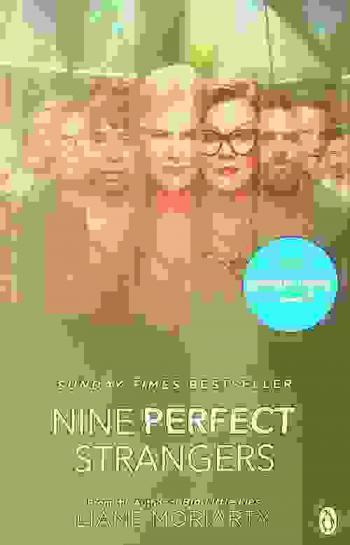
Nine perfect strangers
The retreat at health and wellness resort Tranquillum House promises total transformation. Nine stressed city dwellers are keen to drop their literal and mental baggage, and absorb the meditative ambience while enjoying their hot stone massages. Watching over them is the resort's director, a woman on a mission to reinvigorate their tired minds and bodies. But quite a different one from what any of the guests might have imagined. For behind the retreat's glamorous facade lies a dark agenda. These nine perfect strangers have no idea what is about to hit them.

Approche herméneutique de l’expérience des enfants de familles migrantes lors de la consultation en santé mentale jeunesse : fragilité, apprivoisement par l’art et réenchantement du monde
Cadre de la recherche : Comme la migration, particulièrement lorsque forcée peut affecter psychologiquement les enfants, la consultation en santé mentale jeunesse (SMJ) peut faire partie du parcours des familles migrantes. Alors que de rares articles décrivent cette expérience pour les familles et les jeunes (école secondaire), celle des enfants (école primaire) reste encore moins explorée.Objectif : Cet article se penche sur les données d’entretiens intégrant jeux et dessins menés auprès de 20 enfants de 15 familles migrantes ayant consulté en SMJ (dont certaines réfugiées, demandeuses d’asile ou sans statut). L’objectif est d’explorer l’expérience des enfants en intégrant une méthode d’analyse innovatrice basée sur l’art.Méthodologie : Nous proposons une méthode herméneutique combinant la psychiatrie transculturelle, la psychologie humaniste et l’interprétation des données par la création littéraire. En cohérence avec ces ancrages, les données d’entretien sont présentées de manière narrative sous la forme d’exemples. L’interprétation des données inclut la création d’un texte littéraire intitulé Jungle et religion.Résultats : L’interprétation fait ressortir trois volets de l’expérience des enfants : 1) l’expérience migratoire et la fragilité qu’elle implique, 2) le recours à l’art et au jeu comme moyens d’apprivoisement du trauma, et 3) l’idéalisation de l’intervention. Conclusion : L’expérience comprise des enfants met en lumière à la fois la confusion/peur induite par la migration et la place compensatrice que l’intervention peut prendre, et qui crée la possibilité de vivre des espoirs déçus, mais aussi celle de reconstruire le monde pour l’enfant.Contribution : L’interprétation des résultats basée sur l’art et la création littéraire a permis de traduire l’expérience des enfants plus justement et de mieux la représenter en langage écrit, alors qu’elle nous a principalement été transmise par les enfants en paroles, en jeux et en images.
Journal Article

Plum rains
\"2029: In Japan, ... childbirth rates are at a critical low and the elderly are living increasingly long lives. This population crisis has precipitated a mass immigration of foreign medical workers from all over Asia--as well as the development of refined artificial intelligence to step in where humans fall short. In Tokyo, Angelica Navarro, a Filipina nurse who has been working in Japan for the last five years, is the caretaker for Sayoko Itou, an intensely private woman about to turn 100 years old ... But one day Sayoko receives a present from her son: a cutting-edge robot caretaker that will educate itself to anticipate Sayoko's every need. Angelica wonders if she is about to be forced out of her much-needed job by an inanimate object--one with a preternatural ability to uncover the most deeply buried secrets of the humans around it. While Angelica is fighting back against the AI with all of her resources, Sayoko is becoming more and more attached to the machine. The old woman is hiding many secrets of her own--and maybe now she's too old to want to keep them anymore\"-- Provided by publisher.
Book

Strong families: a new family skills training programme for challenged and humanitarian settings: a single-arm intervention tested in Afghanistan
Background
Children living in challenged humanitarian settings (including those in rural/underserved areas, the displaced, refugees, in conflict/post conflict situations) are at greater risk of mental health difficulties or behavioural problems, with caregivers acting as their main protective factors. While many family skills programmes exist, very few were developed for, or piloted in, low resource settings (settings with limited infrastructure, typical of humanitarian settings). We therefore designed a brief and light programme; the Strong Families (SF) programme, consisting of 5 h contact time over 3 weeks. We conducted a pilot study with the aim to test the feasibility of implementation, and a preliminary look at the effectiveness of SF, in improving child behaviour and family functioning in families living in Afghanistan.
Methods
We recruited female caregivers and children aged 8–12 years through schools and drug treatment centres in Afghanistan and enrolled them in the SF programme. Demographic data, emotional and behavioural difficulties of children and parental skills and family adjustment measures were collected from caregivers before, 2 and 6 weeks after the intervention. Outcome was assessed through the SDQ (Strengths and Difficulties Questionnaire), assessing children’s behavioural, emotional, and social issues, and PAFAS (Parenting and Family Adjustment Scales), measuring parenting practices and family functioning.
Results
We enrolled 72 families in the programme with a 93.1% retention rate (
n
= 67) for data collection 6 weeks post intervention. Mean age of caregivers was 36.1 years, they had 3.8 children on average and 91.7% of them had experienced war/armed conflict in their past. The average total difficulty score of the SDQ (ranging from 0 to 40, with scores above 16 being indicative of high problems) of the 72 children reduced significantly, from 17.8 at pre-test to 12.9 at post-test and 10.6 at second follow-up, with no difference in gender and most noticeably amongst those with the highest scores at baseline. Likewise, PAFAS scores decreased significantly after the programme, again with caregivers with the highest scores at baseline improving most.
Conclusions
The implementation of a brief family skills programme was seemingly effective and feasible in a resource-limited setting and positively improved child mental health and parenting practices and family adjustment skills. These results suggest the value of such a programme and call for further validation through other methods of impact assessment and outcome evaluation.
Trial registration
ISRCTN76509384
. Retrospectively registered on March 9, 2020.
Journal Article