
Catalogue Search | MBRL


Are you sure you want to remove the book from the shelf?

{{itemTitle}}
357
result(s) for
"Health Miscellanea"
Sort by:


It's Not All in Your Head
Where do you go for help when no one believes you're really sick? The doctors can't explain your symptoms, but you know there's something wrong because you can sense it in your body. Living with the specter of an unresolved health issue isn't just painful, it's isolating. The preoccupation and stress it causes can disrupt your career or interfere with personal relationships. If you continually experience symptoms of illness, or worry a lot about disease, you may be suffering from health anxiety--a condition that can produce physical effects of its own, including muscle tension, nausea, and a quickened heart rate. In this compassionate and empowering book, noted psychologists Gordon J. G. Asmundson and Steven Taylor provide simple and accurate self-tests designed to help you understand health anxiety and the role it might be playing in how you feel. Concrete examples and helpful exercises show you how to change thought and behavior patterns that contribute to the aches, pains, and anxiety you're experiencing. The authors also explain how to involve friends and family--and when to seek professional help--as you learn to stay well without worry. Association for Behavioral and Cognitive Therapies (ABCT) Self-Help Book of Merit.
eBook


Prescribing by numbers : drugs and the definition of disease
Winner, 2009 Rachel Carson Prize, Society for the Social Studies of ScienceWinner, 2012 Edward Kremers Award, American Institute of the History of Pharmacy
The second half of the twentieth century witnessed the emergence of a new model of chronic disease—diagnosed on the basis of numerical deviations rather than symptoms and treated on a preventive basis before any overt signs of illness develop—that arose in concert with a set of safe, effective, and highly marketable prescription drugs. In Prescribing by Numbers, physician-historian Jeremy A. Greene examines the mechanisms by which drugs and chronic disease categories define one another within medical research, clinical practice, and pharmaceutical marketing, and he explores how this interaction has profoundly altered the experience, politics, ethics, and economy of health in late-twentieth-century America.
Prescribing by Numbers highlights the complex historical role of pharmaceuticals in the transformation of disease categories. Greene narrates the expanding definition of the three principal cardiovascular risk factors—hypertension, diabetes, and high cholesterol—each intersecting with the career of a particular pharmaceutical agent. Drawing on documents from corporate archives and contemporary pharmaceutical marketing literature in concert with the clinical literature and the records of researchers, clinicians, and public health advocates, Greene produces a fascinating account of the expansion of the pharmaceutical treatment of chronic disease over the past fifty years.
While acknowledging the influence of pharmaceutical marketing on physicians, Greene avoids demonizing drug companies. Rather, his provocative and comprehensive analysis sheds light on the increasing presence of the subjectively healthy but highly medicated individual in the American medical landscape, suggesting how historical analysis can help to address the problems inherent in the program of pharmaceutical prevention.
eBook

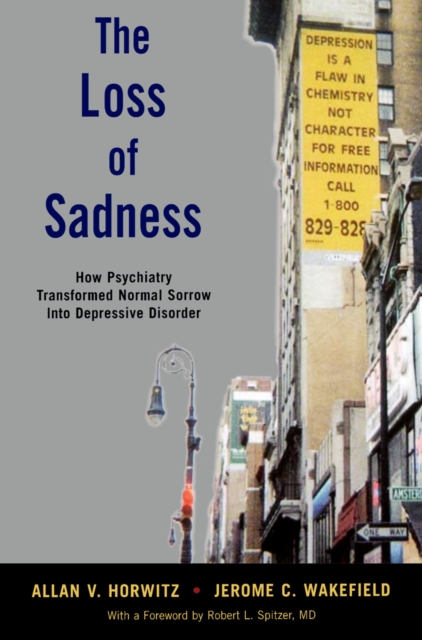
The loss of sadness : how psychiatry transformed normal sorrow into depressive disorder
The Loss of Sadness argues that the increased prevalence of major depressive disorder is due not to a genuine rise in mental disease, but to the way that normal human sadness has been 'pathologised' since 1980. That year saw the publication of the landmark third edition of The Diagnostic and Statistical Manual of Mental Disorders (DSM-III), which has since become a dominant force behind our current understanding of mental illness overall. As concerns at least major depression, the authors argue that the DSM's definition of the condition is too broad and that as a result virtually all research and clinical approaches to the condition have been based on a flawed understanding about it. The social, political, and scientific implications of this are far-reaching - from the overselling of antidepressants to treat ordinary sadness, as Big Pharma exploits the DSM for its own purposes; to intrusive and expensive depression screening programs at all levels of society, as well-meaning but misguided initiatives translate the DSM into simple terms to catch any whiff of depressive pathology in our midst; and funded research into the 'epidemic' of depression, which advances the field very litttle and the public even less. Ultimately, the definition of depression that is in operation today has formed the basis for an entire system of social control (e.g. community-wide screening initiatives, intrusive public health policy) that benefits psychiatry, primary care providers, and the pharmaceutical and insurance industries by turning everyone else into a potential consumer of services, needed or not. The authors do recognise that depression is a devastating illness that affects some people. Their chief concern is with the use of this diagnosis as a catch-all for anyone who has experienced sadness for more than a few weeks at a time. The result is a pointed yet nuanced critique of modern psychiatry that will stir controversy of the sort that will reacquaint us with sadness as a primary human emotion and that could productively influence the way that depression the actual illness is characterised in the future.
eBook

How to eat : all your food and diet questions answered
\"What is the \"best\" diet? Do calories matter? And when it comes to protein, fat, and carbs, which ones are good and which are bad? Food writer and cook Mark Bittman and health expert David Katz, MD, answer all these questions and more in a lively and easy-to-read Q&A format. Inspired by their viral hit article in Grub Street--one of New York magazine's most popular and most-shared articles--here Bittman and Katz share their clear, no-nonsense perspective on food and diet, answering real questions covering everything from basic nutrients to superfoods to fad diets. Topics include dietary patterns (Just what should humans eat?); grains (Aren't these just \"carbs\"? Do I need to avoid gluten?); meat and dairy (How much meat should I eat? Does grass-fed matter?); alcohol (Are there benefits to drinking?); and more. Throughout, Bittman and Katz filter the science of diet and nutrition through a lens of common sense, delivering straightforward advice with a healthy dose of wit\"-- Provided by publisher.
Book

Ultra-low-activity total-body dynamic PET imaging allows equal performance to full-activity PET imaging for investigating kinetic metrics of 18F-FDG in healthy volunteers
PurposeTo investigate the feasibility of ultra-low-activity total-body positron emission tomography (PET) dynamic imaging for quantifying kinetic metrics of 2-[18F]-fluoro-2-deoxy-D-glucose (18F-FDG) in normal organs and to verify its clinical relevance with full-activity imaging.MethodsDynamic total-body PET imaging was performed in 20 healthy volunteers, with eight using full activity (3.7 MBq/kg) of 18F-FDG and 12 using 10× activity reduction (0.37 MBq/kg). Image contrast, in terms of liver-to-muscle ratio (LMR), liver-to-blood ratio (LBR), and blood-to-muscle ratio (BMR) of radioactivity concentrations were assessed. A two-tissue compartment model was fitted to the time-to-activity curves in organs based on regions of interest (ROIs) delineation using PMOD, and constant rates (k1, k2, and k3) were generated. Kinetic constants, corresponding coefficients of variance (CoVs), image contrast, radiation dose, prompt counts, and data size were compared between full- and low-activity groups.ResultsAll constant rates, corresponding CoVs, and image contrast in different organs were comparable with none significant differences between full- and ultra-low-activity groups. PET images in the ultra-low-activity group generated significantly lower effective radiation dose (median, 0.419 vs. 4.886 mSv, P < 0.001), reduced prompt counts (median, 2.79 vs. 55.68 billion, P < 0.001), and smaller data size (median, 71.11 vs. 723.18 GB, P < 0.001).ConclusionTotal-body dynamic PET imaging using 10× reduction of injected activity could achieve relevant kinetic metrics of 18F-FDG and comparable image contrast with full-activity imaging. Activity reduction results in significant decrease of radiation dose and data size, rendering it more acceptable and easier for data reconstruction, transmission, and storage for clinical practice.
Journal Article
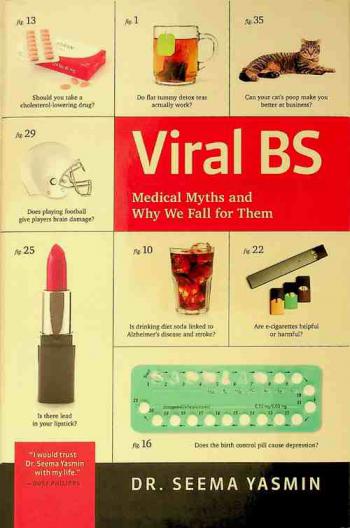
Viral BS : medical myths and why we fall for them
\"This book dissects medical myths and pseudoscience and explores how misinformation can spread faster than microbes. Yasmin debunks public health myths ranging from the spurious link between vaccines and autism to the truth about so-called chemtrails left behind by airplanes. In short chapters covering popular myths, Yasmin parses the science behind fearful rumors and models how to be a more informed consumer of health news\"-- Provided by publisher.
EANM practice guideline for quantitative SPECT-CT
Abstract PurposeQuantitative SPECT-CT is a modality of growing importance with initial developments in post radionuclide therapy dosimetry, and more recent expansion into bone, cardiac and brain imaging together with the concept of theranostics more generally. The aim of this document is to provide guidelines for nuclear medicine departments setting up and developing their quantitative SPECT-CT service with guidance on protocols, harmonisation and clinical use cases.MethodsThese practice guidelines were written by members of the European Association of Nuclear Medicine Physics, Dosimetry, Oncology and Bone committees representing the current major stakeholders in Quantitative SPECT-CT. The guidelines have also been reviewed and approved by all EANM committees and have been endorsed by the European Association of Nuclear Medicine.ConclusionThe present practice guidelines will help practitioners, scientists and researchers perform high-quality quantitative SPECT-CT and will provide a framework for the continuing development of quantitative SPECT-CT as an established modality.
Journal Article