
Catalogue Search | MBRL


Are you sure you want to remove the book from the shelf?

{{itemTitle}}
10
result(s) for
"Health Policy Collected Works."
Sort by:


Receipt of social services intervention in childhood, educational attainment and emergency hospital admissions: longitudinal analyses of national administrative health, social care, and education data in Wales, UK
Background
Research consistently finds poorer health and educational outcomes for children who have experienced out-of-home care relative to the general population. Few studies have explored differences between those in care and those in receipt of intervention from social services but not in care. Children receiving social services interventions often experience Adverse Childhood Experiences (ACEs), and deprivation, which are known to negatively impact outcomes. We aimed to estimate the association of different social services interventions with educational outcomes and hospital admissions, while adjusting for ACEs and deprivation.
Methods
We linked retrospective, routinely collected administrative records from health, education, and social care to create a cohort via the Secure Anonymised Information Linkage (SAIL) databank in Wales, UK. We analysed data for children and household members (
N
= 30,439) across four different groups: (1) no social care intervention; (2) children in need but not in care (CIN); (3) children on the Child Protection Register but not in care (CPR); (4) children in care - i.e. removed from the family home and looked after by the local authority (CLA). Our primary outcome was education outcomes at age 16 years. Secondary outcomes were all cause emergency hospital admissions, and emergency admissions for external causes/injuries.
Results
Children in receipt of social services intervention were more likely to not attain the expected level upon leaving statutory education at age 16 after adjusting for ACEs and other characteristics (for children who had been in out-of-home care (conditional OR: 1·76, (95%CI) 1·25 − 2·48), in need (2·51, 2·00–3·15) and those at risk (i.e., on the child protection register) (4·04, 2·44 − 6·68). For all-cause emergency admissions, all social care groups were at greater risk compared to children in the general population (children in care (conditional HR: 1·31, 1·01–1·68), children in need (1·62, 1·38 − 1·90), and children at risk (1·51, 1·11 − 2·04).
Conclusions
All groups receiving social service intervention experience poorer educational and health outcomes than peers in the general population. Children who remain with their home parents or caregivers but are identified as ‘in need’ or ‘at risk’ by social care practitioners require further research. Integrated support is needed from multiple sectors, including health, educational and social care.
Journal Article

The anesthesia workforce in Canada: a methodology to identify physician anesthesia providers using health administrative data
Background
Safe and timely anesthesia services are an integral component of modern health care systems. There are, however, increasing concerns about the availability of anesthesia services in Canada. Thus, a comprehensive approach to assess the capacity of the anesthesia workforce to provide service is a critical need. Data regarding the anesthesia services provided by specialists and family physicians are available through the Canadian Institute for Health Information (CIHI) but collating the data across delivery jurisdictions has proven challenging. As a result, information related to the activity of physician anesthesia providers is routinely excluded from annual physician workforce reports. Our goal was to develop a novel approach to identifying and characterizing the anesthesia workforce on a pan-Canadian scale.
Methods
The study was approved by the University of Ottawa Office of Research Ethics and Integrity. We developed a methodology to identify physicians who provided anesthesia services in Canada between 1996 and 2018 using data elements from the CIHI National Physician Database. We iteratively consulted with expert advisors and compared the results with Scott’s Medical Database, the Canadian Medical Association (CMA) Masterfile, and the College of Family Physicians of Canada membership database.
Results
The methodology identified providers of anesthesia services using data elements from the CIHI National Physician Database, including categories of the National Grouping System, specialty designations, activity levels and participation thresholds. Physicians who provided anesthesia services only sporadically and medical residents-in-training were excluded. This methodology produced estimates of anesthesia providers that aligned with other sources. The process we followed was sequential, transparent, and intuitive, and was strengthened by collaboration and iterative consultation with experts and stakeholders.
Conclusions
Using physician activity patterns, this novel methodology allows stakeholders to identify which physician provide anesthesia services in Canada. It is an essential step in developing a pan-Canadian anesthesia workforce strategy that can be used to examine patterns and trends related to the workforce and support evidence-informed workforce decision-making. It also establishes a foundation for assessing the effectiveness of a variety of interventions aimed at optimizing physician anesthesia services in Canada.
Journal Article
Public health and social justice : a Jossey-Bass reader
Praise for Public Health and Social Justice \"This compilation unifies ostensibly distant corners of our broad discipline under the common pursuit of health as an achievable, non-negotiable human right. It goes beyond analysis to impassioned suggestions for moving closer to the vision of health equity.\" —Paul Farmer, MD, PhD, Kolokotrones University Professor and chair, Department of Global Health and Social Medicine, Harvard Medical School; co-founder, Partners In Health \"This superb book is the best work yet concerning the relationships between public health and social justice.\" —Howard Waitzkin, MD, PhD, Distinguished Professor Emeritus, University of New Mexico \"This book gives public health professionals, researchers and advocates the essential knowledge they need to capture the energy that social justice brings to our enterprise.\" —Nicholas Freudenberg, DrPH, Distinguished Professor of Public Health, the City University of New York School of Public Health at Hunter College \"The breadth of topics selected provides a strong overview of social justice in medicine and public health for readers new to the topic.\" —William Wiist, DHSc, MPH, MS, senior scientist and head, Office of Health and Society Studies, Interdisciplinary Health Policy Institute, Northern Arizona University \"This book is a tremendous contribution to the literature of social justice and public health.\" —Catherine Thomasson, MD, executive director, Physicians for Social Responsibility \"This book will serve as an essential reference for students, teachers and practitioners in the health and human services who are committed to social responsibility.\" —Shafik Dharamsi, PhD, faculty of medicine, University of British Columbia
eBook

Staffing levels and hospital mortality in England: a national panel study using routinely collected data
ObjectivesExamine the association between multiple clinical staff levels and case-mix adjusted patient mortality in English hospitals. Most studies investigating the association between hospital staffing levels and mortality have focused on single professional groups, in particular nursing. However, single staff group studies might overestimate effects or neglect important contributions to patient safety from other staff groups.DesignRetrospective observational study of routinely available data.Setting and participants138 National Health Service hospital trusts that provided general acute adult services in England between 2015 and 2019.Outcome measureStandardised mortality rates were derived from the Summary Hospital level Mortality Indicator data set, with observed deaths as outcome in our models and expected deaths as offset. Staffing levels were calculated as the ratio of occupied beds per staff group. We developed negative binomial random-effects models with trust as random effects.ResultsHospitals with lower levels of medical and allied healthcare professional (AHP) staff (e.g, occupational therapy, physiotherapy, radiography, speech and language therapy) had significantly higher mortality rates (rate ratio: 1.04, 95% CI 1.02 to 1.06, and 1.04, 95% CI 1.02 to 1.06, respectively), while those with lower support staff had lower mortality rates (0.85, 95% CI 0.79 to 0.91 for nurse support, and 1.00, 95% CI 0.99 to 1.00 for AHP support). Estimates of the association between staffing levels and mortality were stronger between-hospitals than within-hospitals, which were not statistically significant in a within–between random effects model.ConclusionsIn additional to medicine and nursing, AHP staffing levels may influence hospital mortality rates. Considering multiple staff groups simultaneously when examining the association between hospital mortality and clinical staffing levels is crucial.Trial registration numberNCT04374812.
Journal Article

Impact of Nurse Staffing Levels on Patient Fall Rates: A Retrospective Cross-Sectional Study in General Wards in Japan
Background: Falls are common adverse events among hospitalized patients, affecting outcomes and placing a financial burden on patients and hospitals. This study investigated the relationship between nurse staffing/workload and patient falls during hospitalization. Methods: The patients studied were hospitalized in the general wards (excluding pediatrics and obstetrics/gynecology) of 11 National Hospital Organization institutions between April 2019 and March 2020. The data were obtained from the Diagnosis Procedure Combination Work Record and institutional fall reports. The variables used in the analyses included patient conditions, number of hospitalization cases, emergency hospitalizations, surgeries/examinations, disease composition ratio, patient attributes, hospital stay duration, hospital bed size, and nursing time per patient (day and night) on a ward-day basis. Multivariate analysis was performed to determine the effects of these factors on fall events. Results: A total of 36,209 ward days were analyzed, with falls reported on 2866 days (fall event rate of 9.0%). The mean nursing times per patient were 1.99 h (day) and 1.47 h (night). The nursing time per patient in the fall group compared to the non-fall group showed an odds ratio of 1.19 (p < 0.01) during day shifts and 0.17 (p < 0.02) during night shifts. An increase in nursing time per patient during the night was associated with fewer fall events, whereas during the day, increased nursing time appeared to contribute to more falls. Common background factors that increased nurse staffing and patient falls simultaneously could be suggested to exist during the day. Conclusions: Increased nursing time was correlated with reduced fall incidence, indicating the need for policy improvements in nurse staffing practices in Japan to enhance patient safety and outcomes. Further research is needed to accumulate evidence reflecting policies regarding nurse staffing.
Journal Article
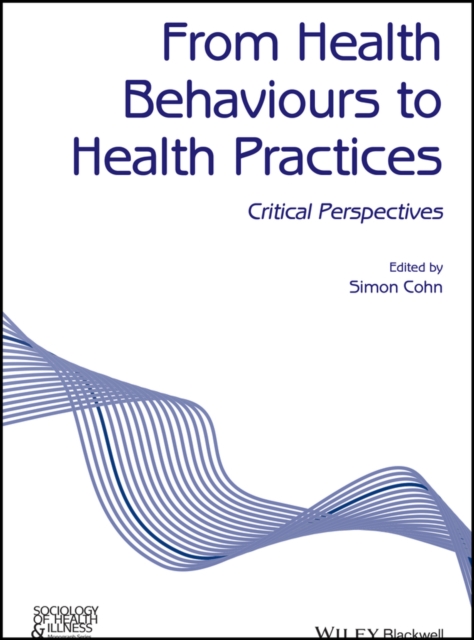
From Health Behaviours to Health Practices
A wide range of international contributions draw on theoretical and empirical sources to explore whether alternatives exist to both conceptualise and conduct research into what people do and don’t do, in relation to their health and experiences of illness. -Presents a collection of international contributions that complement, as well as critique, dominant conceptualisations of health behaviour -Includes a wide range of both theoretical perspectives and empirical cases -Reasserts the unique contribution social sciences can make to health research -Challenges assumptions about the usefulness of the concept of health behaviour -A timely publication given the rise of chronic and lifestyle diseases and the resulting changes in global health agendas
eBook

Self-Fulfilment with Dyslexia
Margaret Malpas and other high achievers such as Anna Devin and Lord Addington explain their ten-step recipe to matching dyslexia with success. Learn how to foster your creativity, passion, verbal influencing skills and more, making the most of your own traits and skills to unlock your full potential.
eBook
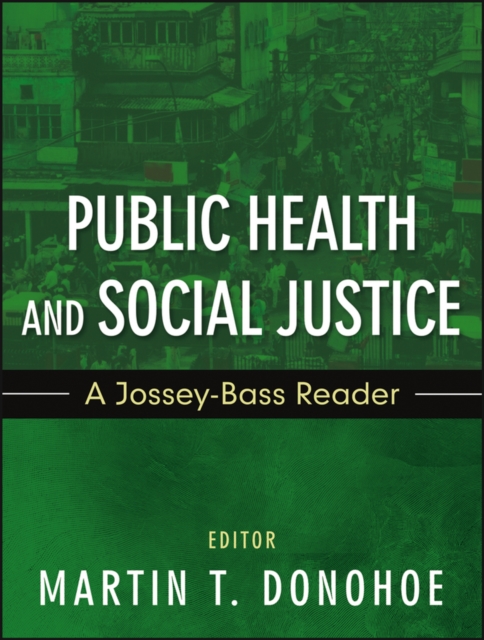
Public health and social justice
Praise for Public Health and Social Justice \"This compilation unifies ostensibly distant corners of our broad discipline under the common pursuit of health as an achievable, non-negotiable human right. It goes beyond analysis to impassioned suggestions for moving closer to the vision of health equity.\" -Paul Farmer, MD, PhD, Kolokotrones University Professor and chair, Department of Global Health and Social Medicine, Harvard Medical School; co-founder, Partners In Health \"This superb book is the best work yet concerning the relationships between public health and social justice.\" -Howard Waitzkin, MD, PhD, Distinguished Professor Emeritus, University of New Mexico \"This book gives public health professionals, researchers and advocates the essential knowledge they need to capture the energy that social justice brings to our enterprise.\" -Nicholas Freudenberg, DrPH, Distinguished Professor of Public Health, the City University of New York School of Public Health at Hunter College \"The breadth of topics selected provides a strong overview of social justice in medicine and public health for readers new to the topic.\" -William Wiist, DHSc, MPH, MS, senior scientist and head, Office of Health and Society Studies, Interdisciplinary Health Policy Institute, Northern Arizona University \"This book is a tremendous contribution to the literature of social justice and public health.\" -Catherine Thomasson, MD, executive director, Physicians for Social Responsibility \"This book will serve as an essential reference for students, teachers and practitioners in the health and human services who are committed to social responsibility.\" -Shafik Dharamsi, PhD, faculty of medicine, University of British Columbia.
eBook

Health economics in development
Economists and public health specialists do not always understand one another, to the detriment of how health systems function. This collection of papers, spanning over 20 years of thinking and writing, aims to bring these disciplines closer together, through exploration of basic concepts, development of ways to think about such ideas as equity, efficiency, cost-effectiveness and the best way to finance health care, and empirical analyses of several interventions against specific diseases or health risks. Health Economics in Development explains basic concepts, for the benefit of non-economists working in public health and further develops some of those concepts to show how they can be applied to real situations. These include how the burden of ill health is measured, how economic thinking helps judge the proper roles of the state and the market in health, ways to understand and measure equity, and the characteristics of sound and equitable financing for health. The empirical material refers to a variety of specific health problems or interventions—among others, smoking, polio, malaria, immunizations, and various forms of malnutrition and programs directed to overcome them.
eBook