
Catalogue Search | MBRL


Are you sure you want to remove the book from the shelf?

{{itemTitle}}
77,505
result(s) for
"Health Services Research - methods"
Sort by:

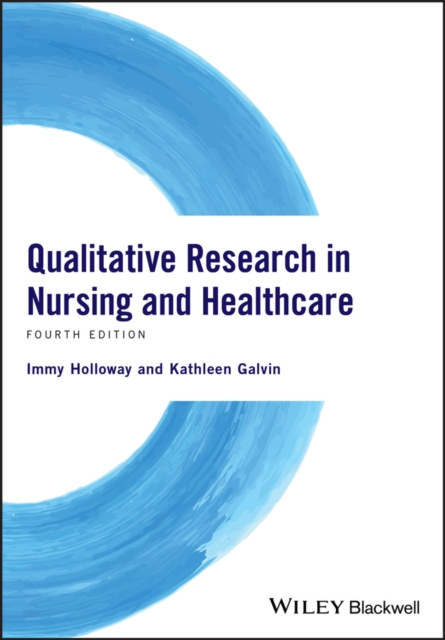
Qualitative research in nursing and healthcare
Qualitative Research in Nursing and Healthcare is an invaluable resource for those who carry out qualitative research in the healthcare arena. It is intended to assist: Professionals and academics in the healthcare field who undertake or teach research in clinical or educational settings; Postgraduates who are undertaking qualitative research and want to revise qualitative research approaches and procedures before going on to more specialist texts; and Undergraduates in their last year who wish to learn about qualitative perspectives or carry out a project using these approaches. Fully updated from the earlier editions by Holloway and Wheeler, it reflects recent developments in nursing research. This new edition provides clear explanations of abstract ideas in qualitative research as well as practical procedures. Structured into four sections, the book looks at the initial stages, methods of data collection, qualitative approaches and analysis of collected data. It also contains a chapter on writing up and publishing qualitative research. With applied and practical examples throughout, Qualitative Research in Nursing and Healthcare is essential reading for those who are looking for a comprehensive introduction to qualitative research.
eBook
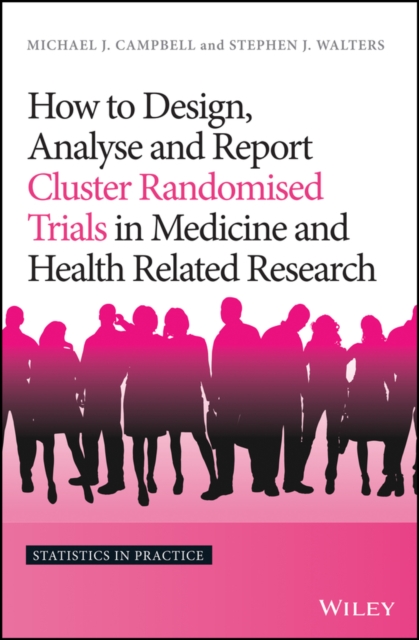
How to design, analyse and report cluster randomised trials in medicine and health related research
A complete guide to understanding cluster randomised trials Written by two researchers with extensive experience in the field, this book presents a complete guide to the design, analysis and reporting of cluster randomised trials. It spans a wide range of applications: trials in developing countries, trials in primary care, trials in the health services. A key feature is the use of R code and code from other popular packages to plan and analyse cluster trials, using data from actual trials. The book contains clear technical descriptions of the models used, and considers in detail the ethics involved in such trials and the problems in planning them. For readers and students who do not intend to run a trial but wish to be a critical reader of the literature, there are sections on the CONSORT statement, and exercises in reading published trials. * Written in a clear, accessible style * Features real examples taken from the authors' extensive practitioner experience of designing and analysing clinical trials * Demonstrates the use of R, Stata and SPSS for statistical analysis * Includes computer code so the reader can replicate all the analyses * Discusses neglected areas such as ethics and practical issues in running cluster randomised trials How to Design, Analyse and Report Cluster Randomised Trials in Medicine and Health Related Research provides an excellent reference tool and can be read with profit by statisticians, health services researchers, systematic reviewers and critical readers of cluster randomised trials.
eBook

Community-Partnered Cluster-Randomized Comparative Effectiveness Trial of Community Engagement and Planning or Resources for Services to Address Depression Disparities
ABSTRACT
BACKGROUND
Depression contributes to disability and there are ethnic/racial disparities in access and outcomes of care. Quality improvement (QI) programs for depression in primary care improve outcomes relative to usual care, but health, social and other community-based service sectors also support clients in under-resourced communities. Little is known about effects on client outcomes of strategies to implement depression QI across diverse sectors.
OBJECTIVE
To compare the effectiveness of
Community Engagement and Planning (CEP)
and
Resources for Services (RS)
to implement depression QI on clients’ mental health-related quality of life (HRQL) and services use.
DESIGN
Matched programs from health, social and other service sectors were randomized to community engagement and planning (promoting inter-agency collaboration) or resources for services (individual program technical assistance plus outreach) to implement depression QI toolkits in Hollywood-Metro and South Los Angeles.
PARTICIPANTS
From 93 randomized programs, 4,440 clients were screened and of 1,322 depressed by the 8-item Patient Health Questionnaire (PHQ-8) and providing contact information, 1,246 enrolled and 1,018 in 90 programs completed baseline or 6-month follow-up.
MEASURES
Self-reported mental HRQL and probable depression (primary), physical activity, employment, homelessness risk factors (secondary) and services use.
RESULTS
CEP was more effective than RS at improving mental HRQL, increasing physical activity and reducing homelessness risk factors, rate of behavioral health hospitalization and medication visits among specialty care users (i.e. psychiatrists, mental health providers) while increasing depression visits among users of primary care/public health for depression and users of faith-based and park programs (each
p
< 0.05). Employment, use of antidepressants, and total contacts were not significantly affected (each
p
> 0.05).
CONCLUSION
Community engagement to build a collaborative approach to implementing depression QI across diverse programs was more effective than resources for services for individual programs in improving mental HRQL, physical activity and homelessness risk factors, and shifted utilization away from hospitalizations and specialty medication visits toward primary care and other sectors, offering an expanded health-home model to address multiple disparities for depressed safety-net clients.
Journal Article

Improving the reporting of pragmatic trials: an extension of the CONSORT statement
Background The CONSORT statement is intended to improve reporting of randomised controlled trials and focuses on minimising the risk of bias (internal validity). The applicability of a trial’s results (generalisability or external validity) is also important, particularly for pragmatic trials. A pragmatic trial (a term first used in 1967 by Schwartz and Lellouch) can be broadly defined as a randomised controlled trial whose purpose is to inform decisions about practice. This extension of the CONSORT statement is intended to improve the reporting of such trials and focuses on applicability. Methods At two, two-day meetings held in Toronto in 2005 and 2008, we reviewed the CONSORT statement and its extensions, the literature on pragmatic trials and applicability, and our experiences in conducting pragmatic trials. Recommendations We recommend extending eight CONSORT checklist items for reporting of pragmatic trials: the background, participants, interventions, outcomes, sample size, blinding, participant flow, and generalisability of the findings. These extensions are presented, along with illustrative examples of reporting, and an explanation of each extension. Adherence to these reporting criteria will make it easier for decision makers to judge how applicable the results of randomised controlled trials are to their own conditions. Empirical studies are needed to ascertain the usefulness and comprehensiveness of these CONSORT checklist item extensions. In the meantime we recommend that those who support, conduct, and report pragmatic trials should use this extension of the CONSORT statement to facilitate the use of trial results in decisions about health care.
Journal Article

Women's Health Research
Even though slightly over half of the U.S. population is female, medical research historically has neglected the health needs of women. However, over the past two decades, there have been major changes in government support of women's health research-in policies, regulations, and the organization of research efforts. To assess the impact of these changes, Congress directed the Department of Health and Human Services (HHS) to ask the IOM to examine what has been learned from that research and how well it has been put into practice as well as communicated to both providers and women.
Women's Health Research finds that women's health research has contributed to significant progress over the past 20 years in lessening the burden of disease and reducing deaths from some conditions, while other conditions have seen only moderate change or even little or no change. Gaps remain, both in research areas and in the application of results to benefit women in general and across multiple population groups. Given the many and significant roles women play in our society, maintaining support for women's health research and enhancing its impact are not only in the interest of women, they are in the interest of us all.
eBook

A realist process evaluation within the Facilitating Implementation of Research Evidence (FIRE) cluster randomised controlled international trial: an exemplar
Background
Facilitation is a promising implementation intervention, which requires theory-informed evaluation. This paper presents an exemplar of a multi-country realist process evaluation that was embedded in the first international randomised controlled trial evaluating two types of facilitation for implementing urinary continence care recommendations. We aimed to uncover what worked (and did not work), for whom, how, why and in what circumstances during the process of implementing the facilitation interventions in practice.
Methods
This realist process evaluation included theory formulation, theory testing and refining. Data were collected in 24 care home sites across four European countries. Data were collected over four time points using multiple qualitative methods: observation (372 h), interviews with staff (
n
= 357), residents (
n
= 152), next of kin (
n
= 109) and other stakeholders (
n
= 128), supplemented by facilitator activity logs. A combined inductive and deductive data analysis process focused on realist theory refinement and testing.
Results
The content and approach of the two facilitation programmes prompted variable opportunities to align and realign support with the needs and expectations of facilitators and homes. This influenced their level of confidence in fulfilling the facilitator role and ability to deliver the intervention as planned. The success of intervention implementation was largely dependent on whether sites prioritised their involvement in both the study and the facilitation programme. In contexts where the study was prioritised (including release of resources) and where managers and staff support was sustained, this prompted collective engagement (as an attitude and action). Internal facilitators’ (IF) personal characteristics and abilities, including personal and formal authority, in combination with a supportive environment prompted by managers triggered the potential for learning over time. Learning over time resulted in a sense of confidence and personal growth, and enactment of the facilitation role, which resulted in practice changes.
Conclusion
The scale and multi-country nature of this study provided a novel context to conduct one of the few trial embedded realist-informed process evaluations. In addition to providing an explanatory account of implementation processes, a conceptual platform for future facilitation research is presented. Finally, a realist-informed process evaluation framework is outlined, which could inform future research of this nature.
Trial registration
Current controlled trials
ISRCTN11598502
.
Journal Article
A Patient Navigator Intervention to Reduce Hospital Readmissions among High-Risk Safety-Net Patients: A Randomized Controlled Trial
Background
Evidence-based interventions to reduce hospital readmissions may not generalize to resource-constrained safety-net hospitals.
Objective
To determine if an intervention by patient navigators (PNs), hospital-based Community Health Workers, reduces readmissions among high risk, low socioeconomic status patients.
Design
Randomized controlled trial.
Participants
General medicine inpatients having at least one of the following readmission risk factors: (1) age ≥60 years, (2) any in-network inpatient admission within the past 6 months, (3) length of stay ≥3 days, (4) admission diagnosis of heart failure, or (5) chronic obstructive pulmonary disease. The analytic sample included 585 intervention patients and 925 controls.
Interventions
PNs provided coaching and assistance in navigating the transition from hospital to home through hospital visits and weekly telephone outreach, supporting patients for 30 days post-discharge with discharge preparation, medication management, scheduling of follow-up appointments, communication with primary care, and symptom management.
Main Measures
The primary outcome was in-network 30-day hospital readmissions. Secondary outcomes included rates of outpatient follow-up. We evaluated outcomes for the entire cohort and stratified by patient age >60 years (425 intervention/584 controls) and ≤60 years (160 intervention/341 controls).
Key Results
Overall, 30-day readmission rates did not differ between intervention and control patients. However, the two age groups demonstrated marked differences. Intervention patients >60 years showed a statistically significant adjusted absolute 4.1 %
decrease
[95 % CI: −8.0 %, -0.2 %] in readmission with an increase in 30-day outpatient follow-up. Intervention patients ≤60 years showed a statistically significant adjusted absolute 11.8 %
increase
[95 % CI: 4.4 %, 19.0 %] in readmission with no change in 30-day outpatient follow-up.
Conclusions
A patient navigator intervention among high risk, safety-net patients decreased readmission among older patients while increasing readmissions among younger patients. Care transition strategies should be evaluated among diverse populations, and younger high risk patients may require novel strategies.
Journal Article
Facilitating Implementation of Research Evidence (FIRE): an international cluster randomised controlled trial to evaluate two models of facilitation informed by the Promoting Action on Research Implementation in Health Services (PARIHS) framework
Background
Health care practice needs to be underpinned by high quality research evidence, so that the best possible care can be delivered. However, evidence from research is not always utilised in practice. This study used the Promoting Action on Research Implementation in Health Services (PARIHS) framework as its theoretical underpinning to test whether two different approaches to facilitating implementation could affect the use of research evidence in practice.
Methods
A pragmatic clustered randomised controlled trial with embedded process and economic evaluation was used. The study took place in four European countries across 24 long-term nursing care sites, for people aged 60 years or more with documented urinary incontinence. In each country, sites were randomly allocated to standard dissemination, or one of two different types of facilitation. The primary outcome was the documented percentage compliance with the continence recommendations, assessed at baseline, then at 6, 12, 18, and 24 months after the intervention.
Data were analysed using STATA15, multi-level mixed-effects linear regression models were fitted to scores for compliance with the continence recommendations, adjusting for clustering.
Results
Quantitative data were obtained from reviews of 2313 records. There were no significant differences in the primary outcome (documented compliance with continence recommendations) between study arms and all study arms improved over time.
Conclusions
This was the first cross European randomised controlled trial with embedded process evaluation that sought to test different methods of facilitation. There were no statistically significant differences in compliance with continence recommendations between the groups. It was not possible to identify whether different types and “doses” of facilitation were influential within very diverse contextual conditions. The process evaluation (Rycroft-Malone et al., Implementation Science. doi: 10.1186/s13012-018-0811-0) revealed the models of facilitation used were limited in their ability to overcome the influence of contextual factors.
Trial registration
Current Controlled Trials
ISRCTN11598502
. Date 4/2/10.
The research leading to these results has received funding from the European Union’s Seventh Framework Programme (FP7/2007–2013) under grant agreement no. 223646.
Journal Article

Questionnaire development for the Lolland-Falster Health Study, Denmark: an iterative and incremental process
In composing multi-thematic questionnaires for the Lolland-Falster Health Study (LOFUS), we faced a range of challenges, for which we found limited guidance in the literature. LOFUS is a household-based population study covering multiple medical and social research areas and targeting the mixed rural-provincial population of 103,000 persons on the Danish islands Lolland and Falster. Households were randomly selected for invitation. In this paper, we describe and discuss challenges in developing the questionnaires related to stakeholders, content of the questionnaire, and the process itself. The development process was characterised by loops of learning and can be described as an iterative and incremental process. We propose recommendations to researchers and administrators involved in similar development processes, including awareness of the non-linearity and complexity of the process, a need for negotiations and navigation among multiple stakeholders, and acknowledgement of pragmatism as an inherent part of decisions made in the process.
Journal Article