
Catalogue Search | MBRL


Are you sure you want to remove the book from the shelf?

{{itemTitle}}
860,308
result(s) for
"Health Systems "
Sort by:

Geospatial analysis of environmental health
This book focuses on a range of geospatial applications for environmental health research, including environmental justice issues, environmental health disparities, air and water contamination, and infectious diseases. Environmental health research is at an exciting point in its use of geotechnologies, and many researchers are working on innovative approaches. This book is a timely scholarly contribution in updating the key concepts and applications of using GIS and other geospatial methods for environmental health research. Each chapter contains original research which utilizes a geotechnical tool (Geographic Information Systems (GIS), remote sensing, GPS, etc.) to address an environmental health problem. The book is divided into three sections organized around the following themes: issues in GIS and environmental health research; using GIS to assess environmental health impacts; and, geospatial methods for environmental health. Representing diverse case studies and geospatial methods, the book is likely to be of interest to researchers, practitioners and students across the geographic and environmental health sciences.
Book
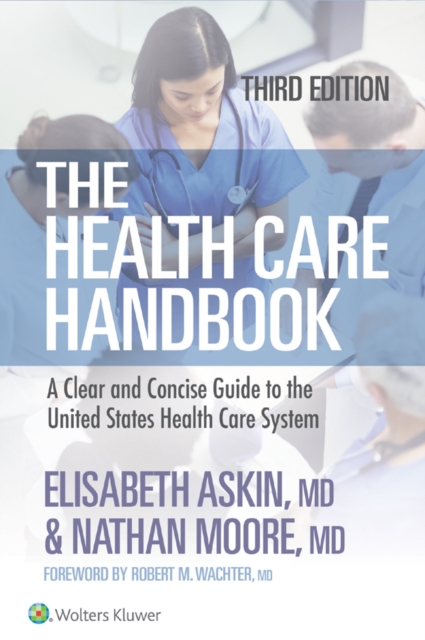
The Health Care Handbook
Described in the New York Times as \"an astonishingly clear 'user's manual' that explains our health care system and the policies that will change it,\" The Health Care Handbook, by Drs.Elisabeth Askin and Nathan Moore, offers a practical, neutral, and readable overview of the U.S.health care system in a compact, convenient format.
eBook


The Truth About Health Care
The United States spends greatly more per person on health care than any other country but the evidence shows that care is often poor and inappropriate. Despite expenditures of 1.7 trillion dollars in 2003, and growing substantially each year, services remain fragmented and poorly coordinated, and more than 46 million people are uninsured. Why can't America, with its vast array of resources, sophisticated technologies, superior medical research and educational institutions, and talented health care professionals, produce higher quality care and better outcomes?In The Truth about Health Care, David Mechanic explains how health care in America has evolved in ways that favor a myriad of economic, professional, and political interests over those of patients. While money has always had a place in medical care, \"big money\" and the quest for profits has become dominant, making meaningful reforms difficult to achieve. Mechanic acknowledges that railing against these influences, which are here to stay, can achieve only so much. Instead, he asks whether it is possible to convert what is best about health care in America into a well functioning system that better serves the entire population.Bringing decades of experience as an active health policy participant, researcher, teacher, and consultant to the public and private sectors, Mechanic examines the strengths and weaknesses of our system and how it has evolved. He pays special attention to areas often neglected in policy discussions, such as the loss of public trust in medicine, the tragic state of long-term care, and the relationship of mental health to health care.For anyone who has been frustrated by uncoordinated health networks, insurance denials, and other obstacles to obtaining appropriate care, this book will provide a refreshing and frank look at the system's current and future dilemmas. Mechanic's thoughtful roadmap describes how health plans, healthcare professionals, policymakers, and consumer groups can work together to improve access, quality, fairness, and health outcomes in America.About the Author:
eBook

Twenty years of health system reform in brazil
It has been more than 20 years since Brazil's 1988 Constitution formally established the Unified Health System (Sistema Unico de Saude, SUS). Building on reforms that started in the 1980s, the SUS represented a significant break with the past, establishing health care as a fundamental right and duty of the state and initiating a process of fundamentally transforming Brazil's health system to achieve this goal. This report aims to answer two main questions. First is have the SUS reforms transformed the health system as envisaged 20 years ago? Second, have the reforms led to improvements with regard to access to services, financial protection, and health outcomes? In addressing these questions, the report revisits ground covered in previous assessments, but also brings to bear additional or more recent data and places Brazil's health system in an international context. The report shows that the health system reforms can be credited with significant achievements. The report points to some promising directions for health system reforms that will allow Brazil to continue building on the achievements made to date. Although it is possible to reach some broad conclusions, there are many gaps and caveats in the story. A secondary aim of the report is to consider how some of these gaps can be filled through improved monitoring of health system performance and future research. The introduction presents a short review of the history of the SUS, describes the core principles that underpinned the reform, and offers a brief description of the evaluation framework used in the report. Chapter two presents findings on the extent to which the SUS reforms have transformed the health system, focusing on delivery, financing, and governance. Chapter three asks whether the reforms have resulted in improved outcomes with regard to access to services, financial protection, quality, health outcomes, and efficiency. The concluding chapter presents the main findings of the study, discusses some policy directions for addressing the current shortcomings, and identifies areas for further research.
eBook


Just Doctoring
Just Doctoring draws the doctor-patient relationship out of the consulting room and into the middle of the legal and political arenas where it more and more frequently appears. Traditionally, medical ethics has focused on the isolated relationship of physician to patient in a setting that has left the physician virtually untouched by market constraints or government regulation. Arguing that changes in health care institutions and legal attention to patient rights have made conventional approaches obsolete, Troyen Brennan points the way to a new, more aware and engaged medical ethics. The medical profession is no longer isolated, even theoretically, from the liberal, market-dominated state. Old ideas of physician beneficence and altruism must make way for a justice-based medical ethics, assuming a relationship between equals more compatible with liberal political philosophy. Brennan offers clinical examples of many of today's most challenging medical problems--from informed consent to care rationing and the repercussions of the HIV epidemic--and gives his recommendation for a new ethical perspective. This lively and controversial plea for a rethinking of medical ethics goes right to the heart of medical care at the end of the twentieth century. This title is part of UC Press's Voices Revived program, which commemorates University of California Press's mission to seek out and cultivate the brightest minds and give them voice, reach, and impact. Drawing on a backlist dating to 1893, Voices Revived makes high-quality, peer-reviewed scholarship accessible once again using print-on-demand technology. This title was originally published in 1991. Many titles in the Voices Revived program are also newly available as ebooks, offered at a discounted price to support wider access to scholarly work.
eBook


Development of the organisational health literacy responsiveness (Org-HLR) framework in collaboration with health and social services professionals
Background
The health literacy skills required by individuals to interact effectively with health services depends on the complexity of those services, and the demands they place on people. Public health and social service organisations have a responsibility to provide services and information in ways that promote equitable access and engagement, that are responsive to diverse needs and preferences, and support people to participate in decisions regarding their health and wellbeing. The aim of this study was to develop a conceptual framework describing the characteristics of health literacy responsive organisations.
Methods
Concept mapping (CM) workshops with six groups of professionals (total
N
= 42) from across health and social services sectors were undertaken. An online concept mapping consultation with 153 professionals was also conducted. In these CM activities, participants responded to the seeding statement “
Thinking broadly from your experiences of working in the health system, what does an organisation need to have or do in order to enable communities and community members to fully engage with information and services to promote and maintain health and wellbeing”.
The CM data were analysed using multidimensional scaling and hierarchical cluster analyses to derive concept maps and cluster tree diagrams. Clusters from the CM processes were then integrated by identifying themes and subthemes across tree diagrams.
Results
Across the workshops, 373 statements were generated in response to the seeding statement. An additional 1206 statements were generated in the online consultation. 84 clusters were derived within the workshops and 20 from the online consultation. Seven domains of health literacy responsiveness were identified; i) External policy and funding environment; ii) Leadership and culture; iii) Systems, processes and policies; iv) Access to services and programs; v) Community engagement and partnerships; vi) Communication practices and standards; and vii) Workforce. Each domain included 1 to 5 sub-domains (24 sub-domains in total).
Conclusions
Using participatory research processes, a conceptual framework describing the characteristics, values, practices and capabilities of organisational health literacy responsiveness was derived. The framework may guide the planning and monitoring of health service and health system improvements, and has the potential to guide effective public health policy and health system reforms.
Journal Article